

10 Famous Artists You Wouldn’t Think Were Self-Taught
Think art school is the only path to greatness? Think again. These 10 artists defied convention through persistence, originality, and vision, without...
Wen Gu 22 January 2026
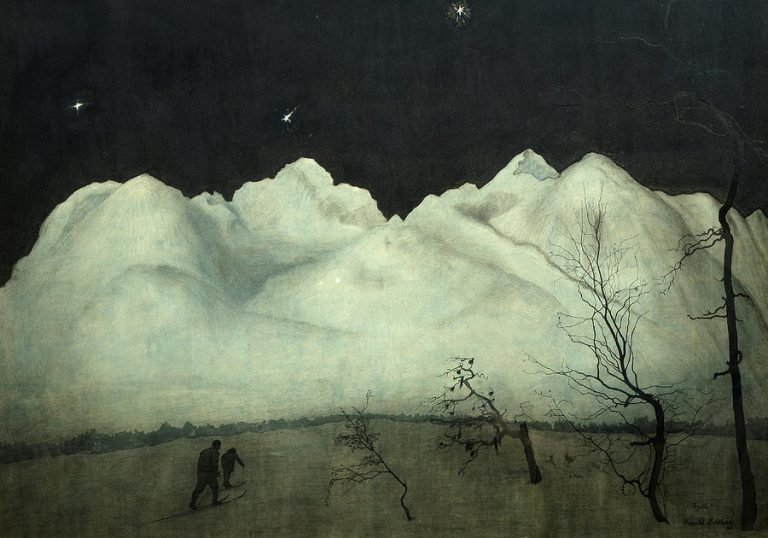
Harald Sohlberg, Winter Night in the Mountains, 1901. Pixels. Detail.
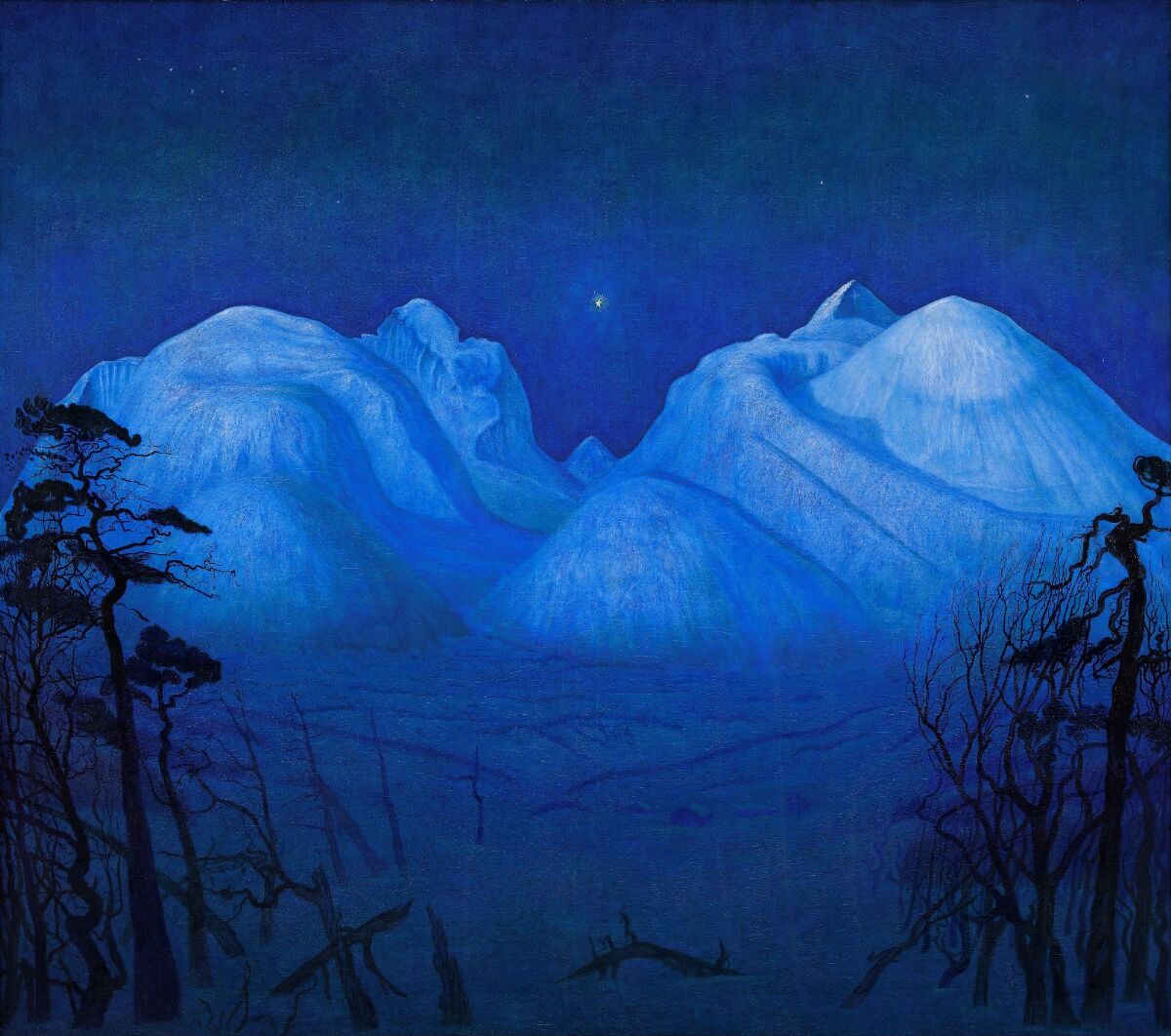
Harald Sohlberg was a Norwegian painter whose works can be described as Neo-Romantic. He is particularly known for his depictions of the mountains of Rondane and the town of Røros. Perhaps his most widely recognized painting, in several variations, is Winter’s Night in Rondane, currently featured at the National Museum of Art, Architecture and Design in Oslo, Norway. Unfortunately, Sohlberg’s work remains fairly unknown internationally, although many of his significant paintings are in Norwegian public collections.
Harald Sohlberg (1869–1935) came from a large, middle-class family with eight children. He did not finish school and instead apprenticed with a decorative painter from age 16. He was very committed to the Romantic idea of the artist as a solitary genius and tended to isolate himself for large periods of time and devote himself entirely to his paintings. Just like his fellow Norwegian painter, Edvard Munch, he denied the influence of other contemporary artists on his own style. He relegated the origins of his artistic inspirations to his own psyche.

After Sohlberg’s death, Pola Gauguin, another Scandinavian artist and one of Paul Gauguin‘s youngest children, wrote in his obituary that the man lived alone and was later forgotten, but not for long:
A name which was famous in its day. […] The coldness which he helped surround it with, will thaw.

The function of lines in Sohlberg’s paintings was to express feelings. They could be lonely, down-to-earth, or melancholic. According to the artist, art should be developed in accordance with nature, an artist’s dialogue with it.

As an old man, Sohlberg said:
It is probably true that for simple and naïve reasons my works have aroused sympathy. But I maintain that they have by no means been properly understood for the pictorial and spiritual values on which I have been working consistently throughout the years.
What Sohlberg really longed for was a true understanding of his art that was pictorial, spiritual, and consistent.
Get your daily dose of art
Click and follow us on Google News to stay updated all the time

DailyArt Magazine needs your support. Every contribution, however big or small, is very valuable for our future. Thanks to it, we will be able to sustain and grow the Magazine. Thank you for your help!

Art Historian, founder and CEO of DailyArtMagazine.com and DailyArt mobile app. But to be honest, her greatest accomplishment is being the owner of Pimpek the Cat.

Bec is an art nerd, bicycle enthusiast, cat mom, artist/crafter/maker from sunny Toronto, Canada.
Think art school is the only path to greatness? Think again. These 10 artists defied convention through persistence, originality, and vision, without...
Wen Gu 22 January 2026
Bronzino was of the generation of artists who had to find a way of following the perfection of the High Renaissance. They pushed the conventions of...
Catriona Miller, 17 November 2025
From early roots in rural Ontario, Canada, to New York City and back again, David Milne was an artist who rarely settled for long. His works span a...
Bec Brownstone 20 November 2025
Edvard Munch is defined by The Scream as an artist of angst, alienation, and agony. Yet he had a long, prolific, and varied career, producing...
Catriona Miller 12 December 2025