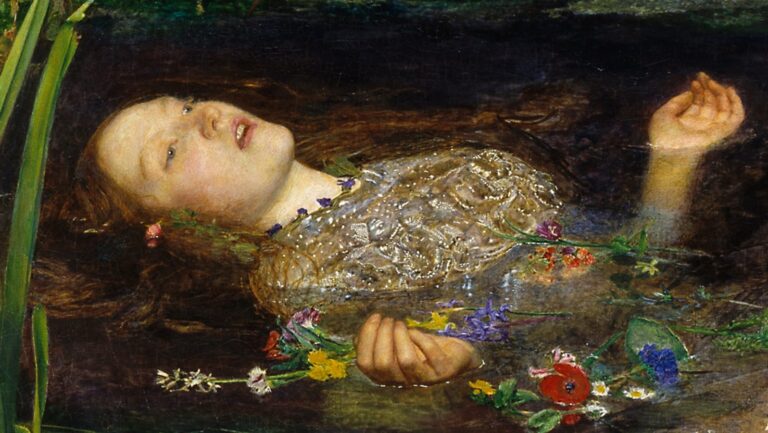
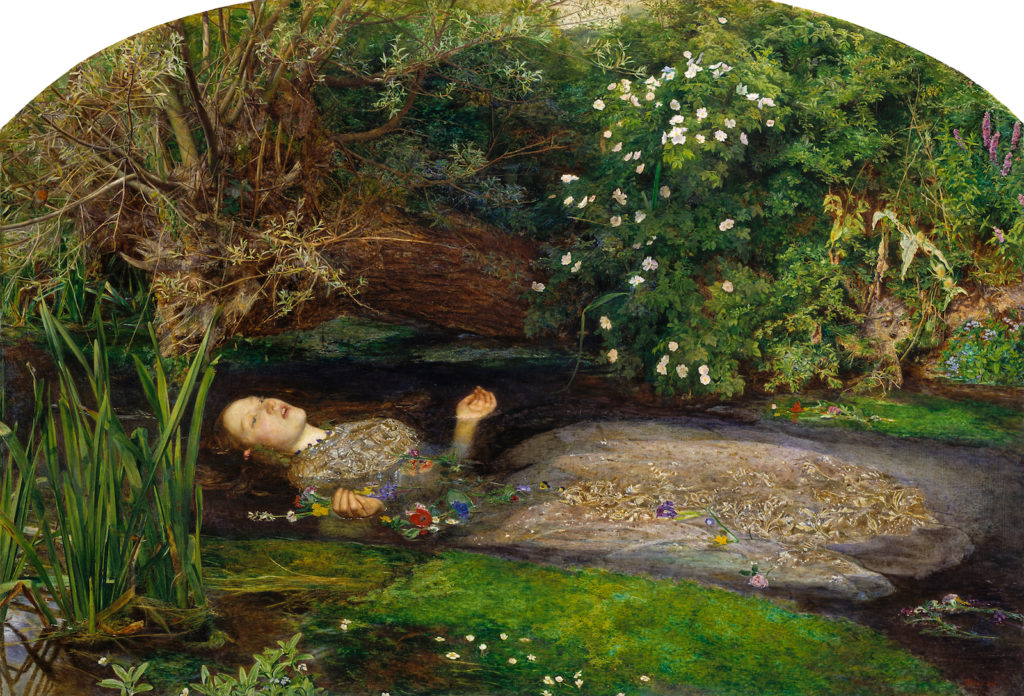
Here she is, Ophelia from Shakespeare’s play Hamlet, gracefully descending into a stream while collecting wildflowers. Overwhelmed by grief after her father’s tragic murder by Hamlet, her beloved, she had been fashioning garlands of these blossoms.
She ventured into a willow tree that stretched over the brook to drape some from its branches, but a limb gave way beneath her. She lay in the water, serenading melodies, seemingly oblivious to the perils, and ultimately surrendered herself to the stream. Her demeanor resembles that of a martyr or saint, her arms outstretched and her gaze directed skyward. It’s worth noting that this posture has also been interpreted as having erotic undertones.
When down her weedy trophies and herself Fell in the weeping brook. Her clothes spread wide; And, mermaid-like, awhile they bore her up: Which time she chanted snatches of old tunes; As one incapable of her own distress, Or like a creature native and indued Unto that element: but long it could not be Till that her garments, heavy with their drink, Pull’d the poor wretch from her melodious lay To muddy death.
― William Shakespeare, Hamlet
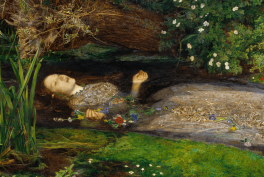
John Everett Millais, Ophelia, 1851 -1852, Tate Britain, London, UK.
Ophelia’s death is often celebrated as one of the most beautifully composed death scenes in the annals of literature. Strangely, it is rarely depicted in theatrical adaptations since, in Shakespeare’s text, it solely exists in Queen Gertrude’s retelling.
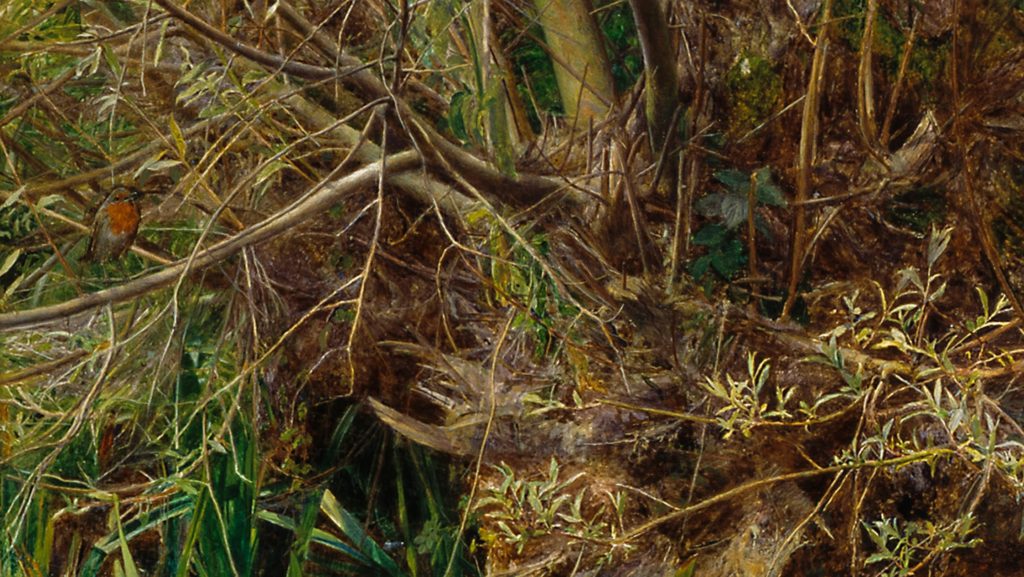
While the play’s setting is in Denmark, the landscape portrayed in the painting has unmistakably become emblematic of England. The artwork featuring Ophelia was created along the banks of the Hogsmill River in Surrey, near Tolworth, Greater London. The selection of flowers floating on the river was meticulously chosen to align with Shakespeare’s description of Ophelia’s garland, and each flower carries its own symbolic significance. The prominent red poppy, although not originally mentioned in Shakespeare’s depiction, symbolizes sleep and death, while daisies signify innocence and pansies represent love in vain. The painting is renowned for its meticulous representation of the river’s intricate flora.
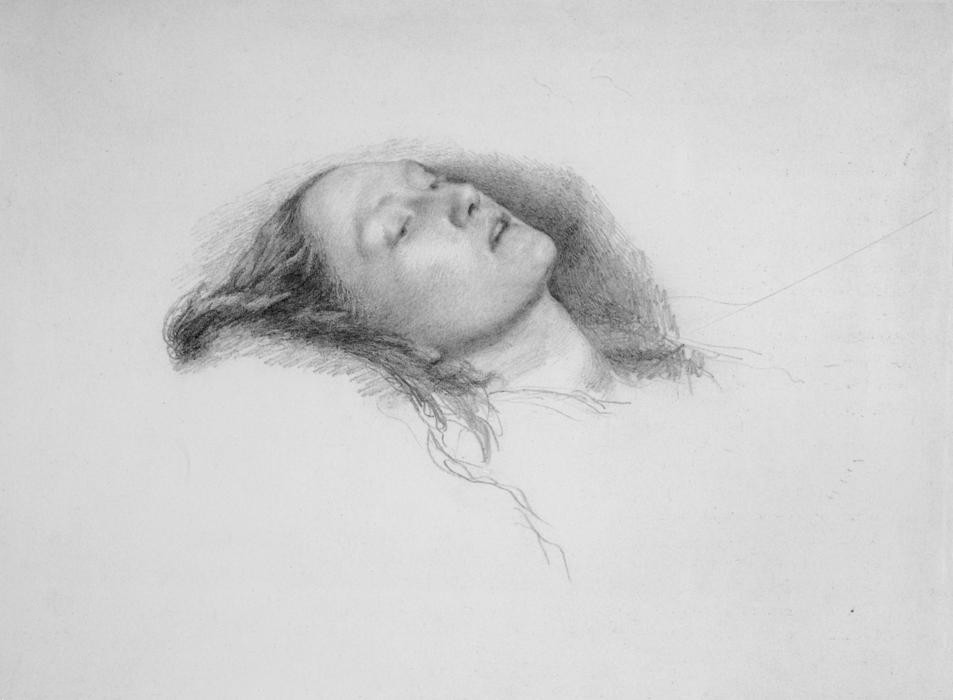
Millais painted Ophelia in two separate stages: first, he painted the landscape, and then the figure of a girl. Ophelia was modeled by the future wife of Dante Gabriel Rossetti, artist and muse Elizabeth Siddal, then 19 years old. Millais had her lie fully clothed in a very fine silver embroidered dress bought by Millais from a second-hand shop for four pounds in a bathtub full of water in his studio in London. The problem was that everything happened in the middle of winter. The artist placed oil lamps under the tub to warm the water but was so intent on his work that he allowed them to go out. As a result, Siddal caught a severe cold, and her father later sent Millais a letter demanding £50 for medical expenses.
John Everett Millais, Study for the head of Elizabeth Siddal, 1852, Birmingham Museums and Art Gallery, Birmingham, UK.
When Ophelia was first publicly exhibited at the Royal Academy in London in 1852, it received mixed reviews. A critic in The Times wrote that there must be something strangely perverse in an imagination which souses Ophelia in a weedy ditch, and robs the drowning struggle of that lovelorn maiden of all pathos and beauty, while a further review in the same newspaper said that Mr. Millais’s Ophelia in her pool … makes us think of a dairymaid in a frolic.
But later everything changed. Now the piece is admired as one of the most important works of the mid-19th century for its beauty.
Click and follow us on Google News to stay updated all the time
We love art history and writing about it. Your support helps us to sustain DailyArt Magazine and keep it running.
DailyArt Magazine needs your support. Every contribution, however big or small, is very valuable for our future. Thanks to it, we will be able to sustain and grow the Magazine. Thank you for your help!
Art Historian, founder and CEO of DailyArtMagazine.com and DailyArt mobile app. But to be honest, her greatest accomplishment is being the owner of Pimpek the Cat.