Based on his work, Caravaggio abandoned idealized beauty in favor of a stark, human reality. His paintings introduce us to scenes in which, as viewers, we often feel not as observers but as participants, implicated in the cost that desire exacts on those who tempt fate. The details presented provide an implied pattern: vulnerability leads to temptation, which results in a price to be paid. Sometimes the fee is a material loss, other times the costs are moral or possibly existential.
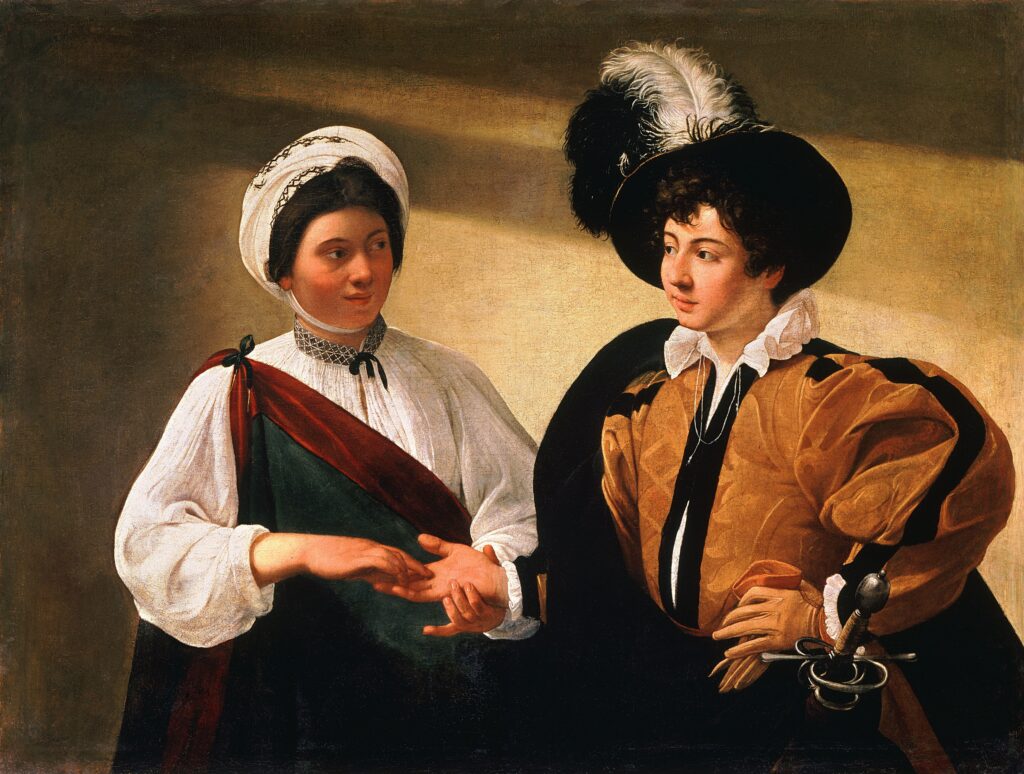
Beginning with The Fortune Teller, Caravaggio presents a scene that provides the clearest intentions of this notion. A well-dressed boy stands with a Romani girl who holds his hand, tracing lines that tell his fortune. Their eyes are upon each other, and her gaze holds an almost coquettish intensity. Desire appears present, based on the young man’s pose and locked gaze.
What Caravaggio places near the bottom of the painting is the cost of the youth’s desire for the fortune teller. As their eyes remain connected, she carefully removes the ring from his finger. This hidden price is almost forgotten, lost in the bright plume of the nobleman’s feathered hat and the unspoken desire he holds for the Romani girl.
This scene is universal, a hidden truth that Caravaggio places in plain sight. The boy’s desire for the girl is real; the cost is the ring on his finger and possibly his innocence. A commonality in life that was otherwise hidden from art in that period of history. This demonstration of the cost of desire was, in many ways, revolutionary.
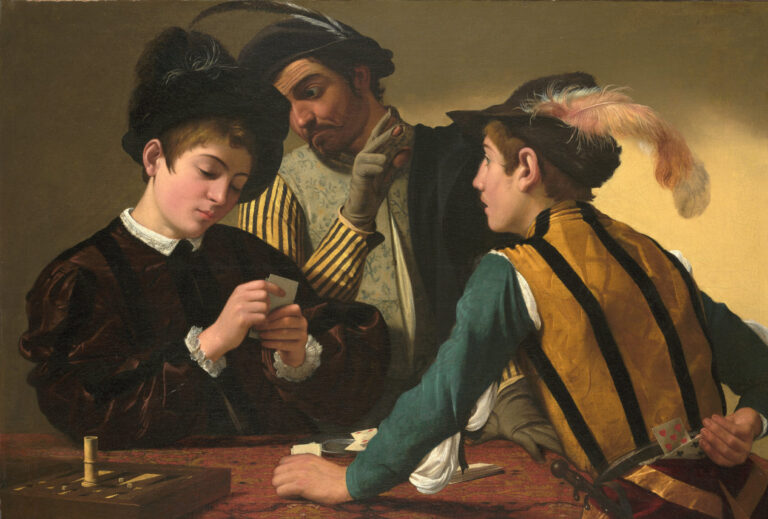
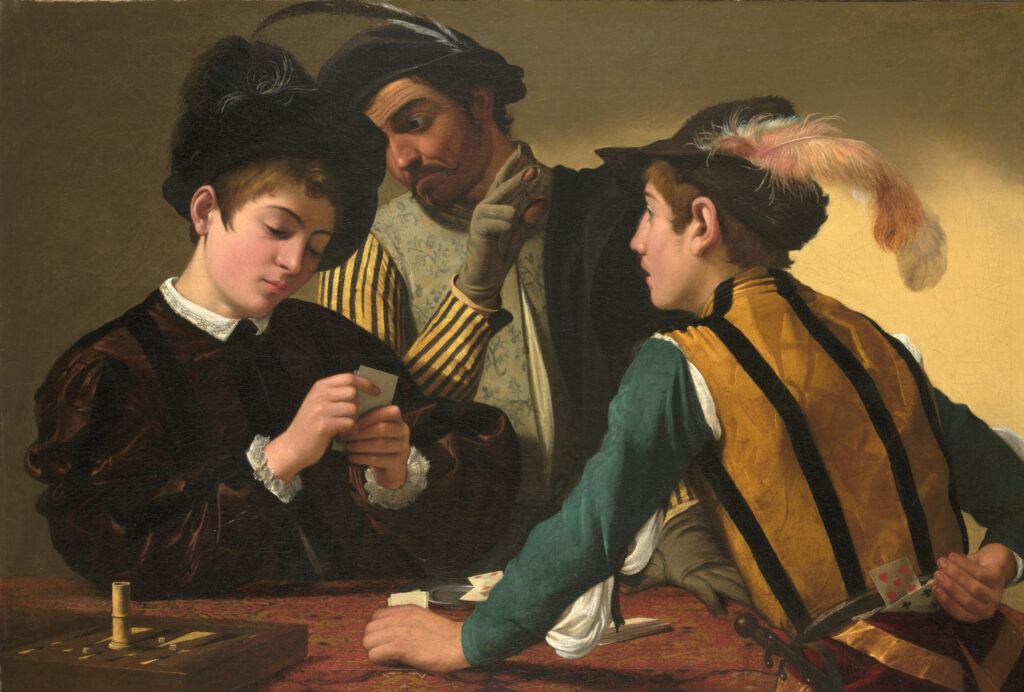
The Cardsharps provides an evident demonstration of the cost of desire. A well-dressed young man plays cards with a flashily dressed youth. The young man’s eyes are upon his card, and Caravaggio shows us that his opponent holds several cards behind his back and a knife in his belt. A third man, older than the card-playing pair, stands behind the well-dressed young man, looking at the cards while holding up three fingers. This action is a signal, a method of cheating that transforms this encounter from a game of chance to a crime.
The sequence is clear: the well-dressed young man joined a game with a pair of criminals, cardsharps if you will. They will either rob him of his money or, based on the blade present in the flashily dressed youth’s belt, his life. Caravaggio exposes both sides of this situation: a desire for money or pleasure, leading to the loss of either money or life.
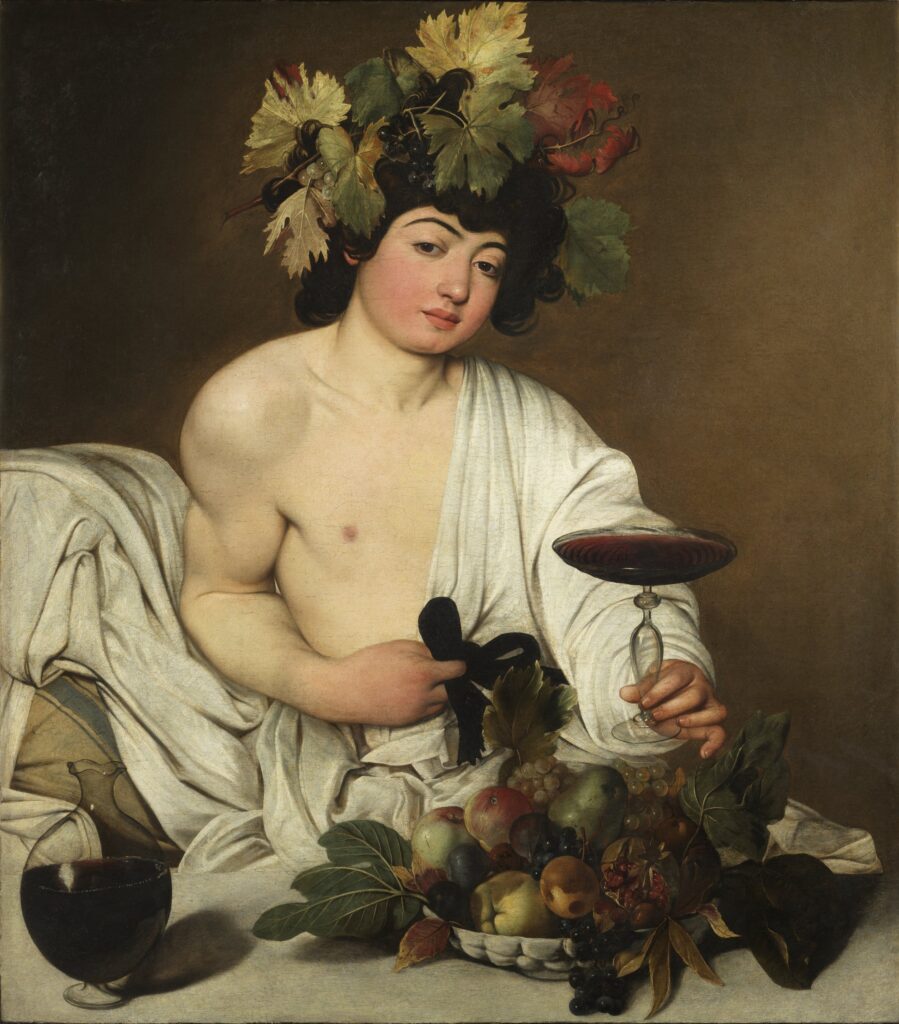
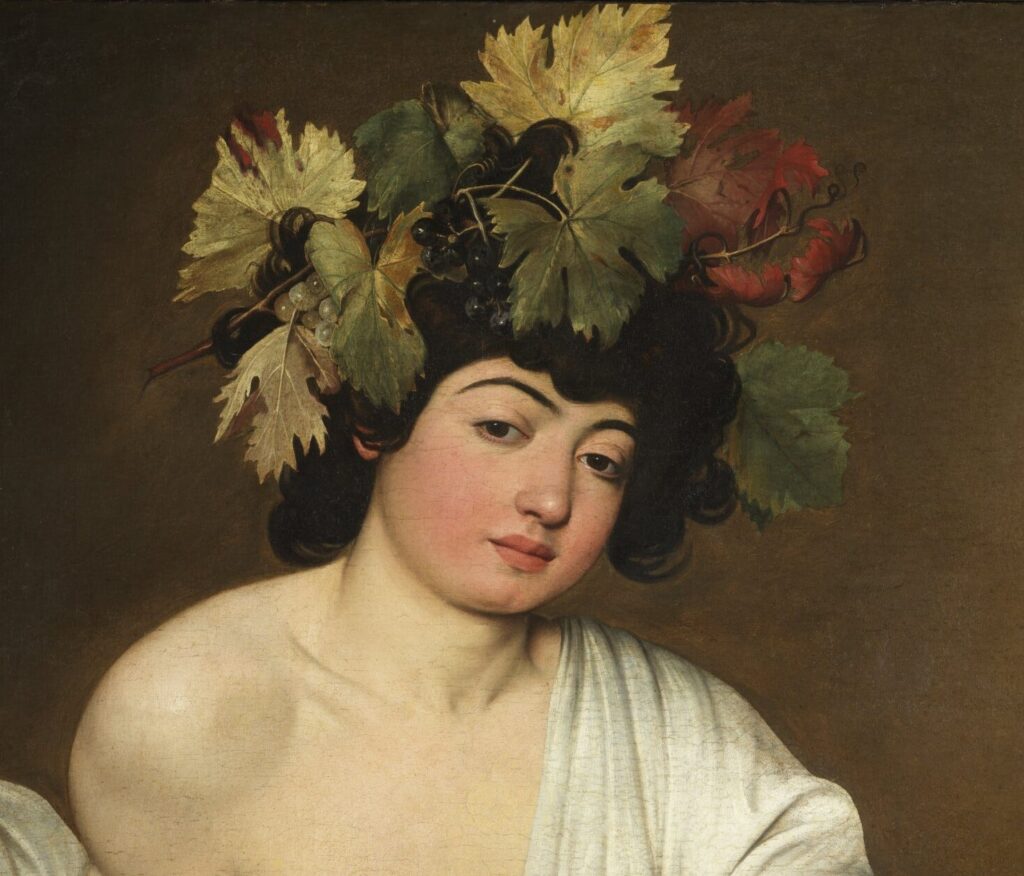
Caravaggio’s Bacchus presents desire in a different manner, one of sensual invitation and decay. Caravaggio presents a round-faced youth with hooded eyes, a muscular body covered by an open toga, while extending a glass of wine towards the viewer; before him lay a basket of fruit with a bursting pomegranate and a rotting apple.
The implication is clear. By embracing the sensuality of the youth, you risk succumbing to corruption. There is also a hint that youth and pleasure are fleeting, and when indulged, they will rot and die like the fruit before the boy. Caravaggio’s homoerotic suggestions may have also alluded to his patron, Cardinal Francesco Maria del Monte’s purported sexuality and his preference for youthful male lovers. This inclination may have damaged the cardinal’s chance at assuming the papacy in the 1621 papal conclave.
Caravaggio presents desire as exacting a payment from its participants. In The Fortune Teller, a young man feels desire for the Romani girl as she steals a ring from his finger. The Cardsharps presents an innocent nobleman as he plays a game of cards with a cheater, while a third man helps the cardshark win. Caravaggio suggests the risk for avarice is either the loss of money or life. Finally, in Bacchus, a youth suggests sensual pleasure, with the possible consequence of corruption. In each painting, Caravaggio presents desire and its cost either openly or through implication.
Author’s bio:
Frank Schildiner is a retired probation officer and longtime martial arts instructor who writes about art, horror, and the psychology of human experience. His work examines how artists depict powerful human forces such as fear, desire, and judgment through visual imagery. He has previously written fiction and independent essays exploring the darker dimensions of human nature.