

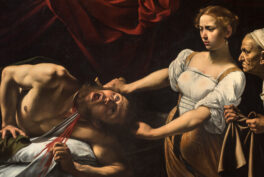
Masterpiece Story: Judith and Holofernes by Caravaggio
Judith and Holofernes is a Caravaggio masterpiece that captures Biblical murder and drama. Rarely has death been captured so intensely and violently...
James W Singer 13 September 2026
13 September 2026 min Read
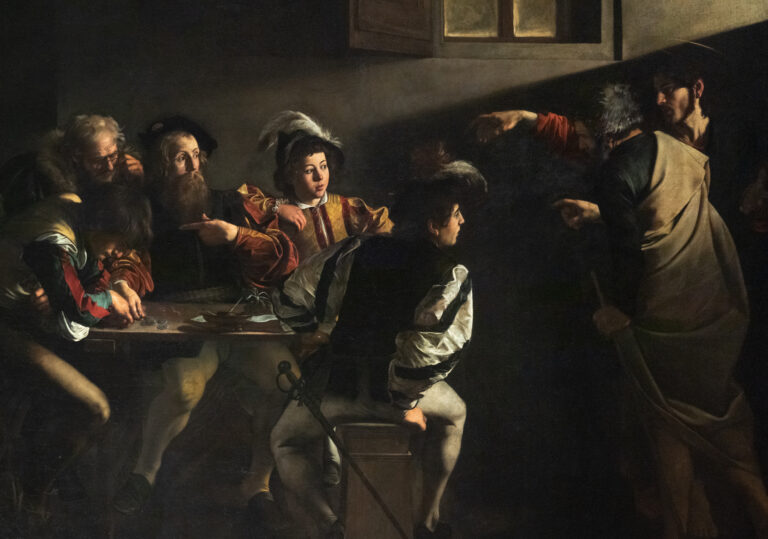
Caravaggio, The Calling of Saint Matthew, 1599–1600, San Luigi dei Francesi, Rome, Italy. Wikimedia Commons (public domain). Detail.
The Calling of Saint Matthew by Caravaggio depicts the moment Matthew turns away from tax collecting and toward Jesus. Caravaggio was a master of using light and contrast to convey deep messages. In this painting, the figures are dramatically lit, juxtaposing spiritual themes of good and evil.
Caravaggio, The Calling of Saint Matthew, 1599–1600, San Luigi dei Francesi, Rome, Italy. Wikimedia Commons (public domain).
Caravaggio was born in Milan, Italy, and lived from 1571 to 1610. He was one of the most notable Baroque painters, and the sharp contrast of light and dark in his paintings distinctly marks his art. His paintings often feature characters from myths or the Bible. He was highly skilled at painting portraits and interiors with his characteristic sense of lighting.
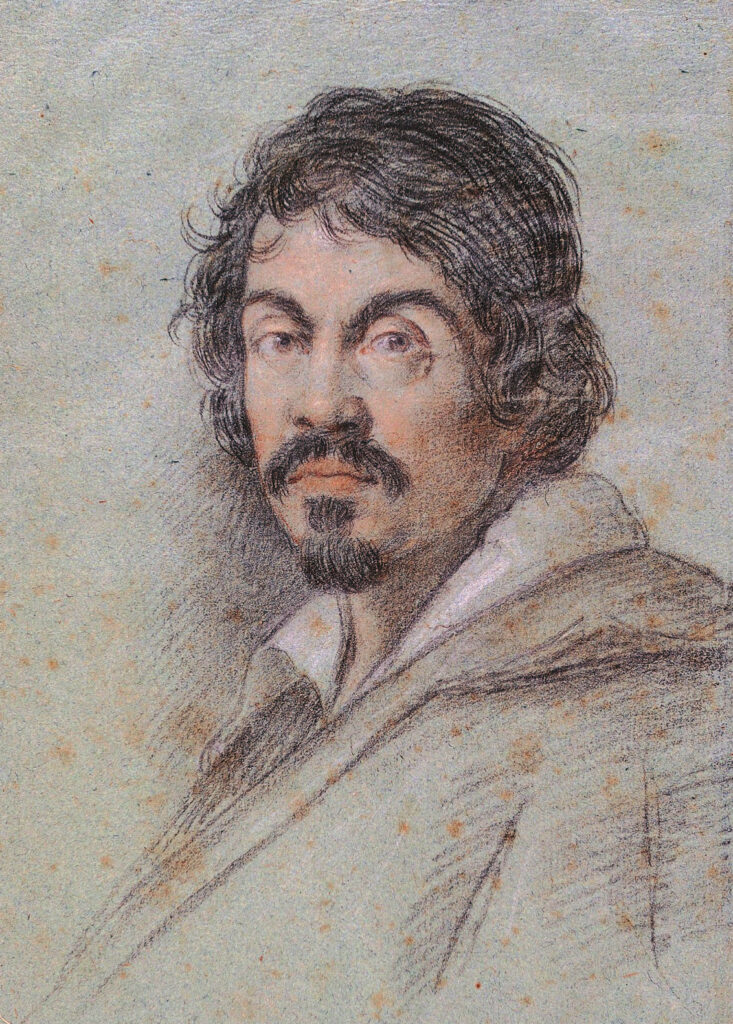
Ottavio Leoni, Portrait of Caravaggio, 1621, Biblioteca Marucelliana, Florence, Italy. Wikimedia Commons (public domain).
Caravaggio was almost 30 when he created the The Calling of Saint Matthew in 1600. The painting was Caravaggio’s first major public commission. It is made of oil paint on canvas and measures 323 x 343 cm (127 1/4 x 135 in.). He created this piece to display in the Contarelli Chapel of the Church of St. Louis of the French in Rome, Italy. This painting is still on view in the chapel today, along with two of Caravaggio’s other paintings depicting the life of Matthew. This painting is notable as it encapsulates the strengths of Baroque art. It has dramatic lighting, an emotional scene, and realistically painted figures.
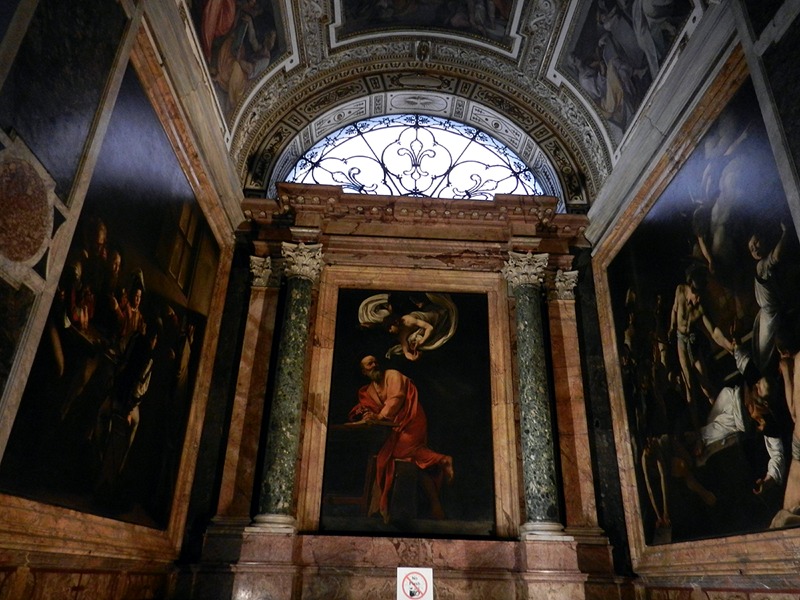
The interior of Contarelli Chapel, San Luigi dei Francesi, Rome, Italy. Photograph by Geobia via Wikimedia Commons (CC BY-SA 3.0).
The Calling of Saint Matthew shows Jesus calling Matthew away from tax collecting to become one of his 12 apostles. Matthew sits at the center of the table. He has a long beard and wears a dark vest with yellow and red sleeves and a black hat. Much of his body is cast in shadow, but Caravaggio uses the strong light source from the right side of the painting to illuminate Matthew’s face and hand. He looks towards Jesus, as Jesus stretches out his arm towards Matthew, calling him away from his life as a tax collector.
Matthew points to himself in disbelief, unsure why Jesus would ask him to become a disciple. This piece is based on Matthew 9:9, which reads “[a]s Jesus went on from there, he saw a man named Matthew sitting at the tax collector’s booth. ‘Follow me,’ he told him, and Matthew got up and followed him.”1 This verse formed the basic story and idea of the painting, but Caravaggio built on it, creating a rich scene full of detail and meaning.
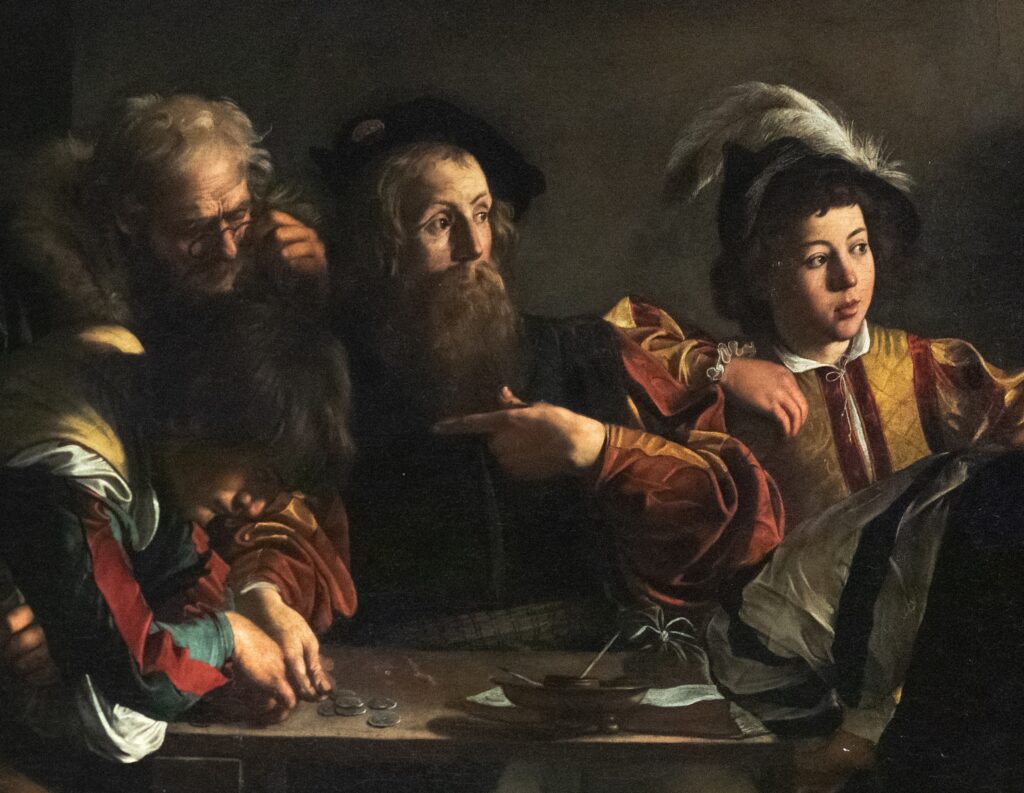
Caravaggio, The Calling of Saint Matthew, 1599–1600, San Luigi dei Francesi, Rome, Italy. Wikimedia Commons (public domain). Detail.
Jesus stands on the right side of the painting, with only his outstretched arm and face visible. Another figure is in front of him, partially blocking the viewer from seeing Christ’s whole body. A faint halo, created by a stroke of light paint, floats above Jesus’s head.

Caravaggio, The Calling of Saint Matthew, 1599–1600, San Luigi dei Francesi, Rome, Italy. Wikimedia Commons (public domain). Detail.
Caravaggio captures Matthew’s shock, as he cannot believe Jesus chose him as one of his 12 apostles. Matthew was a corrupt tax collector and an outcast. In ancient Israel, once the people paid their taxes to Rome, the tax collectors levied additional charges and pocketed the extra money. So when Jesus addresses Matthew, he points to himself, as if asking, “Why me?” Caravaggio froze this scene at a moment of decision. Matthew’s hand lingers on the coins on the table, still holding onto his wealth. He is reluctant to give up his comfortable lifestyle. Yet his face looks into the light, at the face of Jesus, who offers him a new life only if Matthew heeds his call.
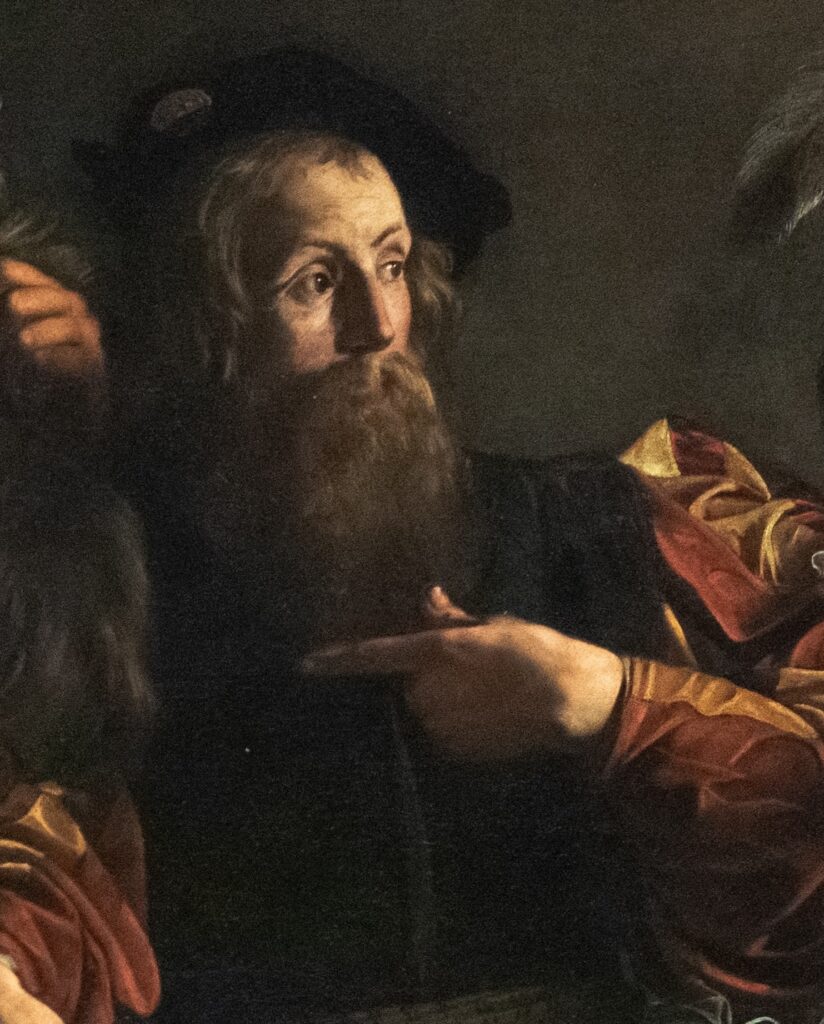
Caravaggio, The Calling of Saint Matthew, 1599–1600, San Luigi dei Francesi, Rome, Italy. Wikimedia Commons (public domain). Detail.
While Jesus and Matthew are the primary focus of the painting, several other individuals add meaning to this painting. Matthew sits at a table with four tax collectors as they count their money. A pile of coins is on the tabletop beneath the apostle and another tax collector’s hands. The two leftmost tax collectors look down at the money, and Jesus goes unnoticed. Their faces are not as starkly illuminated by the light, and they dwell deeper in the shadows. Yet the two figures on the right side of the table are brightly lit and turn to look at Jesus as he enters.
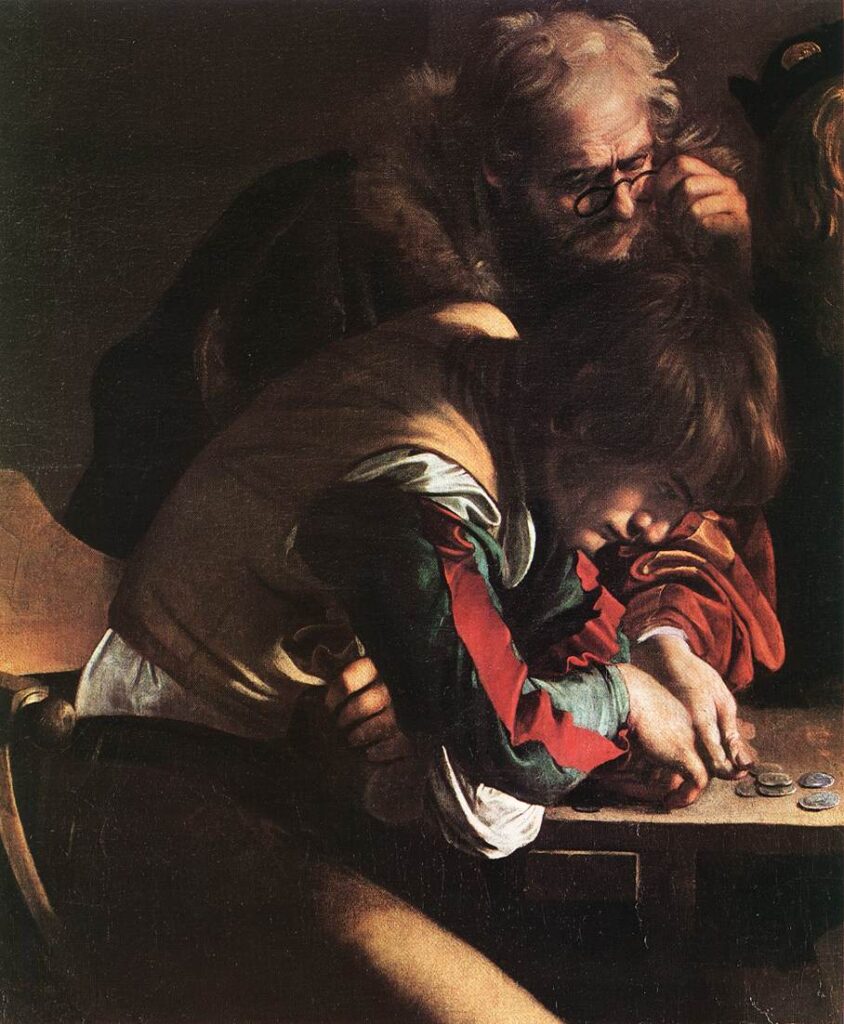
Caravaggio, The Calling of Saint Matthew, 1599–1600, San Luigi dei Francesi, Rome, Italy. Wikimedia Commons (public domain). Detail.
This group is painted in a contemporary setting, likely in the back room of a bar or tavern. The tax collectors wear rich, colorful clothing in the style of the 16th century. Some figures wear feathered hats, and one even has a pair of glasses. Many artists of the 16th century made unique choices for their subjects’ clothing style. Religious figures were painted in the style of the current day, with little regard to the clothing or setting of ancient Israel.
The tax collectors are outfitted with closed-toe shoes, contrasting with Jesus and the disciple beside him. Their feet are bare, and they wear a more classical drape and style. The juxtaposition of the rich clothing with the bare feet of Jesus further emphasizes the difference between Matthew’s old life and the new life he is being called into.
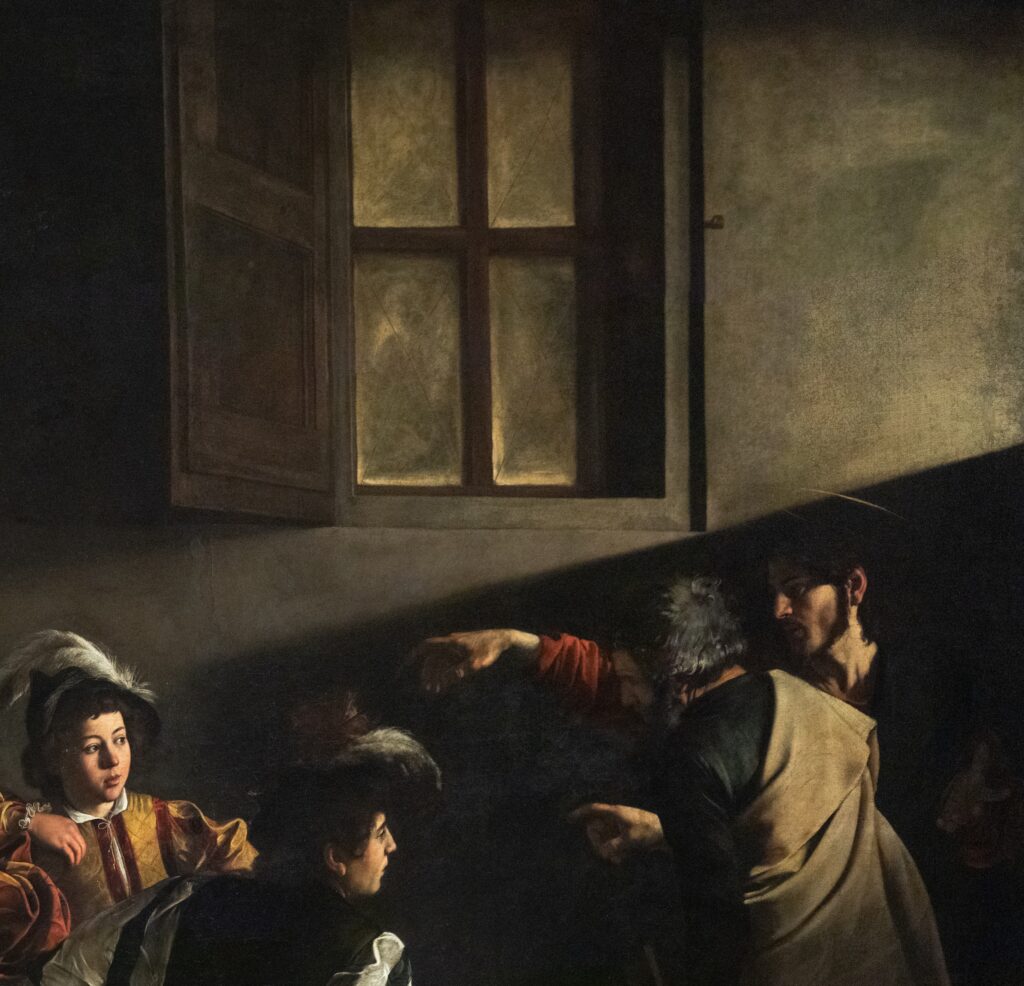
Caravaggio, The Calling of Saint Matthew, 1599–1600, San Luigi dei Francesi, Rome, Italy. Wikimedia Commons (public domain). Detail.
Caravaggio used lighting to emphasize the change in Matthew’s heart. The painting is dimly lit, with a few bright highlights. It’s a great example of tenebrism, defined by stark contrasts between light and shadow. The figures are brightly illuminated compared to the dark background, adding a sense of drama to the painting. There is no light source inside the room itself. The only light comes from behind Jesus. This light streams into the room, illuminating Matthew’s face.
Author’s Bio
Chloe Robinson is an artist and writer with a passion for art history. She has worked on collegiate-level research on the early life of Van Gogh. She is particularly interested in how religious themes and narratives are expressed in artwork.
“Matthew 9:9 (New International Version)” in Bible Gateway. Accessed Jun. 23, 2024.
The Church of St. Louis of the French, Aug. 27, 2019, Romeing. Accessed Jun. 23, 2024.
Beth Harris and Steven Zucker: Caravaggio, Calling of Saint Matthew, Nov. 18, 2015, Smarthistory. Accessed Jun. 22, 2024.
DailyArt Magazine needs your support. Every contribution, however big or small, is very valuable for our future. Thanks to it, we will be able to sustain and grow the Magazine. Thank you for your help!

This is our guest profile for occasional authors. If you have an interesting story about art to tell, send it to our Editor-in-chief Kate at [email protected]. You might be the next here!

Leigh is a writer, reader, art lover, radio nerd and herbalist based in Nashville, TN.
Judith and Holofernes is a Caravaggio masterpiece that captures Biblical murder and drama. Rarely has death been captured so intensely and violently...
James W Singer 13 September 2026
Explore an astonishing 1915 nude self portrait by American modernist painter Florine Stettheimer.
Candy Bedworth 21 September 2026
Winslow Homer (1836–1910) was one of the leading American Realist painters. His painting The Veteran in a New Field is a masterpiece of late...
James W Singer 30 August 2026
At first glance, A Goldsmith in His Shop (1449) appears to depict an ordinary visit to a jeweller. Yet Petrus Christus transformed an ordinary...
Shivani Gupta 23 August 2026