
Masterpiece Story: Judith and Holofernes by Caravaggio
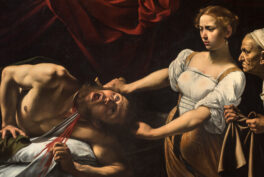
Judith and Holofernes is a Caravaggio masterpiece that captures Biblical murder and drama. Rarely has death been captured so intensely and violently...
James W Singer 13 September 2026
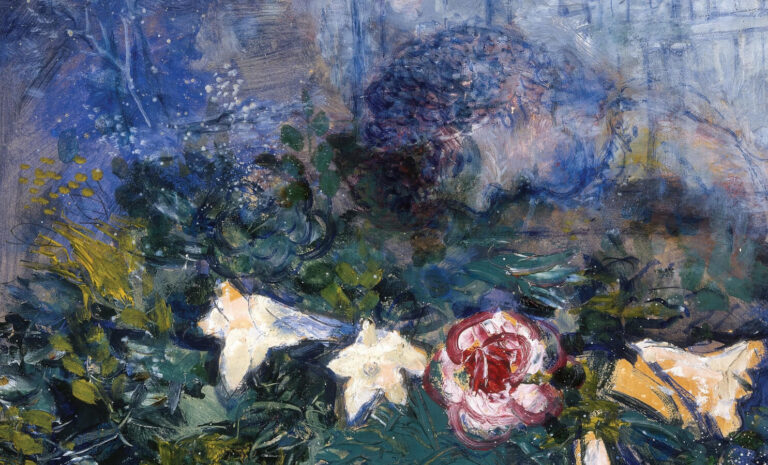
Marc Chagall, Leaning Over Flowers, 1927, Tel Aviv Museum of Art, Tel Aviv, Israel. Detail.
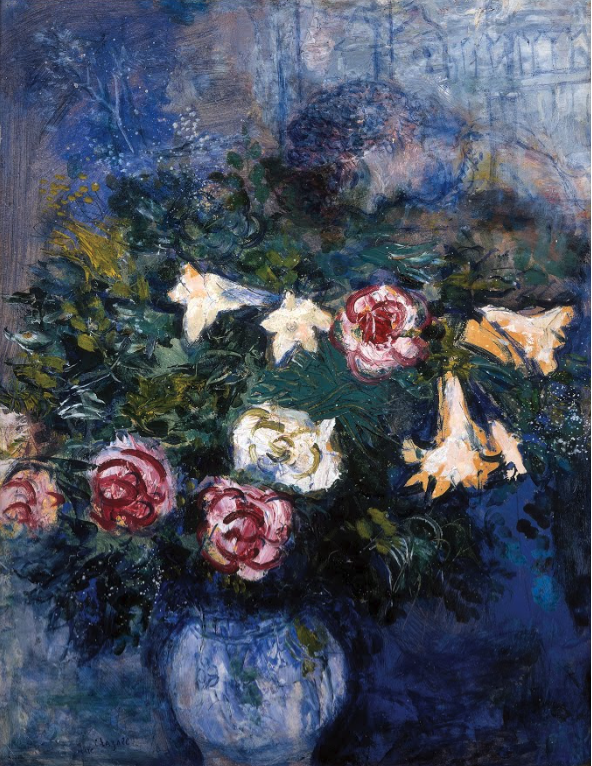
Leaning Over Flowers by Marc Chagall is a masterpiece of happiness, positivity, and floral imagery. The artwork not only depicts a moment of quiet tenderness toward nature, but also invites the viewer into a dreamlike world where the boundary between reality and imagination nearly disappears.
Marc Chagall (1887–1985) is one of the most famous Jewish artists in the Western art tradition. His paintings and stained glass windows reflect an innocence and positivity that attract the viewers’ gaze. He embraced Jewish folklore and child-like stories as the subjects of his depictions. Capturing the delights of love and simple pleasures was at the core of his signature style.
Marc Chagall, Leaning Over Flowers, 1927, Tel Aviv Museum of Art, Tel Aviv, Israel.
Marc Chagall was born in Vitebsk, Belarus, and the oldest of nine siblings. His family was extremely poor and Chagall struggled to acquire even the most basic of paint materials. However, he later escaped his poverty-stricken lifestyle when he received wide recognition for his poetic images. One such poetic masterpiece is Leaning Over Flowers, held in the Tel Aviv Museum of Art, in Tel Aviv, Israel.
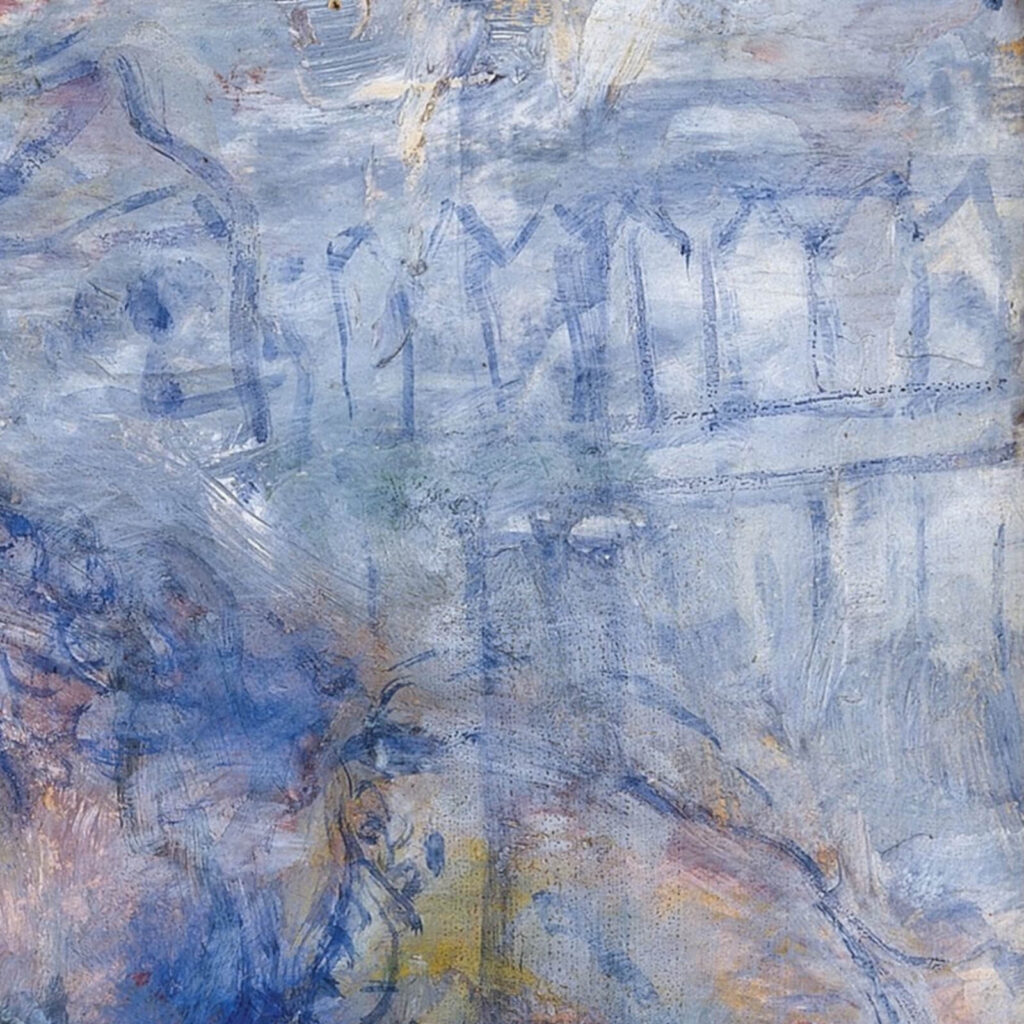
Leaning Over Flowers was painted in 1927 when the artist was living in Paris and struggling as a stereotypical starving artist. The image is gouache on paper and measures 48 by 62 centimeters (3.15 × 24.41 inches). It presents a simplistic image of a large bouquet in front of a window. However, curiously, a person standing outside is leaning through the window and over the flowers. A Parisian cityscape is seen in the upper right-hand corner.
Marc Chagall, Leaning Over Flowers, 1927, Tel Aviv Museum of Art, Tel Aviv, Israel. Detail.
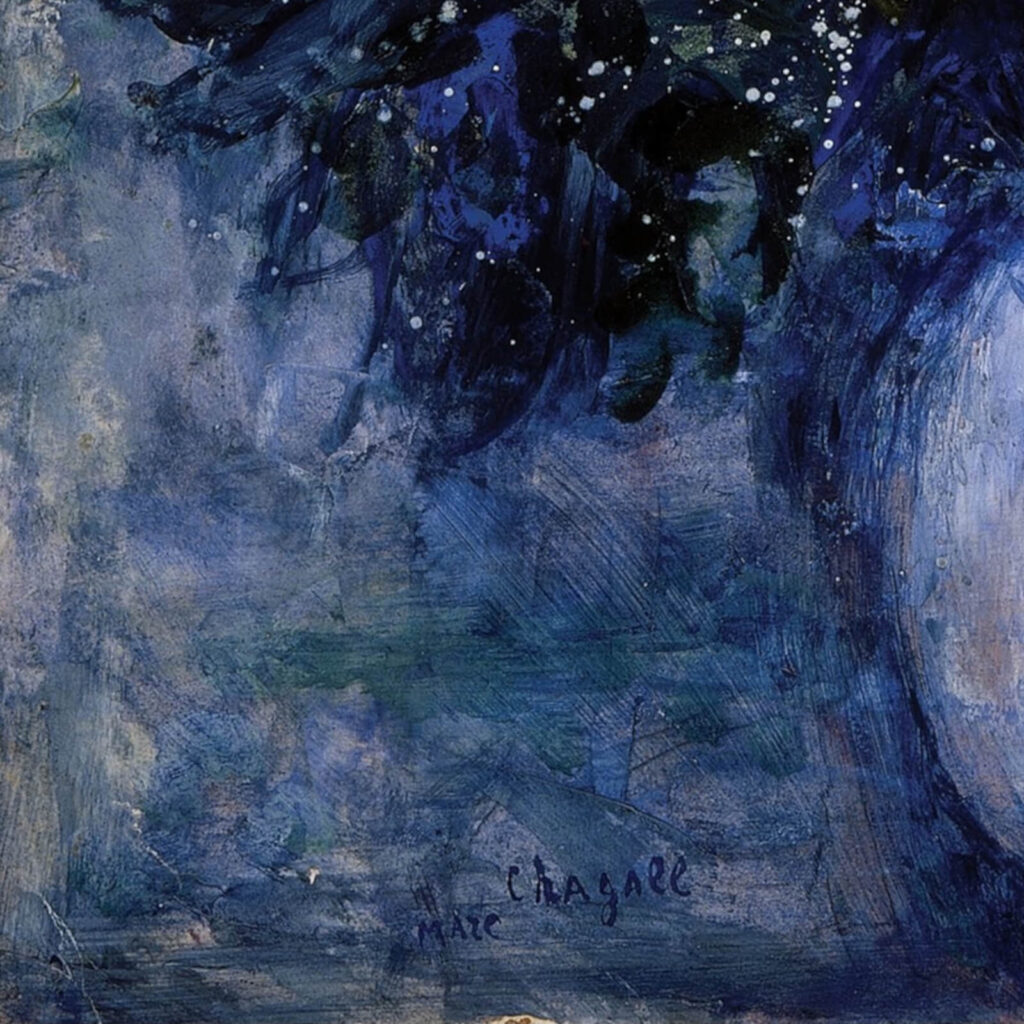
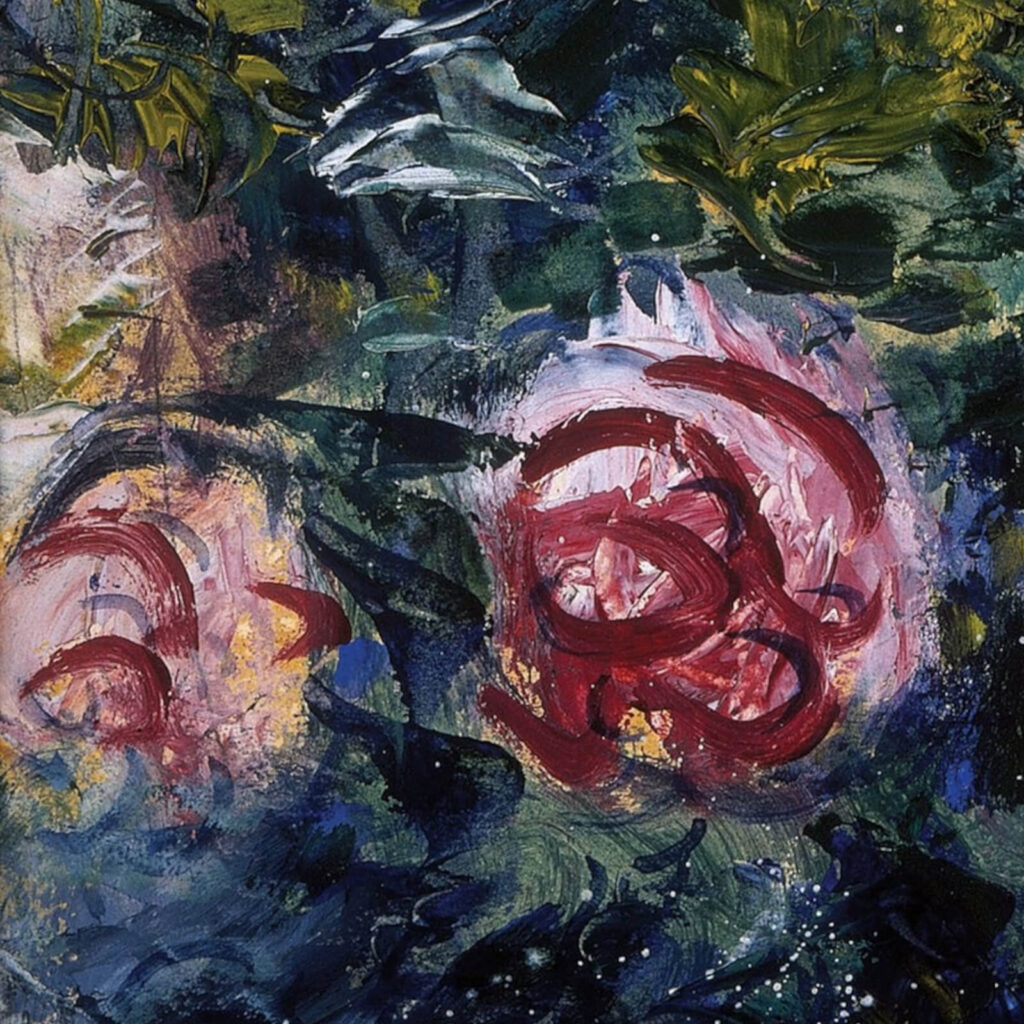
The painting is dominated by shades of blue and is very similar in style to Picasso’s blue period (1901–1904), two decades earlier. Everything is tinted with blue except for the leaves and flowers of the bouquet. Bright red roses, vibrant yellow lilies, and bold green leaves contrast against the blue atmosphere. With only four distinct colors, the painting has a limited palette, which creates a monumental and almost stained-glass effect. It could even be described as dreamlike.
Marc Chagall, Leaning Over Flowers, 1927, Tel Aviv Museum of Art, Tel Aviv, Israel. Detail.
The rhythmic placement of the flower heads and the repetitive lines and shadows create a harmonious visual pattern across the bouquet of flowers. It has an almost wallpaper effect with its regular floral profusions.
Marc Chagall, Leaning Over Flowers, 1927, Tel Aviv Museum of Art, Tel Aviv, Israel. Detail.
The figure dominating the upper right corner is believed to be a self-portrait of Marc Chagall. The figure’s deep-set eyes and curly hair certainly reflect the facial characteristics of the artist. However, Chagall does not include “self-portrait” for any other self-identifying indicator in the painting’s title. Therefore, while the figure may be visually based upon Chagall, it is not meant to be Chagall. This theory is more probable because this painting was created when Chagall was still an impoverished artist. He would not have been able to afford paying for a model, therefore he would have simply used a mirror and his reflection for his figural pieces.
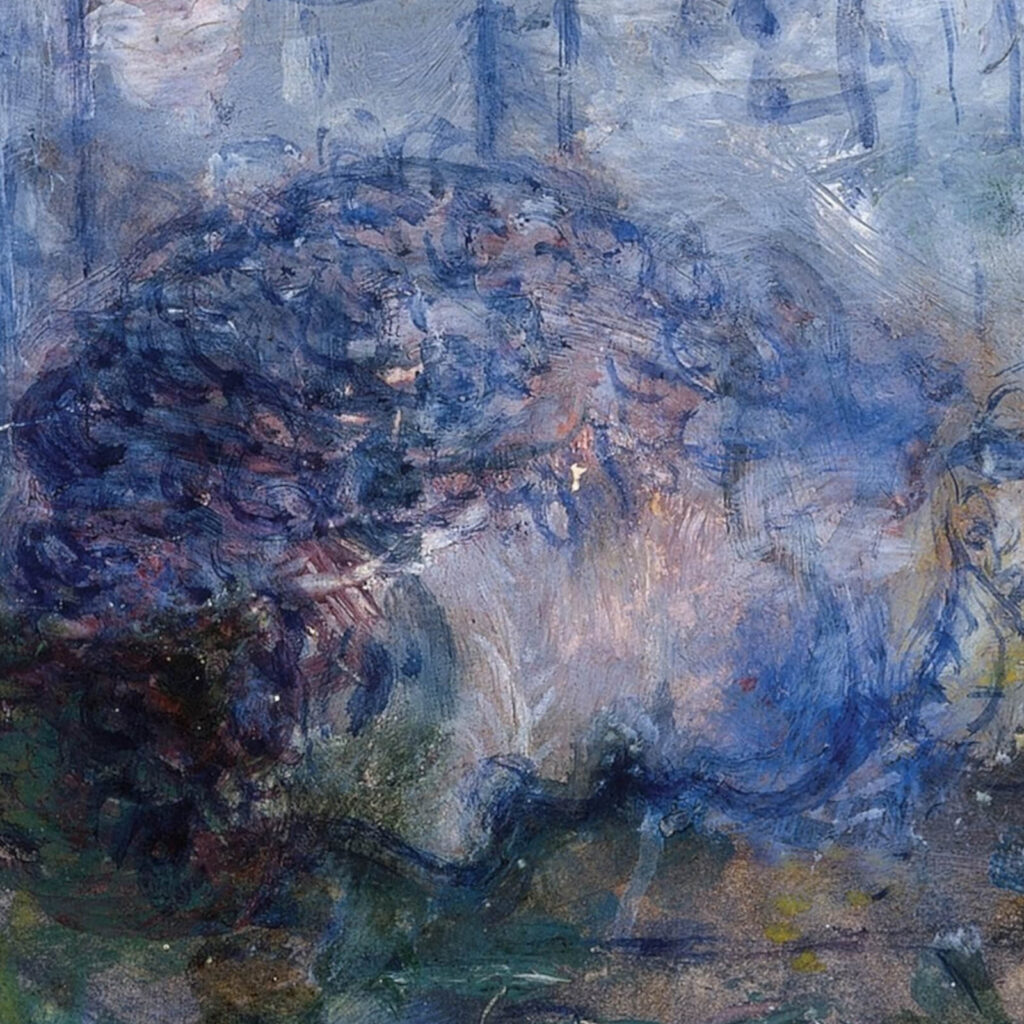
Marc Chagall, Leaning Over Flowers, 1927, Tel Aviv Museum of Art, Tel Aviv, Israel. Detail.
The figure (Chagall) stands outside the window in the exterior space. However, he leans through the window and over the flowers. He buries his face in the peripheral edge and reaches the perfume emanating from the bouquet. Does this figure own the domestic space and the flowers inside? Or is he a stranger who is passing by and is absorbed by the unguarded arrangement? Hopefully, it is the first situation because most people would be deeply surprised and even scared to find a stranger leaning through their window, into their domestic space, to smell their flowers.
Regardless of the figure’s relationship to the flowers, there is a certain simplistic pleasure in smelling flowers. There is a child-like innocence in his action – sometimes the greatest joys can be found in the smallest moments, and this is a message found frequently in Chagall’s images.
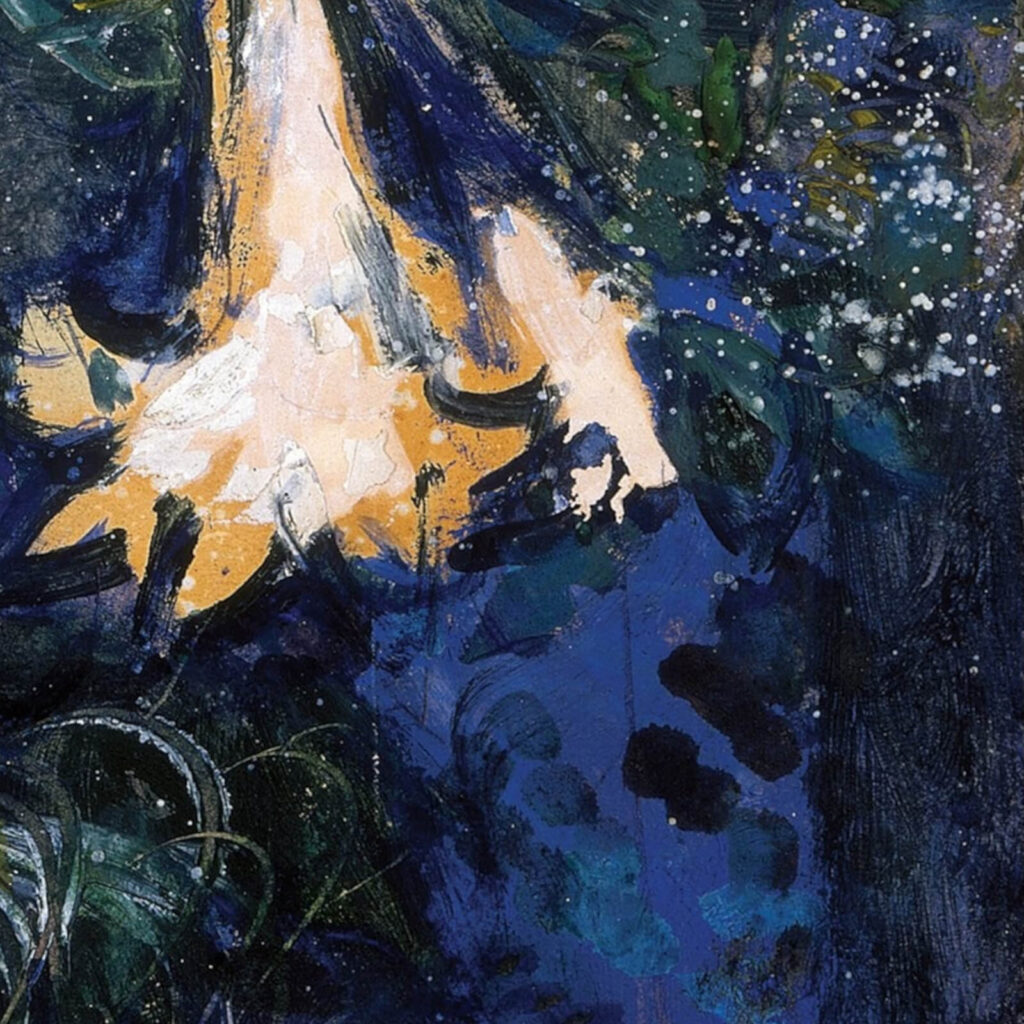
Marc Chagall, Leaning Over Flowers, 1927, Tel Aviv Museum of Art, Tel Aviv, Israel. Detail.
Marc Chagall’s life was punctuated by frequent hardship and the instability of wars and revolutions. He was affected by the Russian Revolution of 1905, World War I, the Russian Revolution of 1917, the Great Depression, and World War II. However, despite these cataclysmic events, Chagall’s images remain light-hearted and positive. They express the joys of love, the pleasures of nature, and the freedom of the imagination. Perhaps in our modern times, when extreme behavior and regional unrest are growing, Chagall’s images and fortitude are more relevant than ever.
Above the Flowers, marchagall.com. Retrieved 3 April 2026.
Leaning Over Flowers, Google Arts & Culture. Retrieved 3 April 2026.
Lesso Rosie, Wild and Wondrous World of Marc Chagall, The Collector. Retrieved 3 April 2026.
DailyArt Magazine needs your support. Every contribution, however big or small, is very valuable for our future. Thanks to it, we will be able to sustain and grow the Magazine. Thank you for your help!

James W. Singer is an art historian and fine art photographer. He earned a Bachelor of Arts in Art History from the University of Florida. He later moved to Paris, France. He currently writes “Masterpiece” articles for DailyArt Magazine.

Leigh is a writer, reader, art lover, radio nerd and herbalist based in Nashville, TN.
Judith and Holofernes is a Caravaggio masterpiece that captures Biblical murder and drama. Rarely has death been captured so intensely and violently...
James W Singer 13 September 2026
Winslow Homer (1836–1910) was one of the leading American Realist painters. His painting The Veteran in a New Field is a masterpiece of late...
James W Singer 30 August 2026
At first glance, A Goldsmith in His Shop (1449) appears to depict an ordinary visit to a jeweller. Yet Petrus Christus transformed an ordinary...
Shivani Gupta 23 August 2026
With Virgin and Child as a cornerstone of her reputation, Elisabetta Sirani should be recognized as an important Italian Baroque artist. Far more...
James W Singer 16 August 2026