
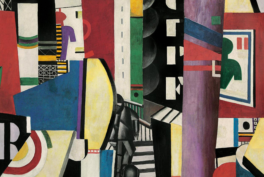
10 Iconic Cubist Paintings Every Art Lover Should Know
Back in the first half of the 20th century, these iconic Cubist paintings spurred a total revolution in Western art history. This article serves as a...
Errika Gerakiti 23 April 2026
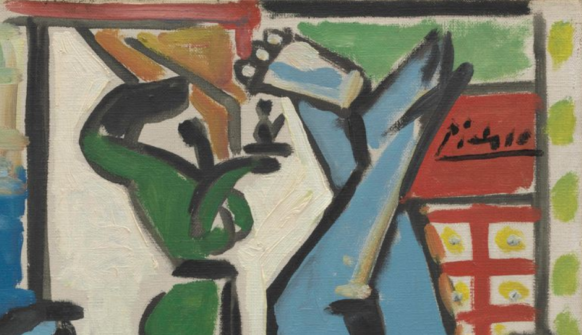
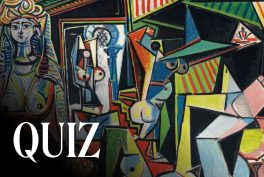
Pablo Picasso, Les Femmes d’Alger, 1955, San Francisco Museum of Modern Art, San Francisco, CA, USA. Detail.
On November 1, 1954, the Algerian War of Independence began between France and its colonial subjects in Algeria. About a month later, Pablo Picasso turned to the work of the great Romantic master Eugène Delacroix, starting a series of works that reinterpreted the famous Femmes d’Alger dans leur appartement (Women of Algiers in Their Apartment). Over the succeeding winter months, he produced 15 canvases, each a variation on the theme.
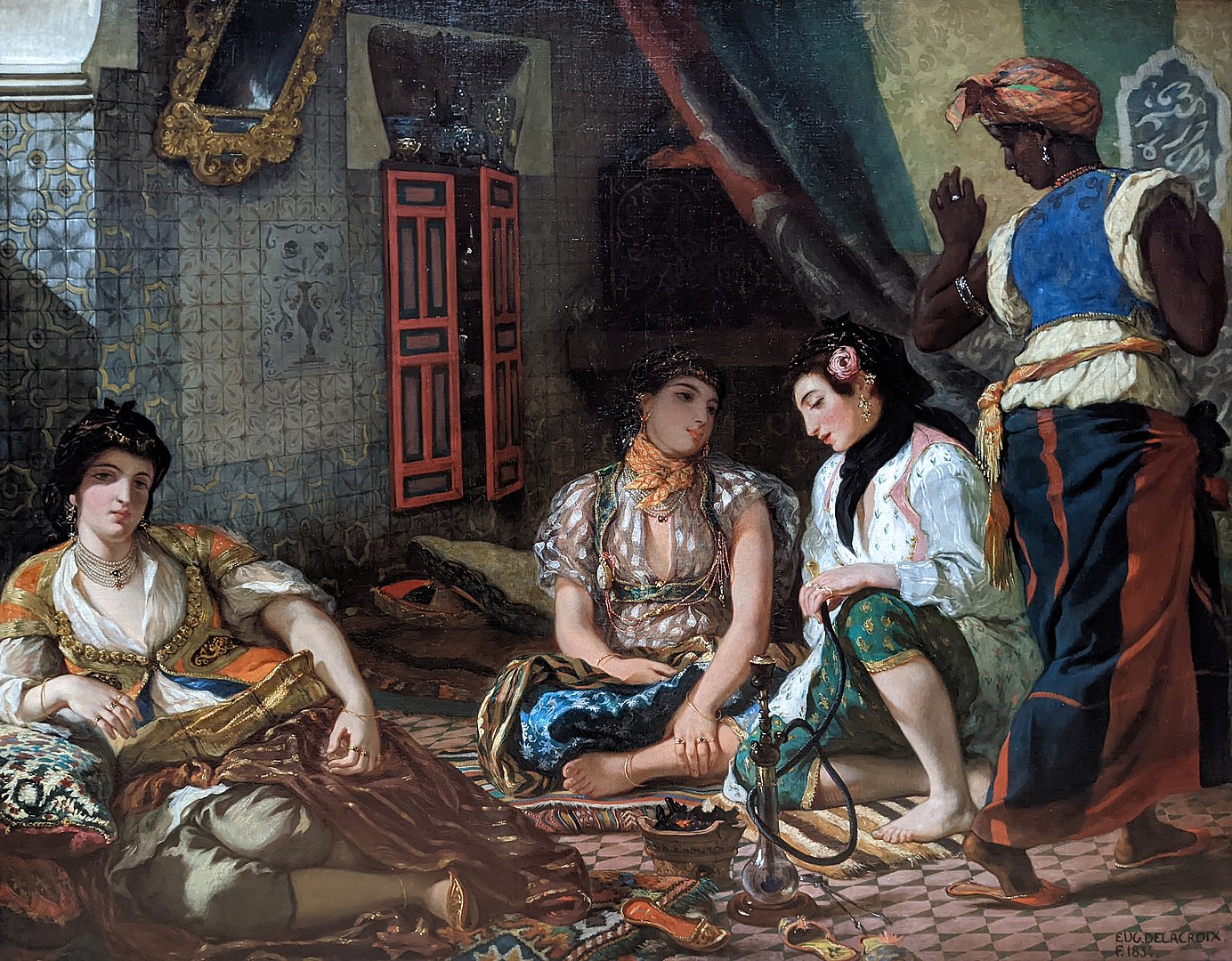
Picasso studied Delacroix‘s Women of Algiers in Their Apartment (1834 and 1849) at the Louvre. Françoise Gilot, a painter and partner of Picasso, wrote in 1964 that Picasso would go to the museum once a month to look at the painting. When Gilot asked him how he felt about Delacroix, he replied: “That bastard. He’s really good.” He produced many sketches that focused on women’s poses (seated versus lying down), the servant in motion, the curtain, and the water pipe.
The variety of movements and shapes allowed Picasso to explore the theme in his Cubist style, but also to include references to his contemporary, rival, and friend, Henri Matisse, who had died just six weeks before Picasso began the series. Matisse and Picasso held a deep mutual respect, as evidenced by Matisse’s statement that Picasso was the only person with the right to critique his work.
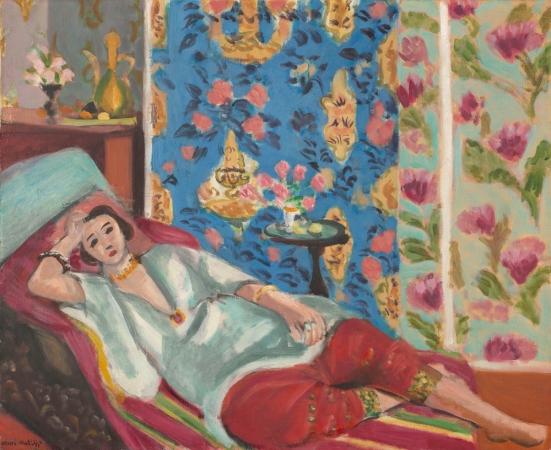
“When Matisse died, he left his Odalisques to me as a legacy,” Picasso said; hence the series can also be considered an elegy for his lost friend. The connection between Picasso, Matisse, and Femmes d’Alger goes deeper: Matisse had regarded Delacroix as a predecessor, particularly for his dynamic use of color and his recurring interest in Orientalist subjects.
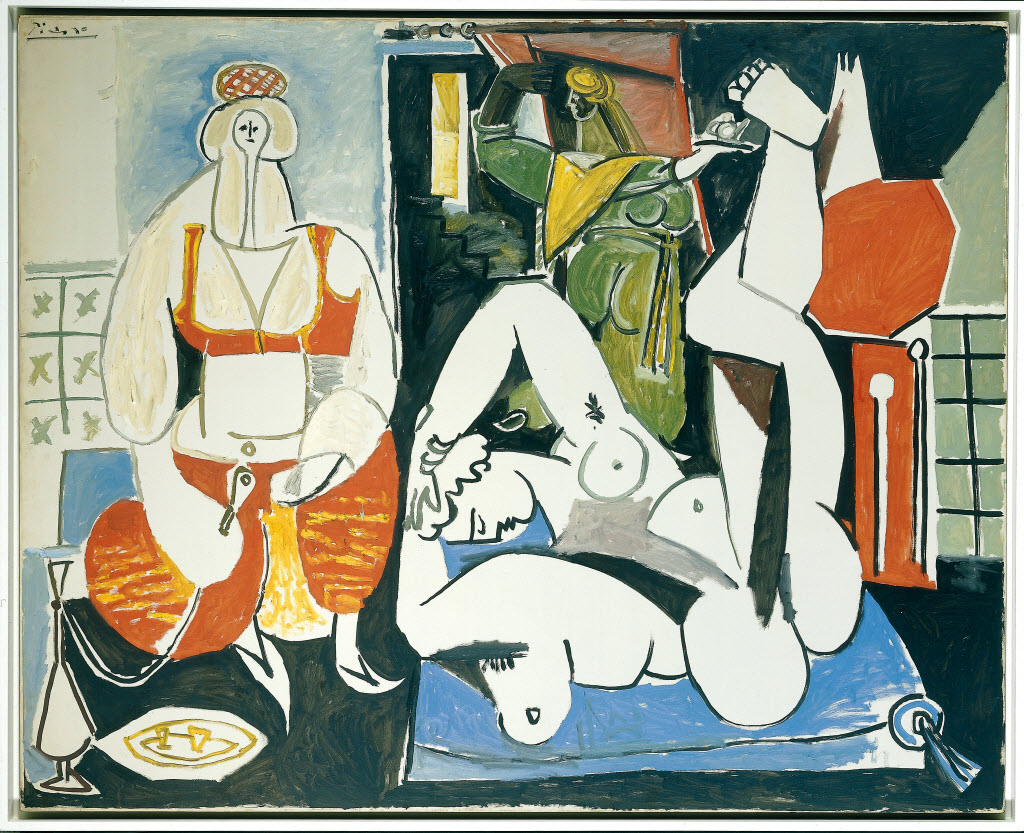
The works are labeled alphabetically (from A to O). The version shown above, H, resembles the first, A, in both color palette and composition. Picasso took the liberty of repositioning the reclining figure to the center and enlarging her.
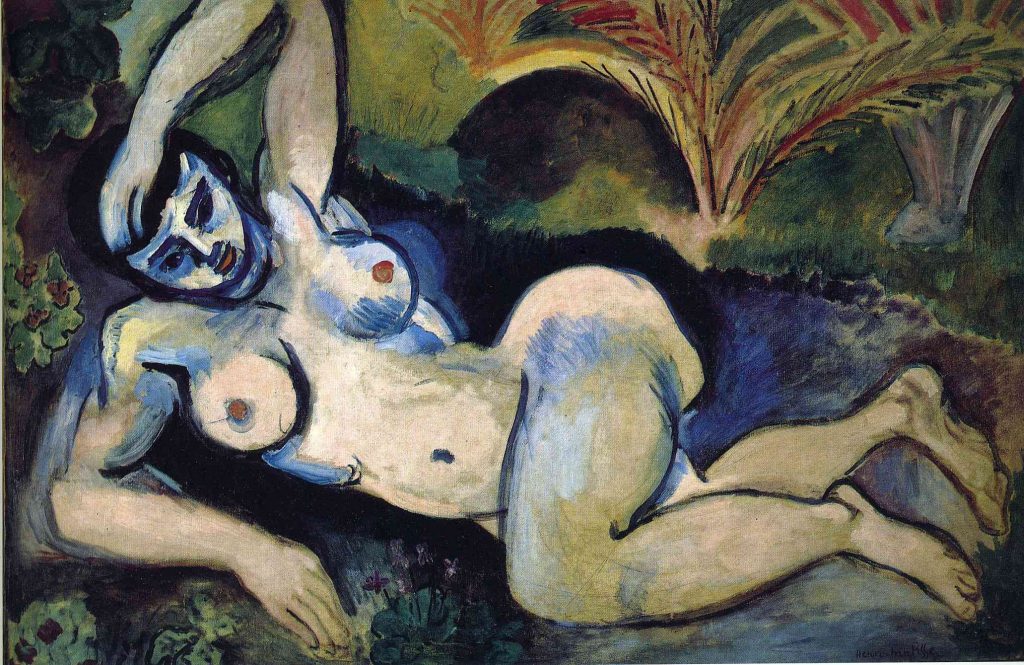
If you look at her pose, you can see a reference to Matisse’s controversial Blue Nude, which many considered too ambiguous in terms of the subject’s race, making it difficult to classify as colonial or not. In Chicago, it was even burned in effigy! Nevertheless, in 1907, it fascinated Picasso and Braque and inspired them to continue their Cubist experiments.
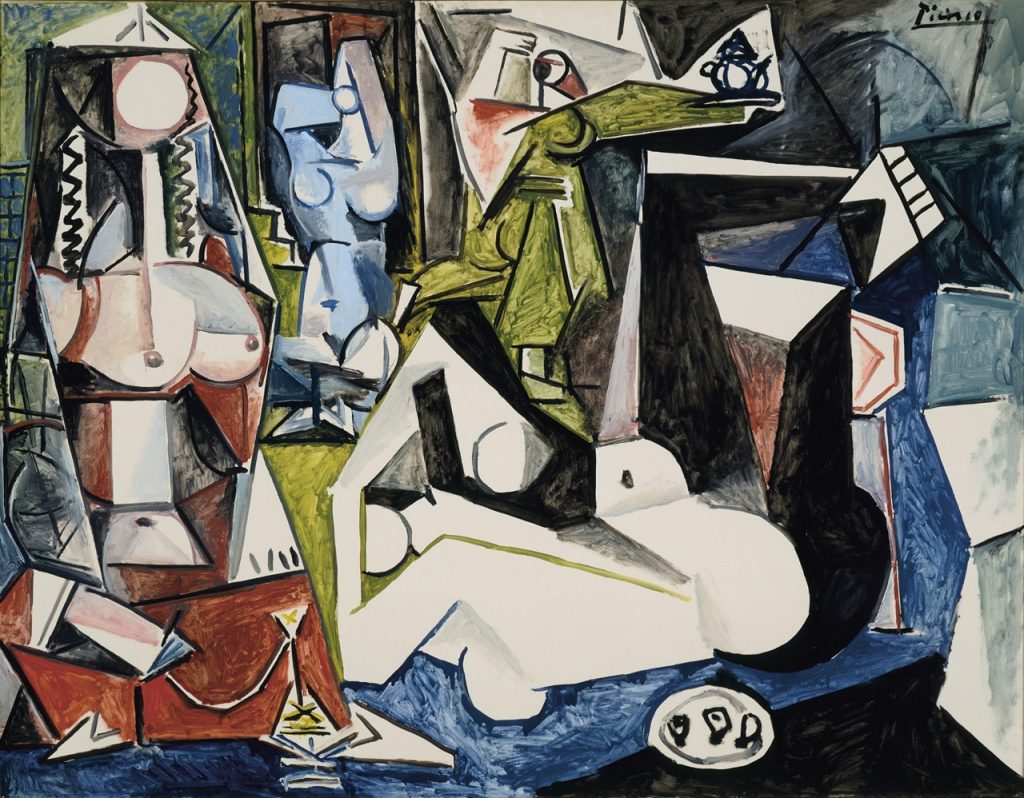
Each painting in the series is slightly different, with some leaning more toward abstraction and others retaining stronger figurative elements. In the painting above, dark colors dominate the composition, and the women’s bodies almost fuse with the geometric background. Notice how dynamic the figure of the servant is. She’s even holding a teapot!
Initially, all 15 works were purchased by Picasso collectors Victor and Sally Ganz in June 1956. They later sold 10 of the paintings and kept versions C, H, K, M, and O, which they hung in their apartment.
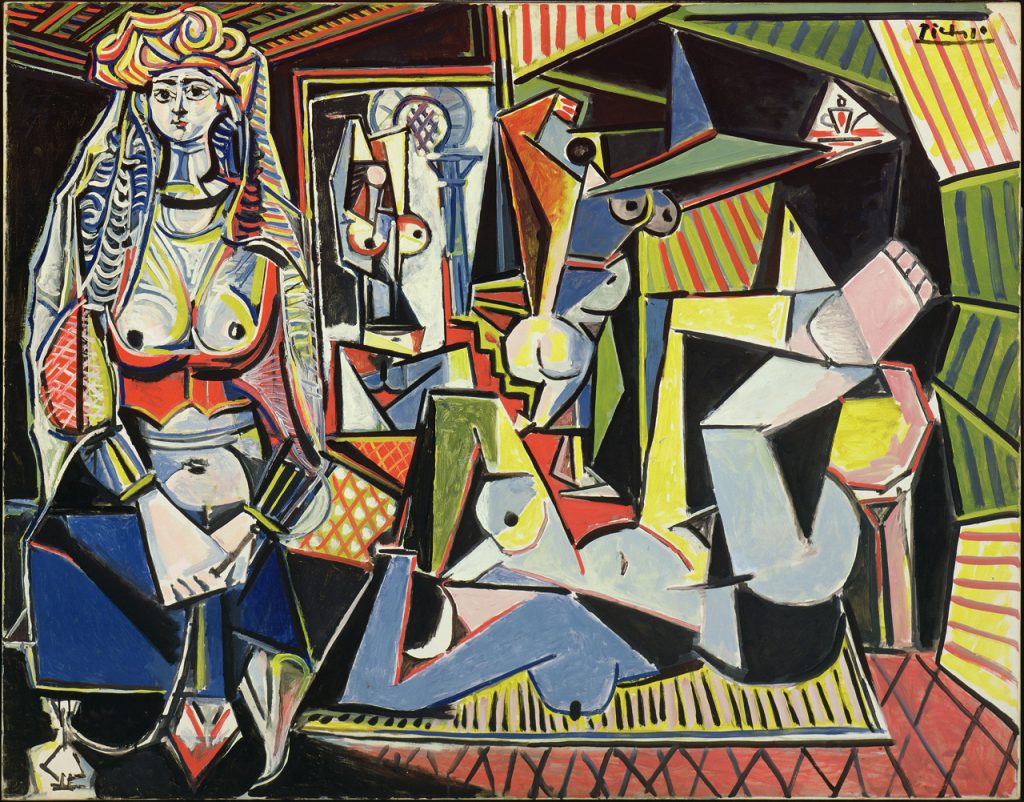
The final work in the entire cycle is a true spectacle of color and form. We can see Cubist fractured forms, flat planes, and a distorted sense of depth. The bright flat color patches clearly reference Matisse’s colorful cut-outs.
DailyArt Magazine needs your support. Every contribution, however big or small, is very valuable for our future. Thanks to it, we will be able to sustain and grow the Magazine. Thank you for your help!

Magda, art historian and Italianist, she writes about art because she cannot make it herself. She loves committed and political artists like Ai Weiwei or the Futurists; like Joseph Beuys she believes that art can change us and we can change the world.
Back in the first half of the 20th century, these iconic Cubist paintings spurred a total revolution in Western art history. This article serves as a...
Errika Gerakiti 23 April 2026
Ever wondered what it’s like to be raised by two world-famous artists? Pablo Picasso and Françoise Gilot shared a decade of creativity and family...
Szymon Jocek 6 October 2025
Everyone knows Pablo Picasso and considers him the father of Cubism. Everyone also knows that success has many fathers. Today, let’s talk about...
Joanna Kaszubowska 23 May 2025
Pablo Picasso, a prolific producer of paintings, prints, ceramics, and sculpture, his work has perhaps become over-familiar. Equally, in recent years...
Catriona Miller 23 May 2025