
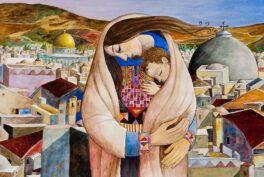
Sliman Mansour, Painter of Palestinian Resistance, Dies at 79
Sliman Mansour, one of the leading figures in Palestinian art, died yesterday at the age of 79. Mansour’s practice was profoundly intertwined...
Martha Teverson 25 August 2026
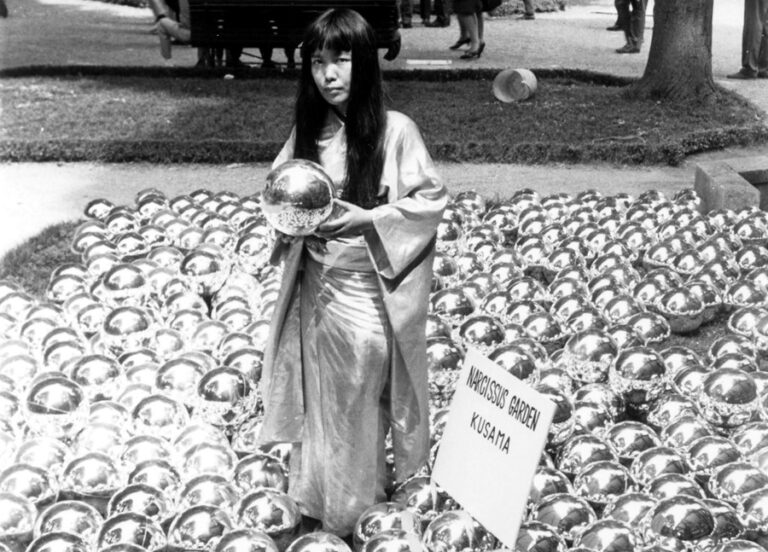
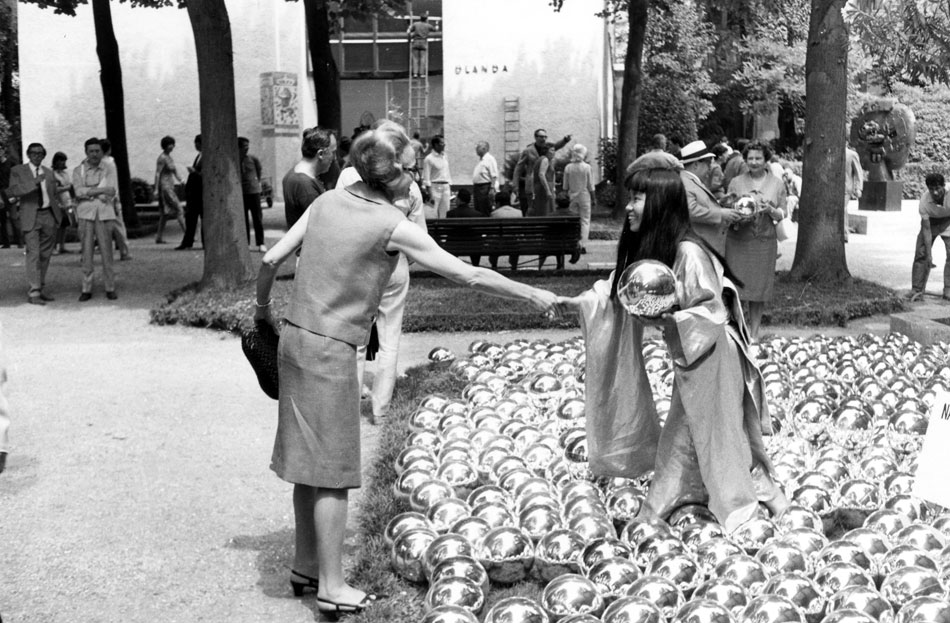
Yayoi Kusama, Narcissus Garden, 1966, 33rd Venice Biennale, Venice Italy. Dazed.
In 1966, Yayoi Kusama scattered 1,500 mirrored spheres at the Venice Biennale, selling them for two dollars each—blurring art, commerce, and narcissism in one dazzling gesture. Let’s take a look at Narcissus Garden—one of the most interesting works in Yayoi Kusama’s career.
Back in 1966, Japanese artist Yayoi Kusama (b. 1929) first exhibited one of her most iconic works, Narcissus Garden. It was presented during the 33rd Venice Biennale near the Italian pavilion. The installation featured 1,500 mirrored plastic orbs, which were laid on the ground, out in the open. Dressed in a golden kimono, Kusama stood among them, selling each orb to the visitors for two dollars. This act raised many questions: Was it commercial or high art? A performance or an installation?
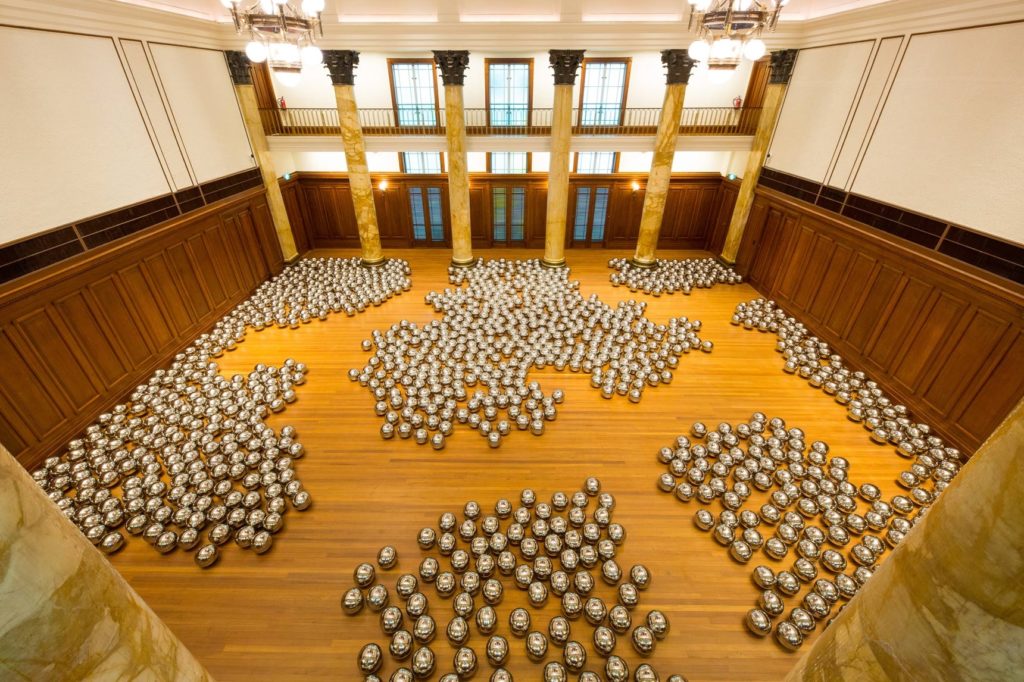
The name of the work was derived from Echo and Narcissus, a myth by Ovid. According to the story, Narcissus saw his reflection in a pond and became so captivated that he could not look away. Narcissus Garden transforms that pond into a field of mirrored orbs, and each visitor plays the role of Narcissus. The spheres were made for interaction, allowing visitors to see their reflection in them and even purchase them.
Today, many artists use mirrors in their art, from Anish Kapoor to Jeff Koons. But in 1966, mirrors were considered a non-traditional art material. Using them in a piece exhibited at one of the art world’s most prestigious events was a radical idea. And as if that weren’t enough, Kusama sold elements of the installation at the Biennale, criticizing the commercialism of the art world (which the Biennale itself was also accused of at the time). The artist was eventually expelled from the 33rd Venice Biennale and did not return until the 45th edition in 1993.
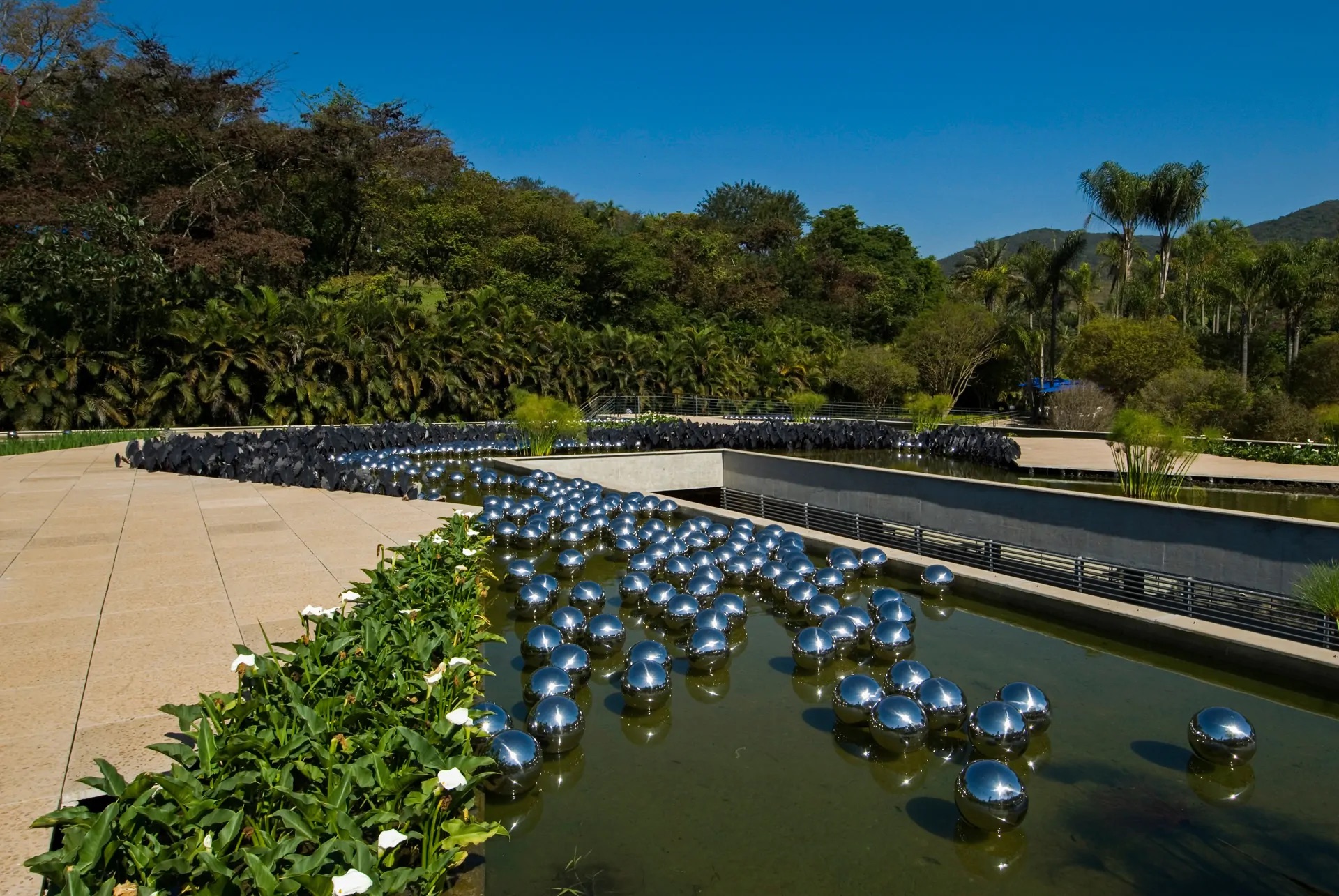
In later decades, Narcissus Garden was reinstalled in various settings, with the plastic spheres replaced by stainless steel. The artist’s presence was also removed. While the work lost its original context, it remains impressive. In 2009, the orbs were installed in a pond in the Inhotim Institute in Brazil. They floated on the water’s surface, constantly shifting with the changing wind and other climate conditions.
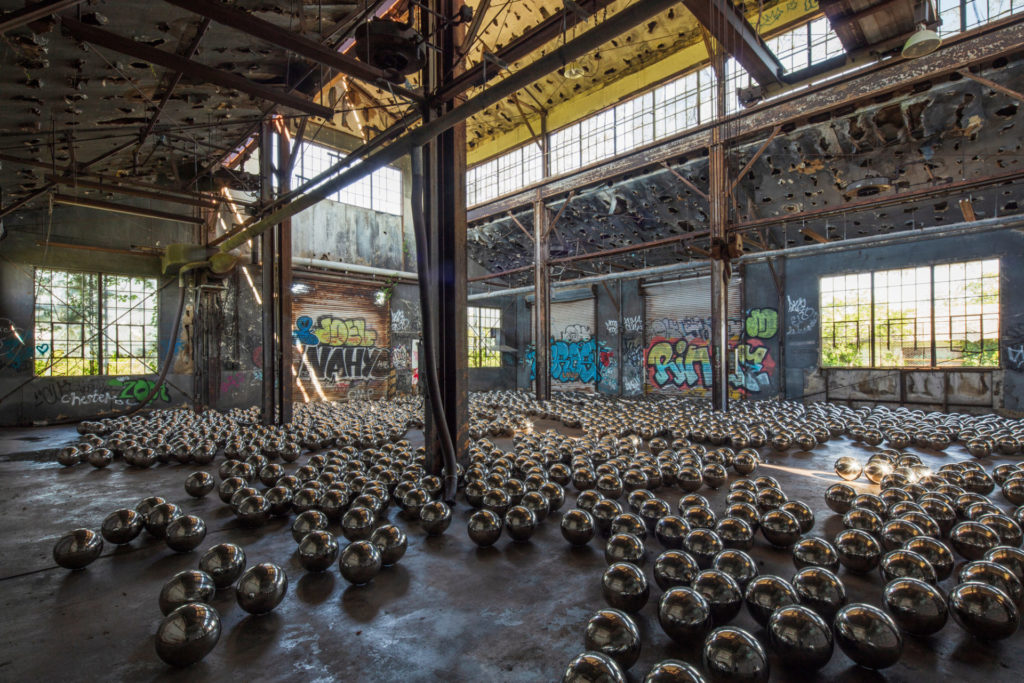
In 2018, MoMA presented Narcissus Garden at Fort Tilden, New York, as part of its Rockaway! festival. The former industrial space, with its decaying infrastructure and graffiti-covered walls, gained a striking new dimension through the shiny silver orbs scattered across the ground. The installation was somewhat reminiscent of Kusama’s rebellious act at the Venice Biennale.
Today, in the age of social media, the installation takes on new contexts and meanings. The reflective surfaces of the spheres tempt viewers to capture them on their phones and share them on Instagram and other platforms. After all, who could resist sharing something this visually striking with friends?
If you plan to see the Narcissus Garden, take your time to examine the spheres and notice how their surroundings affect them. You’ll see that the orbs, as a collective, create the impression of a reflective pond, inviting contemplation of both your appearance and your thoughts.
Narcissus Garden can currently be viewed at the Rubell Museum, Miami, FL, USA, until December 31, 2026 and at the Valley Gallery, Naoshima, Japan, where it is part of the permanent exhibition.
DailyArt Magazine needs your support. Every contribution, however big or small, is very valuable for our future. Thanks to it, we will be able to sustain and grow the Magazine. Thank you for your help!

Noa is an undergraduate Art History student who lives just outside Tel Aviv. She enjoys traveling the globe, visiting exciting art exhibitions and overanalysing the hidden symbolism of various TV shows.

Sliman Mansour, one of the leading figures in Palestinian art, died yesterday at the age of 79. Mansour’s practice was profoundly intertwined...
Martha Teverson 25 August 2026
There is a particular vertigo in crouching down to look at something the size of a fingernail. Since 2006, Slinkachu has built an entire career...
Errika Gerakiti 3 August 2026
Few would claim real shock at the loss of an artist a month shy of turning 89. And then David Hockney passed away on June 11. Born in 1937, the lad...
MJ Rivera 22 June 2026
Between marquee art fairs, auction-house madness, downtown openings, uptown previews, long-awaited gallery and museum exhibitions, and the artsy...
MJ Rivera 28 May 2026