
Masterpiece Series: Kitchen Table Series by Carrie Mae Weems
Artist Carrie Mae Weems was born in Portland, Oregon, USA. Now in her seventies, she is still actively working, and is considered one of America’s...
Candy Bedworth 1 February 2026
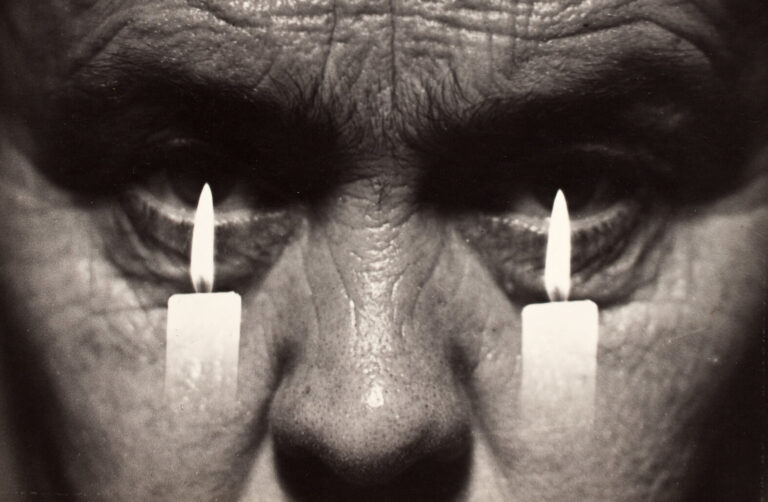
Zdzisław Beksiński, All Souls Day (Zaduszki), 1955, National Museum in Wrocław, Wrocław, Poland.
The name of Zdzisław Beksiński is mostly associated with surreal images filled with gloom and anxiety. Although the artist is mainly known for his paintings, his photographic oeuvre is equally fascinating and constitutes an important element of his work. These five key Zdzisław Beksiński photographs encapsulate his unique vision of the world. They provide an excellent opportunity to discover how the medium of photography became for him a tool to experiment with the human body, identity, and surreal imagery.
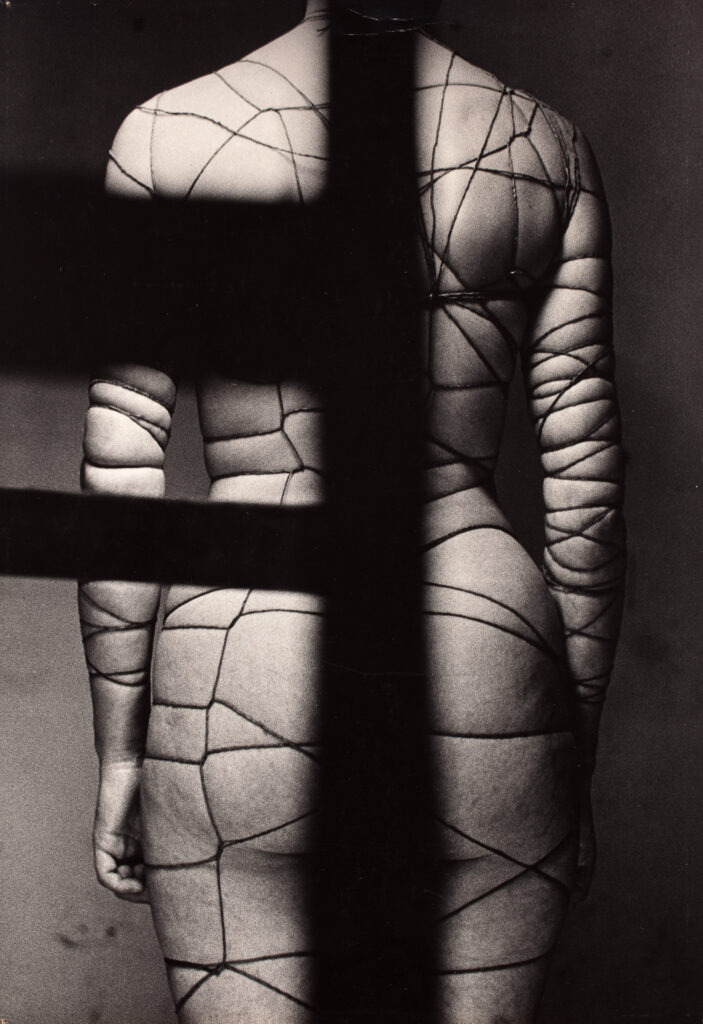
Zdzisław Beksiński, Sadist’s Corset (Gorset Sadysty), 1957, National Museum in Wrocław, Wrocław, Poland.
Sadist’s Corset is considered to be one of the most fascinating Zdzisław Beksiński photographs, provoking deep reflection on corporeality and how to represent it. In this photograph, the artist shows a woman whose body is intricately tied up with string. It loses its autonomy and changes to mere “meat”—an object of manipulation. Thus, Beksiński goes beyond the classic canons of aesthetics, presenting the human body as a thing, subjected to external actions and ready for consumption.
There is also an element of surprise, changing the tone of this work, in the form of a ladder which obscures a part of the body. This simple, yet significant measure, creates a distance between the body and the viewer, limiting its erotic aspect and lending the image a more disturbing character. Sadist’s Corset is also seen as a forerunner of body art—a trend in which a body becomes both an instrument of expression and the object of transformation.
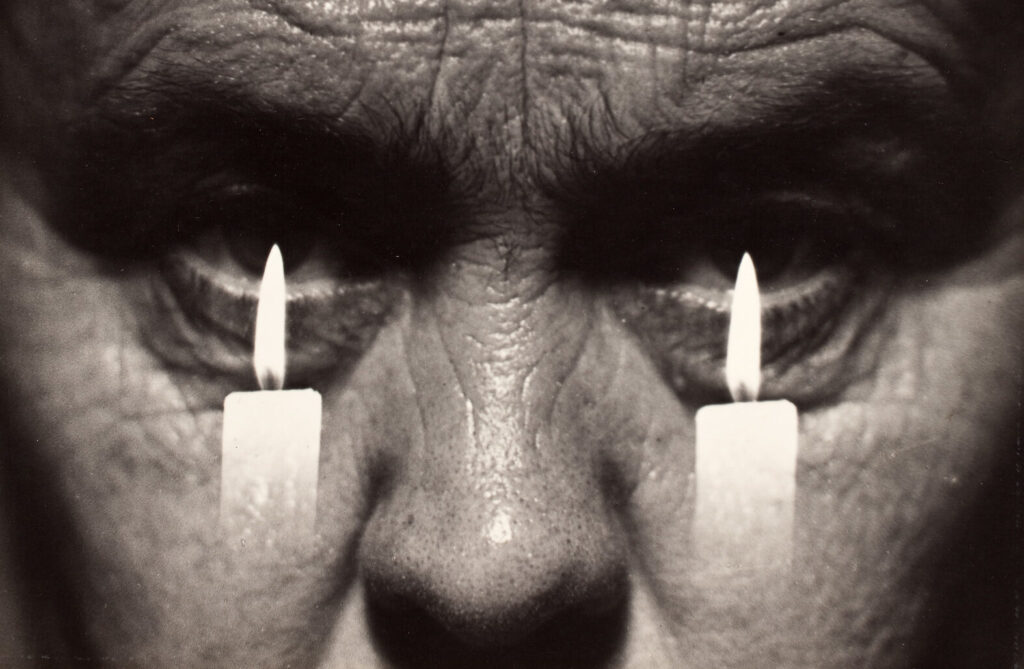
Zdzisław Beksiński, All Souls Day (Zaduszki), 1955, National Museum in Wrocław, Wrocław, Poland.
The photograph entitled All Souls Day, a portrait of Beksiński’s mother, represents one of his most important works, deeply imbued with Surrealism. A close-up of his mother’s face, with images of two burning candles placed in front of her eyes, evokes angst, whilst the glimmering light introduces a metaphysical atmosphere.
Here, Beksiński addresses the subject of the boundary between life and death. He poses the question about the presence and the absence. This photograph is a portrait, yet at the same time a reflection on the frailty of existence, full of mystery and inexplicable tension.
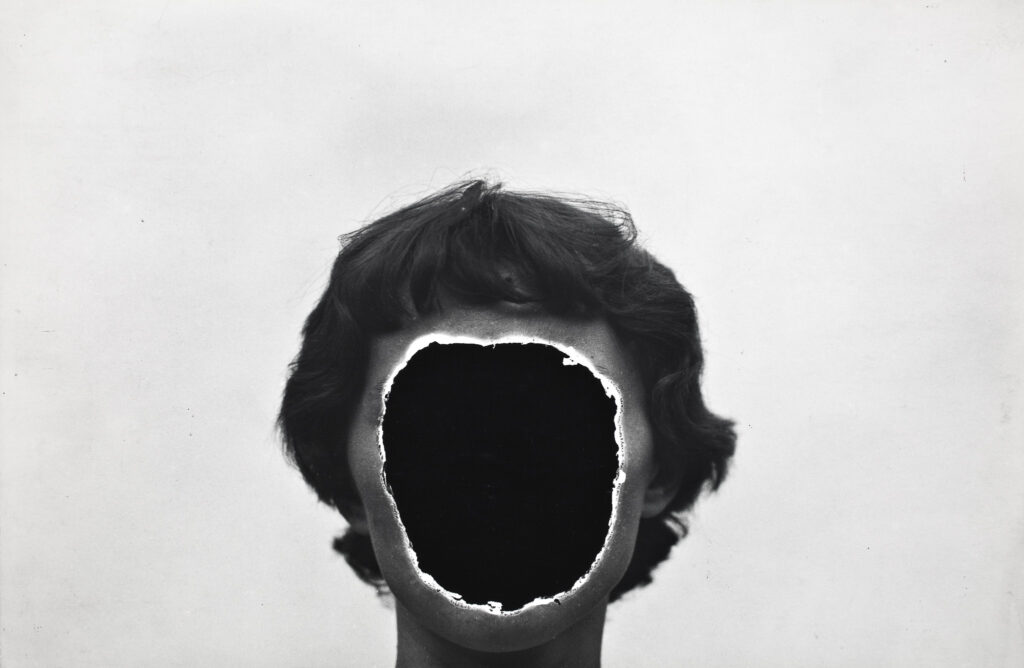
Zdzisław Beksiński, Girl (Dziewczyna), 1957, National Museum in Wrocław, Wrocław, Poland.
Girl is among the most striking Zdzisław Beksiński photographs, which illustrates to perfection the artist’s fascination with the deconstruction of the human form. The work conducted on the human body, which is subjected to intensive measures of composition—cutting, contrasting, and multiplying—leads to the loss of identity of the presented figure.
In place of the recognizable face, there is a mysterious black void. In this way, Girl becomes an anti-portrait, in which a person ceases to be an individual, becoming just an impersonal matter. Beksiński applies brutal analysis to a human form, obliterating any traces of individuality in favor of pure plasticity.
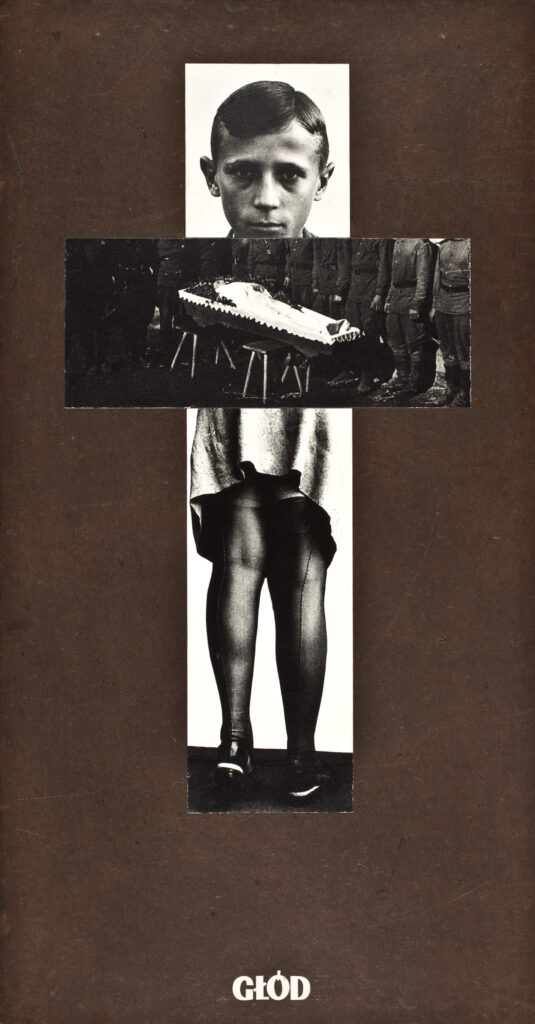
Zdzisław Beksiński, Hunger (Głód), 1958–1959, National Museum in Wrocław, Wrocław, Poland.
The photograph titled Hunger constitutes part of the series known as The Sets (Zestawy), which was presented by Beksiński at the exhibition Pokaz Zamknięty (Private Viewing) in 1959. It is considered one of the key moments in the history of Polish photographic art. Unlike the traditional approach to photography, which usually captures a single, closed image, Beksiński used the technique of collage in order to evoke nonobvious associations and ambiguous interpretations.
The work combines the photographs of a boy, a woman’s legs, and a coffin, creating images that escape clear interpretation. In this way, the artist not only explored existential subjects but also deconstructed the concept of photography as a document. He broke through the boundaries of realism and opted for surrealist and symbolic deliberations.
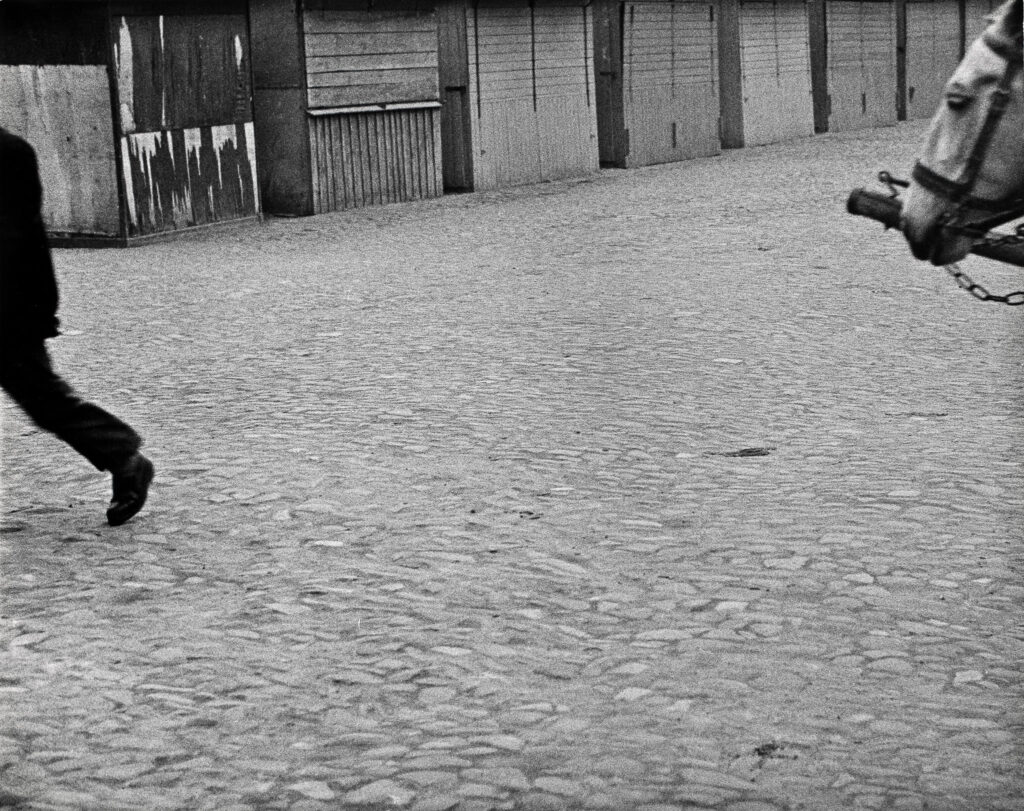
Zdzisław Beksiński, Province (Prowincja), 1958, National Museum in Wrocław, Wrocław, Poland.
Province is one of the most characteristic Zdzisław Beksiński photographs, demonstrating his unique ability to perceive deep, universal dimensions of human drama in seemingly ordinary, everyday scenes. Despite living in a small town, the artist was able to capture images, which—seemingly trivial—comprised the emotional content of unexpected depth.
By making as many as 70 prints of this frame, Beksiński aimed at perfection, typical of him as an artist. He was capable of staying for hours at the same spot, waiting for the right moment to capture what was ephemeral and yet highly evocative, as if trying to stop time at its most significant point.
You can see these and other haunting photographs of the artist at The Phenomenal Zdzisław Beksiński—on view at the Four Domes Pavilion—Museum of Contemporary Art in Wrocław, Poland until August 24, 2025.
Author’s bio:
Aleksandra Szwedo is an art historian, curator, and photography researcher specializing in women’s history in photography and alternative visual narratives. She works at the National Museum in Wrocław, focusing on feminist reinterpretations of the medium and uncovering the overlooked contributions of women photographers.
Get your daily dose of art
Click and follow us on Google News to stay updated all the time

DailyArt Magazine needs your support. Every contribution, however big or small, is very valuable for our future. Thanks to it, we will be able to sustain and grow the Magazine. Thank you for your help!

This is our guest profile for occasional authors. If you have an interesting story about art to tell, send it to our Editor-in-chief Kate at [email protected]. You might be the next here!

Univ. of New Orleans, Fine Arts and History; Fine Artist, Professional Graphic Designer, Art Historian, Historian, Musician, worked at the New Orleans Museum of Art and MS Museum of Art; learning enthusiast!
Artist Carrie Mae Weems was born in Portland, Oregon, USA. Now in her seventies, she is still actively working, and is considered one of America’s...
Candy Bedworth 1 February 2026
Tadeusz Rolke, hailed as an icon and legend of Polish photojournalism, died in his native Warsaw in July 2025, at the age of 96. He dedicated his...
Guest Author 6 October 2025
Salvador Dalí and Philippe Halsman’s 37-year collaboration challenged viewers and revealed connections between the traditionally realistic medium...
Theodore Carter 24 October 2025
Helmut Newton is considered one of the most important fashion photographers of all time. He often surprised and divided audiences by blending...
Nikolina Konjevod 7 July 2025