
Nakedness or Nudity? To Be a Woman Is to Perform
Throughout the centuries, women’s bodies have consistently been staged for display rather than simply allowed to exist. John Berger’s...
Guest Author 12 March 2026
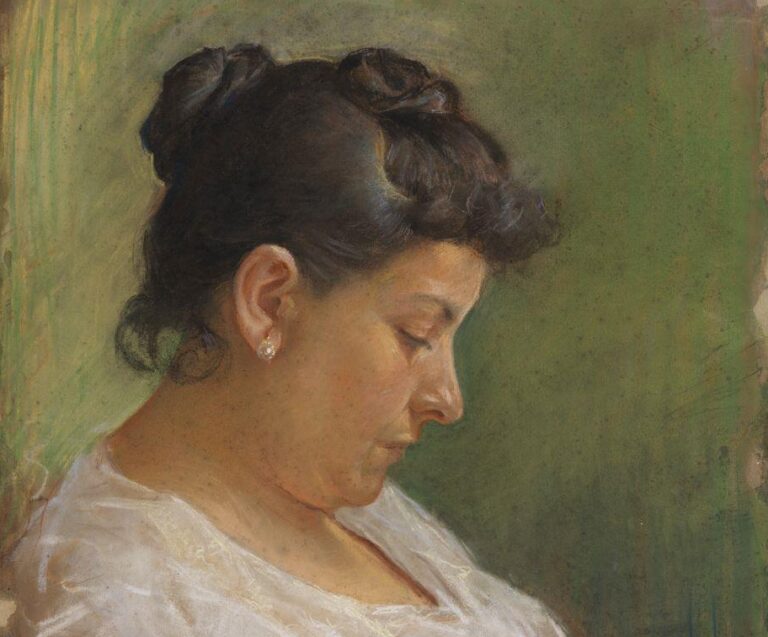
Pablo Picasso, The Artist’s Mother, 1896, Museu Picasso, Barcelona, Spain. Detail.
Picasso is usually thought of as a genius who by a divine miracle possessed inexplicable artistic talent. This would probably annoy Picasso, because that “miracle” included hours of work, creative discipline, and a deep, sensitive intuition cultivated since childhood. Let’s review Picasso’s early years, which show how technique and sensitivity cemented the artist who would redefine 20th-century art.
It seems that, in our collective consciousness, we unconditionally elevate Picasso to the status of “genius,” referring to a kind of metaphysical gift that seems to justify Picasso’s subsequent artistic brilliance. Although extraordinary artists are obviously endowed with innate gifts, Picasso—like any other artist—was not born with “genius.”
Yes, genius may be based on the small, intelligible flame that some are offered by divine grace—but that flame must be fanned. Similarly, Picasso had to earn a dedicated artistic career sustained by dedication, artistic sensitivity, and effort.
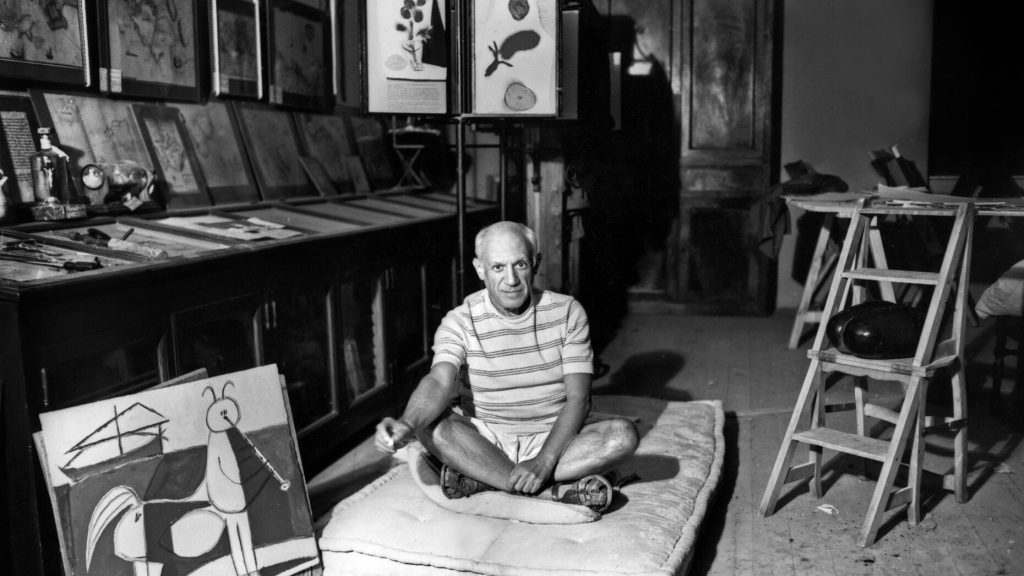
Pablo Picasso in his studio. P55.Art.
When any of us think of Picasso’s work, what comes to mind are impossible portraits, complex perspectives, and the occasional object that we cannot quite visualize. However, his earliest works demonstrate enormous technical skill that foreshadows the gesture and psychological depth of his later works. The images below are works that Picasso produced in his early years. These works, unconcerned with the acclaim they would receive, reflect the profound human and personal aspirations that Picasso began to capture on canvas, an attitude he never abandoned, and which would elevate him to the status of the paradigm of 20th-century art.
Picasso was born in Malaga in 1881 in a family of artists. His father, José Ruiz y Blasco, was a drawing teacher at the Provincial School of Fine Arts in Málaga. After receiving his first lessons in oil painting from him, in 1891, at the age of just nine, he painted his first work on the wood of a cigar box.
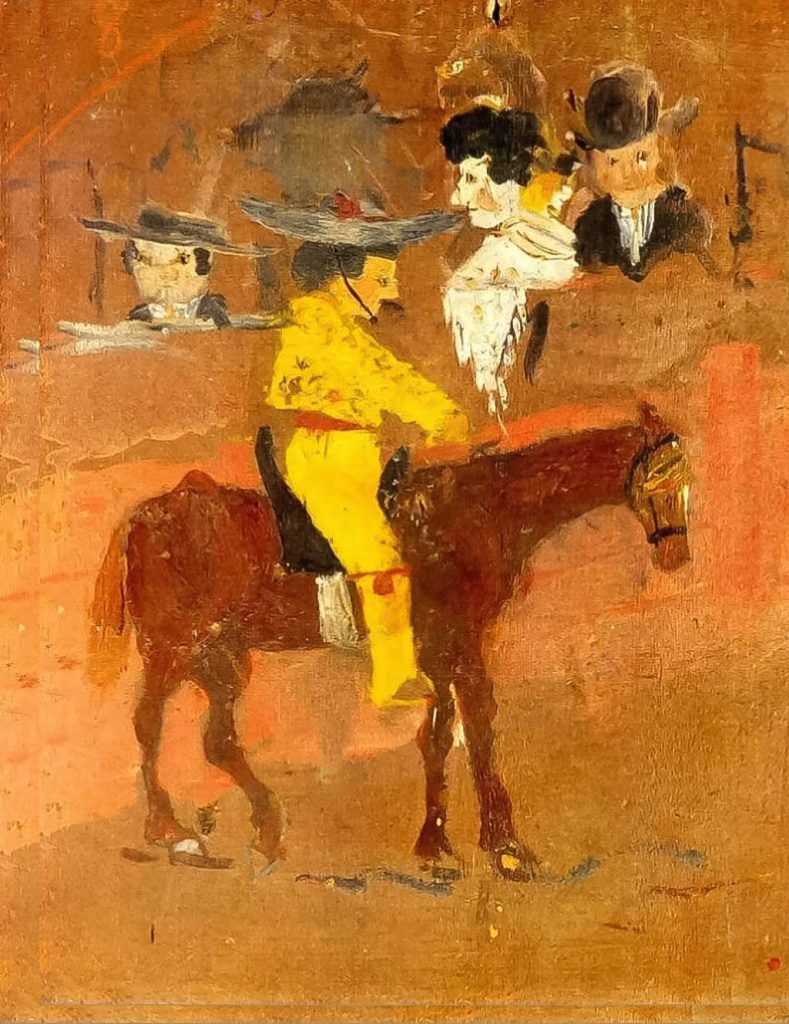
Pablo Picasso, The Little Yellow Picador, 1889, private collection. PabloPicasso.org.
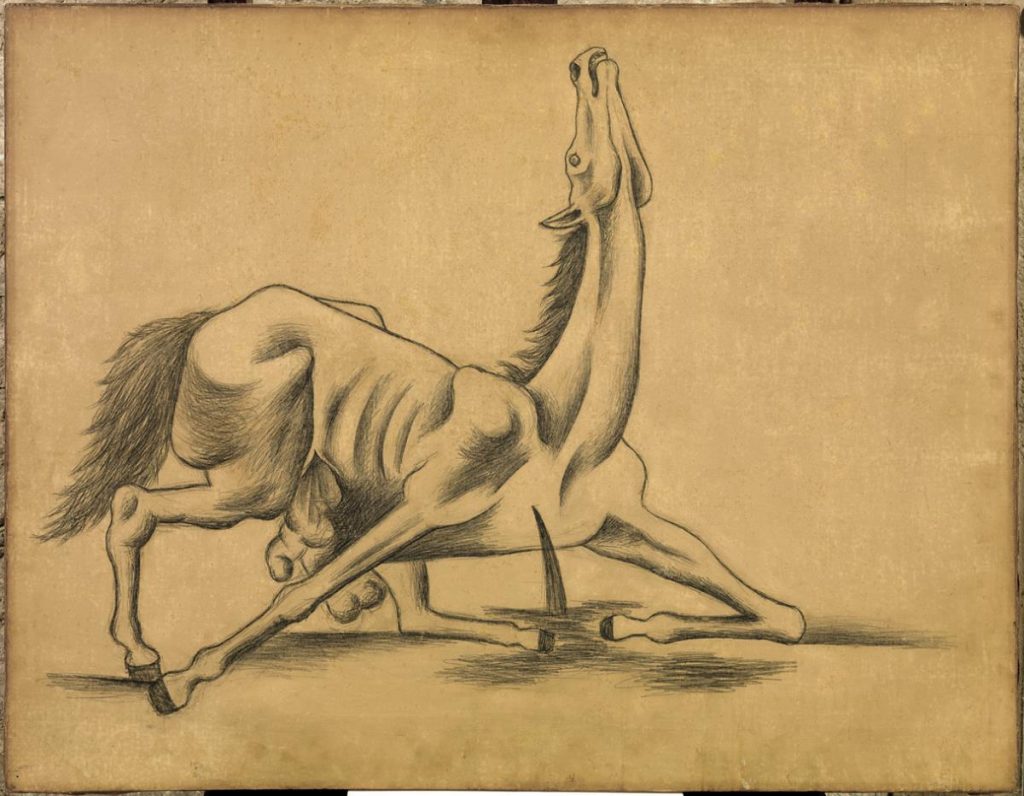
Pablo Picasso, Gored Horse, 1917, Museu Picasso, Barcelona, Spain.


It seems that sensitivity knows no age; Picasso gives us a first glimpse of his in this very special work.
17 years after painting Yellow Picador, Picasso portrays the same animal, this time dying and breathing its last breath after being gored. The horse, an animal that has fascinated artists since prehistoric times, did not leave Picasso indifferent. This animal would accompany him in his work from Yellow Picador onwards. He would portray it in a friendly, but also poignant way: take a look at Caballo Corneado, which he painted 17 years after Picador Amarillo.
The Little Yellow Picador reflects Picasso’s closeness to the world of bullfighting—an aesthetic closeness that would always be reflected in his work. Picasso offers us a first glimpse of his naive and endearing style, which includes one of the most frequently used elements in his later work: the horse.
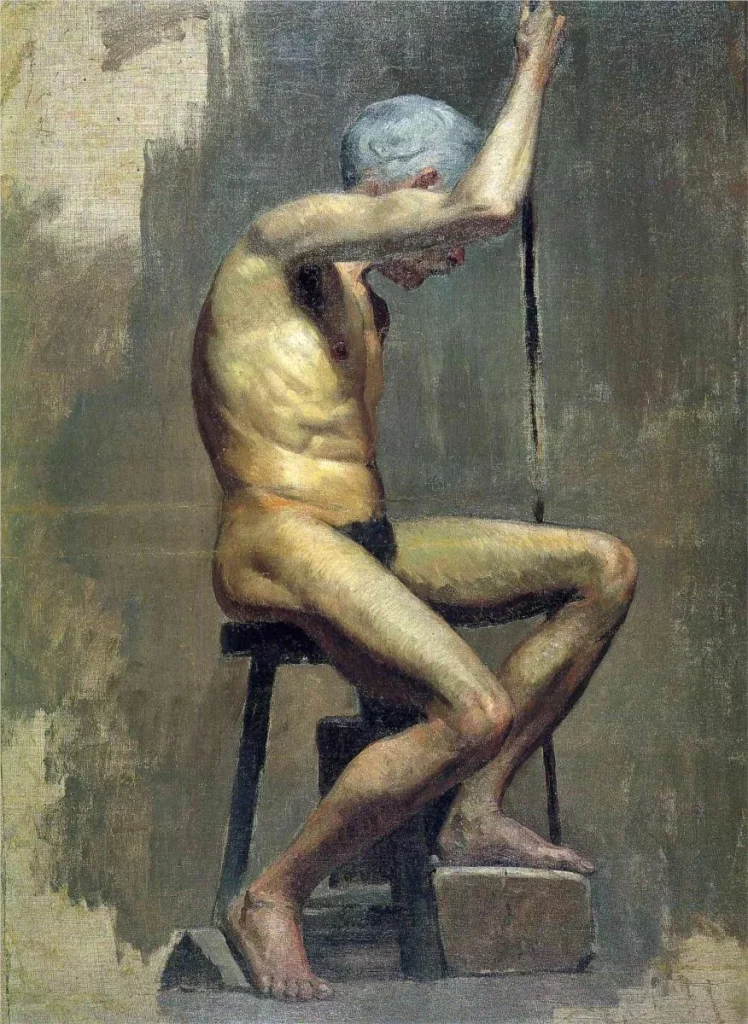
Pablo Picasso, Academic Study, 1895, Museu Picasso, Barcelona, Spain.
…I was not yet a genius… I lacked the clumsiness of a child, his naivety…
Michael Fitzgerald, Picasso: The Artist’s Studio, 2001.
He was only 13 years old when Picasso began studying at the School of Fine Arts in Barcelona, as his father, José Ruiz Blasco, had been transferred to work as a professor at the Escola de la Llotja. In this academic study, we see Picasso’s technical precocity. This young man from Malaga was so talented that his father (also an artist) gave him his brushes and palette and promised never to paint again in his life. Although Picasso produced drawings of extraordinary academic precision, he would later say that he missed the awkwardness and simple clumsiness that a child has.
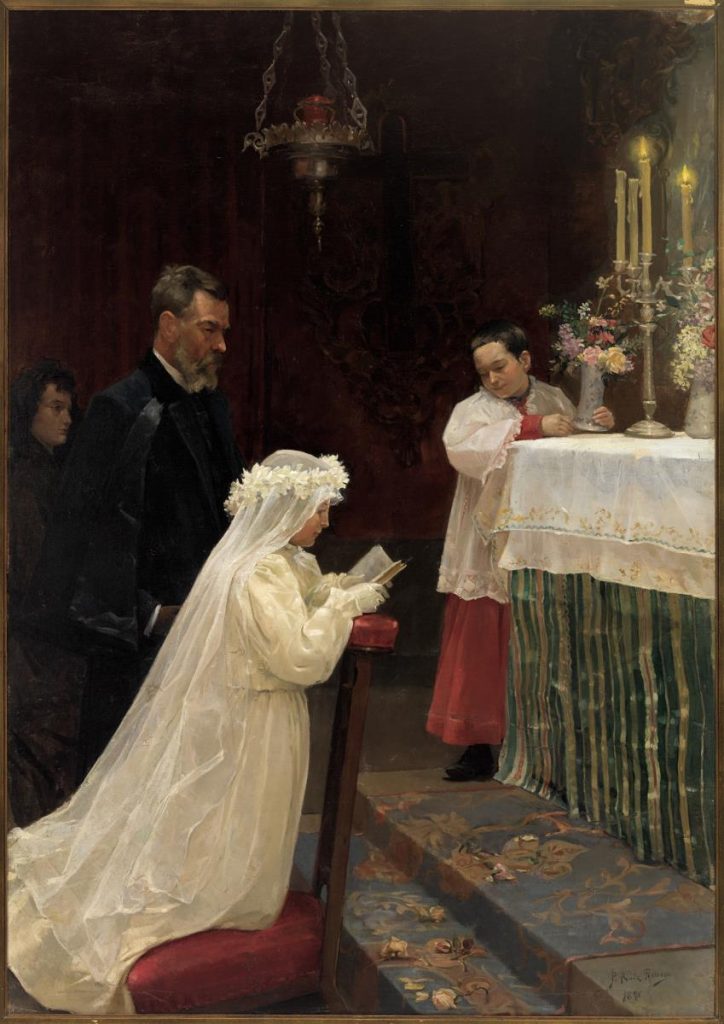
Pablo Picasso, First Communion, 1896, Museu Picasso, Barcelona, Spain.
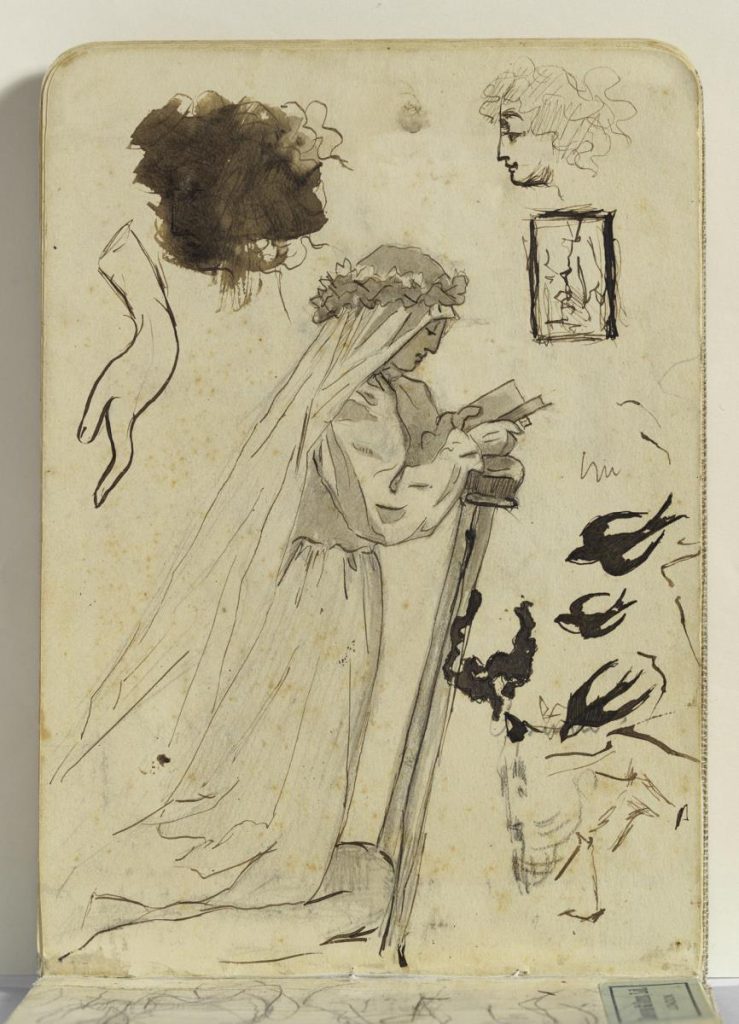
Pablo Picasso, Sketch for First Communion, 1896, Museu Picasso, Barcelona, Spain.
The intense white of the girl’s dress contrasts with the dark background, just as her tender and submissive posture clashes with her father’s serious and sober expression.
Picasso squeezes the reality around him to capture it in his painting. He takes these preliminary sketches, which foreshadow the gracefulness of the final result.
At the tender age of 15, Picasso created his first large-format work, First Communion (165 x 117 cm; 64 15/16 x 46 1/16 in.), depicting his sister during the communion, alongside their parents. Picasso demonstrates astonishing artistic skills, offering a refined anatomical and psychological study of each of the characters that comprise the work, as well as a personal and intimate interpretation of a religious motif. By removing elements that were commonly used, such as the cross and saints, Picasso offers us a portrait of religion that is different from that of the late 19th century.
Some interesting preliminary studies and sketches from this work have been preserved, demonstrating Picasso’s deep interest and analysis. The Malaga-born artist wanted to squeeze every ounce of sensitivity out of the entire piece, and this is evident in his studies.
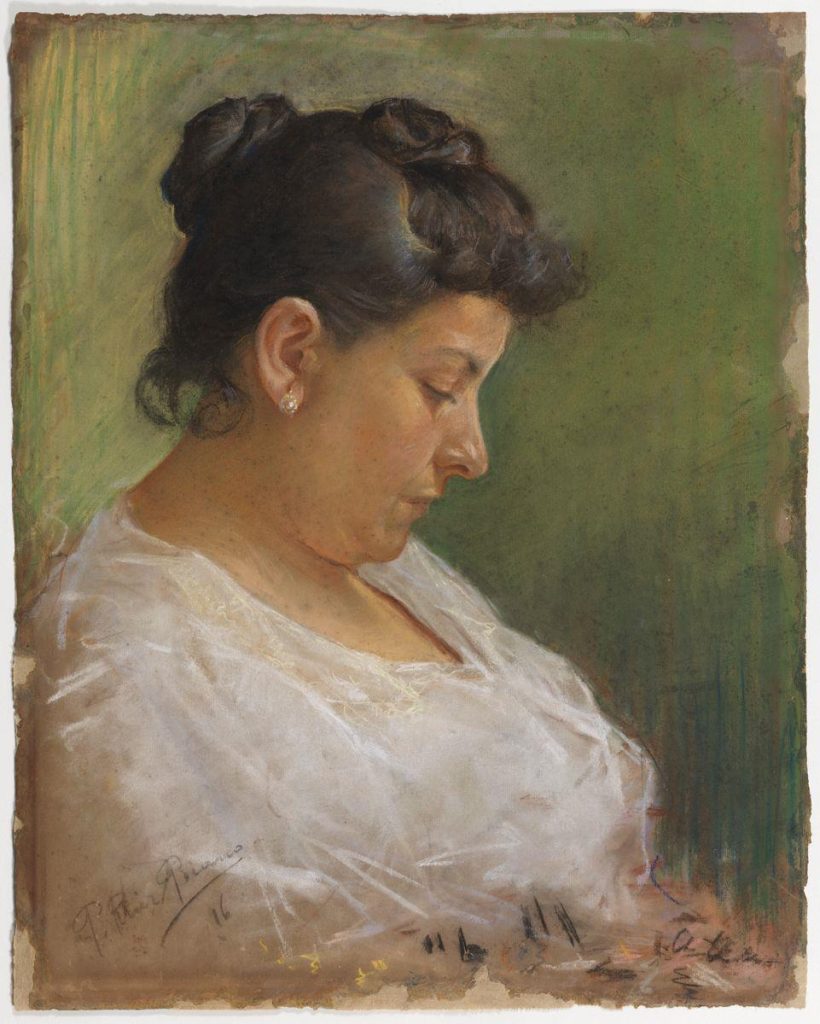
Pablo Picasso, The Artist’s Mother, 1896, Museu Picasso, Barcelona, Spain.
Continuing his academic training at the Llotja in Barcelona, the young Picasso did not hesitate to show off his considerable academic and portraiture skills. He painted this portrait of his mother using pastels, demonstrating his technical prowess in techniques other than oil painting. Through careful brushstrokes and a profound sensitivity to the nuances of light and color, the work conveys the repose of the face in profile. The artist managed to capture the moment when his mother was resting, giving the scene a tender and peaceful feel.
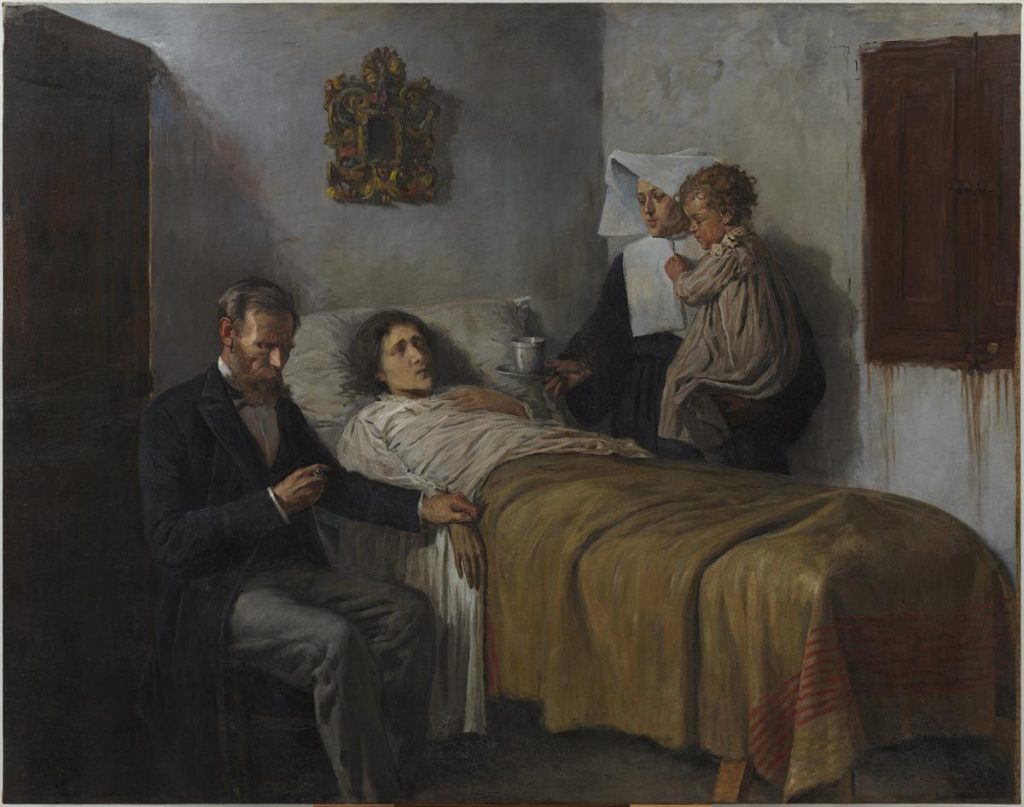
Pablo Picasso, Science and Charity, 1897, Museu Picasso, Barcelona, Spain.
Science and Charity represent the culmination of his early artistic period. It was the work that would kick-start his prolific career. The painting was presented at the National Exhibition of Fine Arts held in Madrid in 1897, where it received 25 honourable mentions.
The characters express enormous psychological depth, in line with the aesthetics of social realism that was beginning to prevail at the time. The young Picasso chooses a timeless theme: the debate between faith and reason, and as we can see in his early art, he does so in a masterful way. We can all feel part of the work, surrounded by cold walls—while the doctor’s watch reminds us of an undeniable truth, the nun’s tender care offers a soothing balm.
Anyone who does not know their past is doomed to repeat it, and that is why we, lovers of beauty, those who call ourselves aesthetes and artists, must question the artists we study. We must search, investigate, immerse ourselves in their essence, in their beginnings, and discover their roots. Sapere Aude! In this way, we can find in Picasso the genius common to all masters: the genius that is cultivated with discipline, sown with perseverance, and reaped with fame.
Get your daily dose of art
Click and follow us on Google News to stay updated all the time

DailyArt Magazine needs your support. Every contribution, however big or small, is very valuable for our future. Thanks to it, we will be able to sustain and grow the Magazine. Thank you for your help!

Leigh is a writer, reader, art lover, radio nerd and herbalist based in Nashville, TN.
Throughout the centuries, women’s bodies have consistently been staged for display rather than simply allowed to exist. John Berger’s...
Guest Author 12 March 2026
As we are in the middle of the season of Great Lent, sacred imagery becomes a bridge between the material world and spiritual reflection. Even today,...
Guest Author 12 March 2026
Fanny Eaton was a regular model for the Pre-Raphaelites during the 1860s and features in a number of famous works. Yet for most of the last century,...
Catriona Miller 19 February 2026
From van Gogh’s sunflowers, through golden dresses, to tranquil landscapes—yellow lights up the scene. It is the color of the sun, associated...
Kinga Dobosz 26 February 2026