
Masterpiece Story: The Setting of the Sun by François Boucher
With sweet putti, handsome gods, beautiful nymphs, vibrant colors, and elaborate compositions, The Setting of the Sun is a testimony to François...
James W Singer 8 February 2026
25 January 2026 min Read
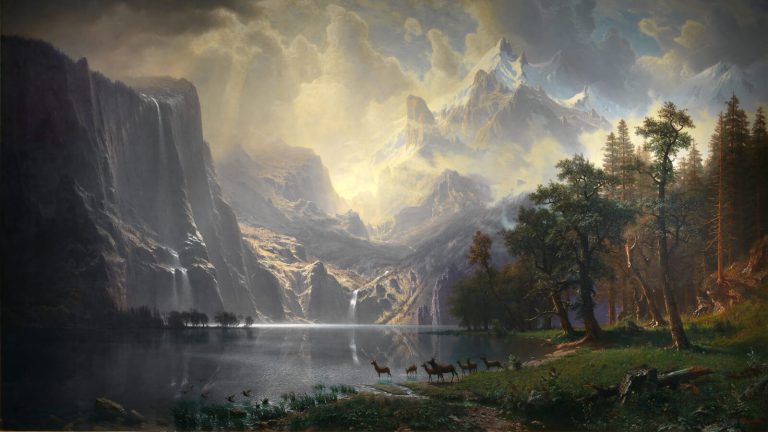
Albert Bierstadt, Among the Sierra Nevada, California, 1868, Smithsonian American Art Museum, Washington, DC, USA. Detail.
Among the Sierra Nevada, California, by Albert Bierstadt, is a majestic mountainous landscape filled with wild beauty and blissful idealism. Its panoramic scale and luminous atmosphere invite viewers to imagine a pristine American wilderness untouched by human presence.
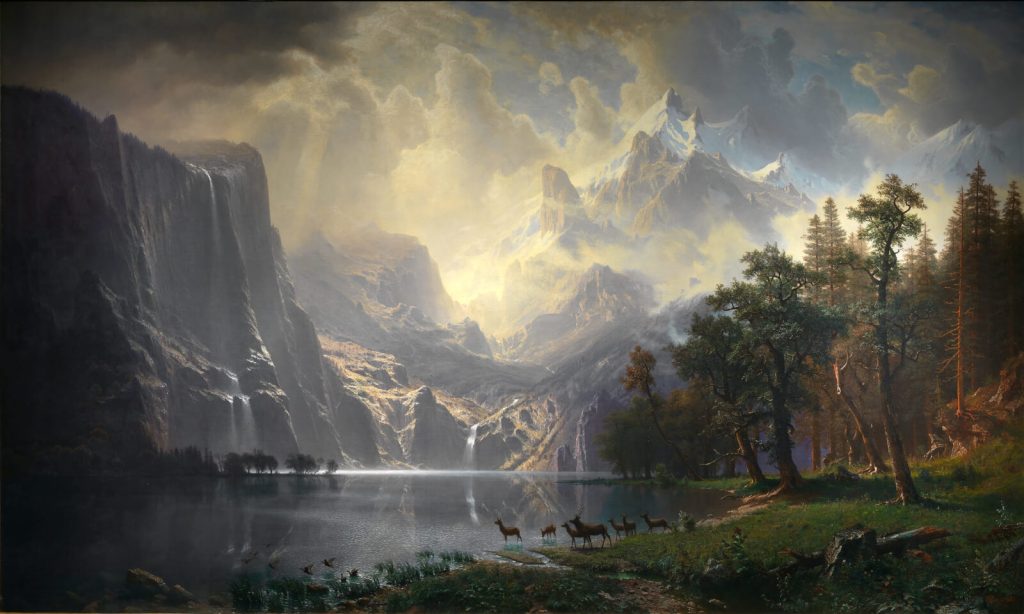
Albert Bierstadt, Among the Sierra Nevada, California, 1868, Smithsonian American Art Museum, Washington, DC, USA. Detail.
The 19th century was a foundational era for the development of landscape painting. It was a century dominated by the themes of Romanticism and the picturesque. These themes elevated the genre of landscape painting into an independent and respected artistic subject. Landscape painting also gained wider popularity through increased tourism, thanks to improved railway networks across Europe and North America.
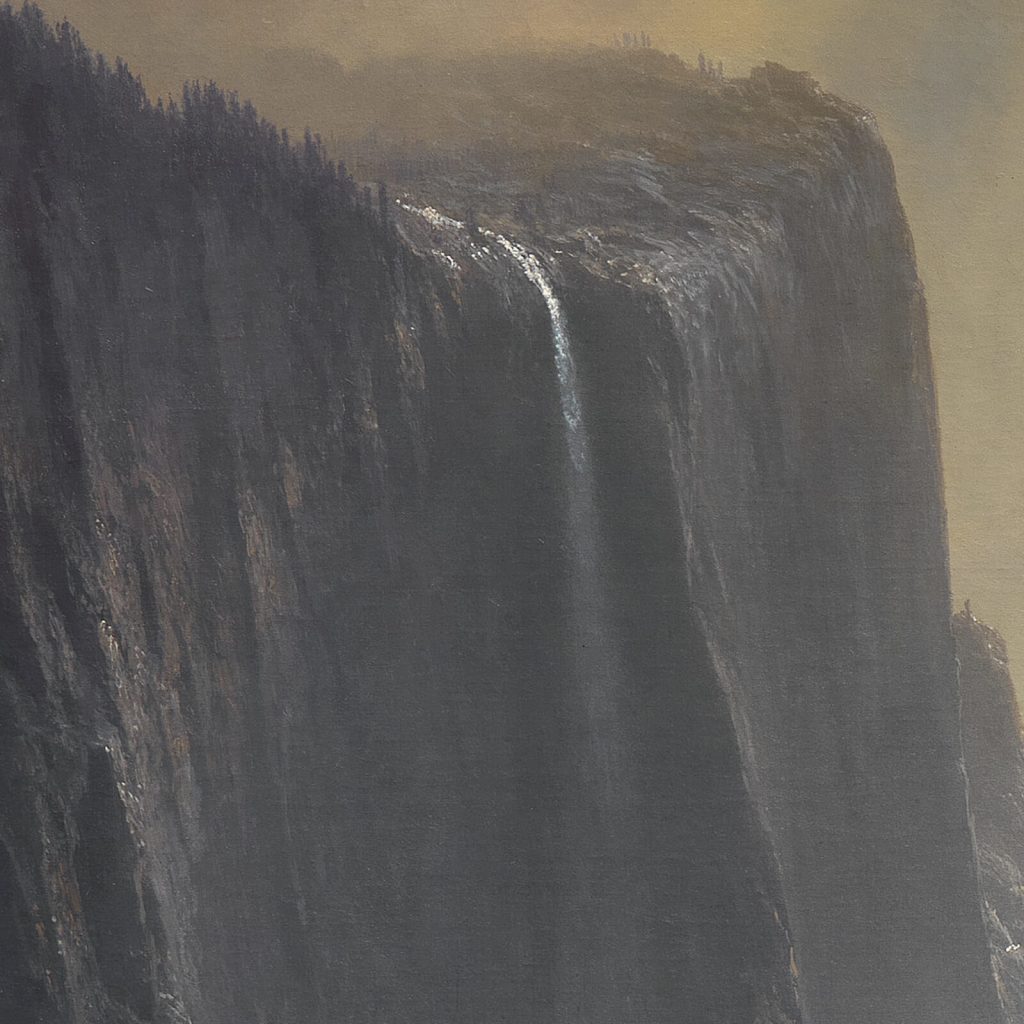
Albert Bierstadt, Among the Sierra Nevada, California, 1868, Smithsonian American Art Museum, Washington, DC, USA. Detail.
Landscapes with particularly striking features, such as mountains, rivers, and dense forests, became target subjects for painters and praised compositions for collectors. They became the markers of specific locations and identifiable destinations. Mountains became especially popular in the United States with the rise of the Hudson River School, an artistic movement originally formed near New York’s Hudson River Valley but later expanded westward in search of new subjects. As painters and tourists traveled and admired the countryside, they began to analyze and reflect upon the spiritual, moral, and philosophical implications of these wild and savage terrains.
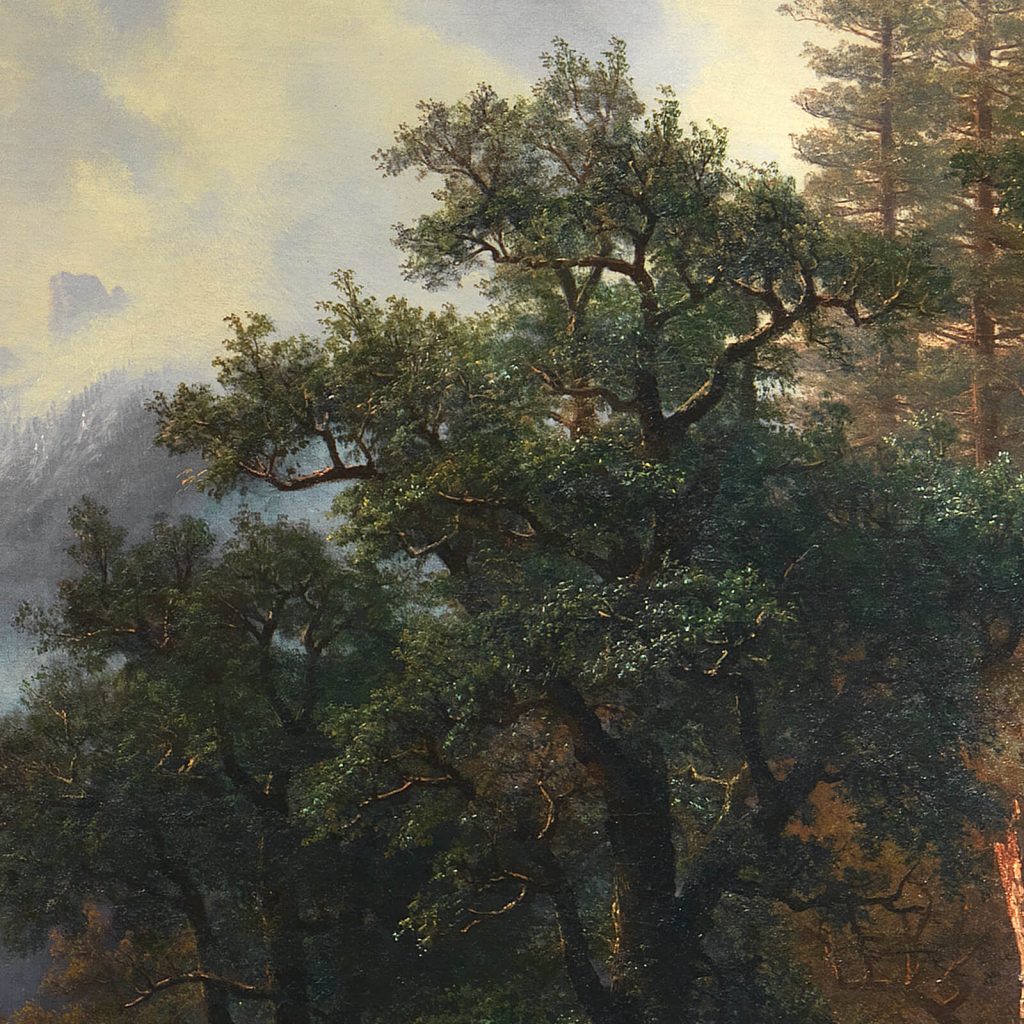
Albert Bierstadt, Among the Sierra Nevada, California, 1868, Smithsonian American Art Museum, Washington, DC, USA. Detail.
Albert Bierstadt (1830–1902) was one of the leading landscape painters of 19th-century America. He specialized in large-format canvases of mountainous landscapes with sweeping proportions. He was particularly attracted to California, where vast tracts of untouched land could still be found. Among the Sierra Nevada, California is one of his most brilliant masterpieces and a perfect example of his signature style.
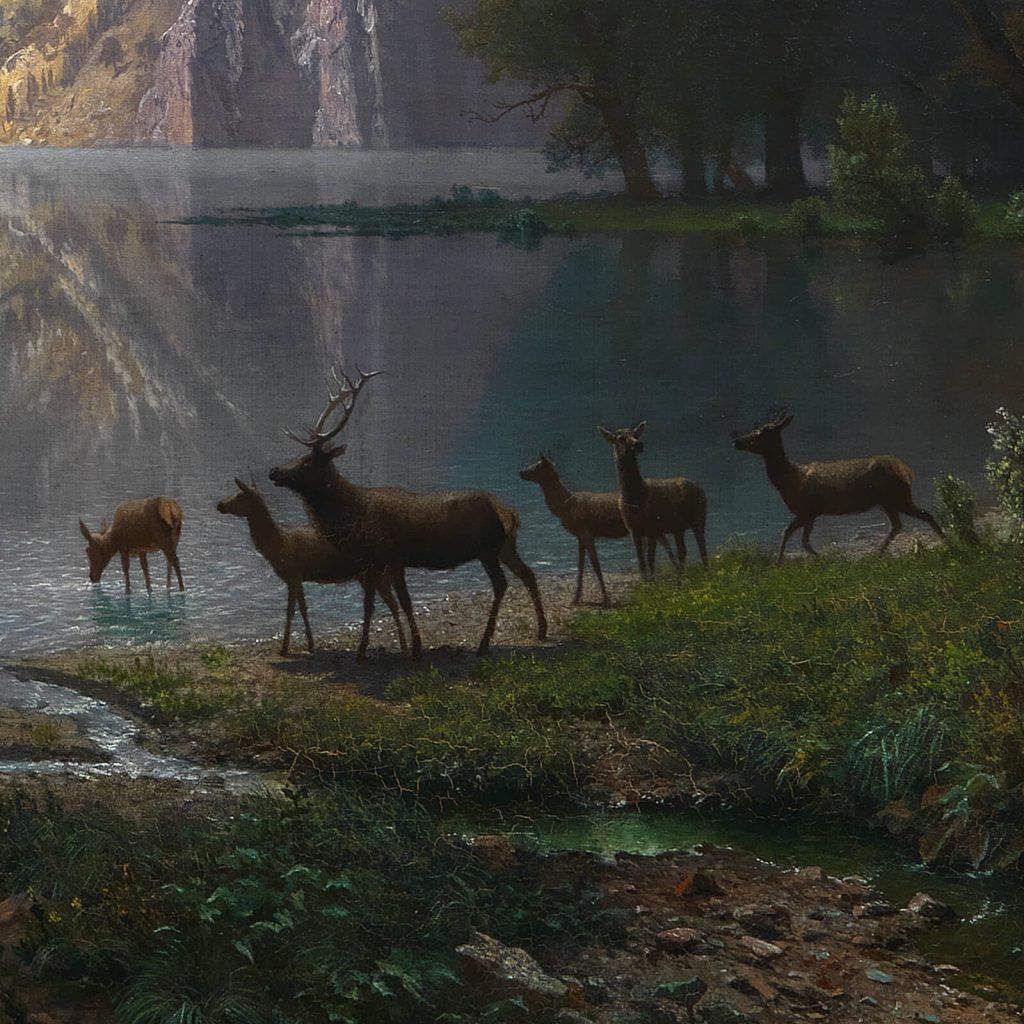
Albert Bierstadt, Among the Sierra Nevada, California, 1868, Smithsonian American Art Museum, Washington, DC, USA. Detail.
Among the Sierra Nevada, California is an oil on canvas measuring 183 x 305 cm (72 x 120 1⁄8 in). It presents a breathtaking scene filled with awe-inspiring natural beauty. The Sierra Nevada mountains majestically dominate the landscape, easily filling half of the background. Above, cottonball clouds populate a windswept blue sky. Sunbeams burst through the clouds like theatrical stage lights. Below, a placid lake fills the left foreground as a green pasture fills the right foreground. A thick cluster of trees occupies the right midground—animals, such as deer and ducks, cluster near the lake’s edge in the middle foreground. Taking central place is a majestic and postcard-worthy waterfall.
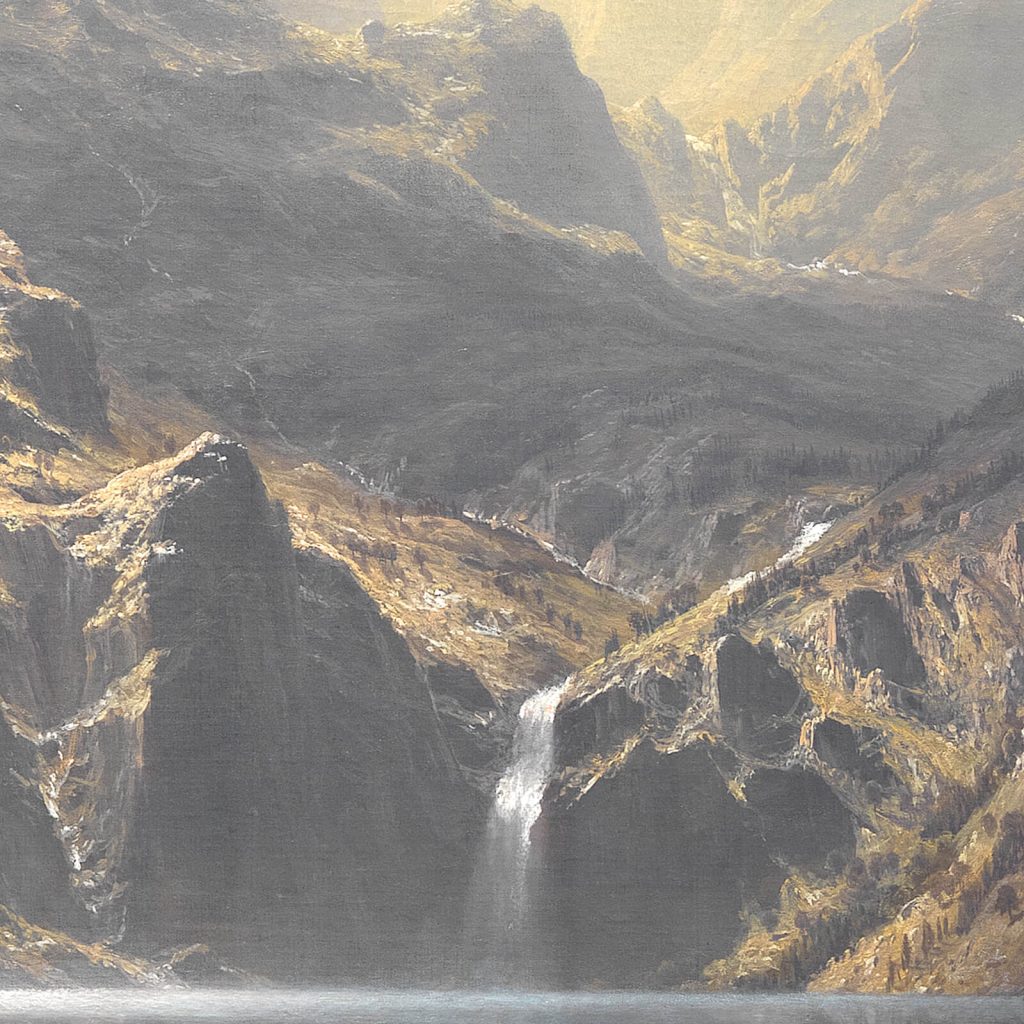
Albert Bierstadt, Among the Sierra Nevada, California, 1868, Smithsonian American Art Museum, Washington, DC, USA. Detail.
The Sierra Nevada forms part of the western “backbone” of the continental Americas. Approximately, it spans 640 km (400 mi), the north-south distance of California. Its highest peak is Mount Whitney at 4,421 m (14,505 ft), which is also the highest peak in the contiguous United States. Perhaps Albert Bierstadt displays Mount Whitney in the background as a glistening white snow cap?
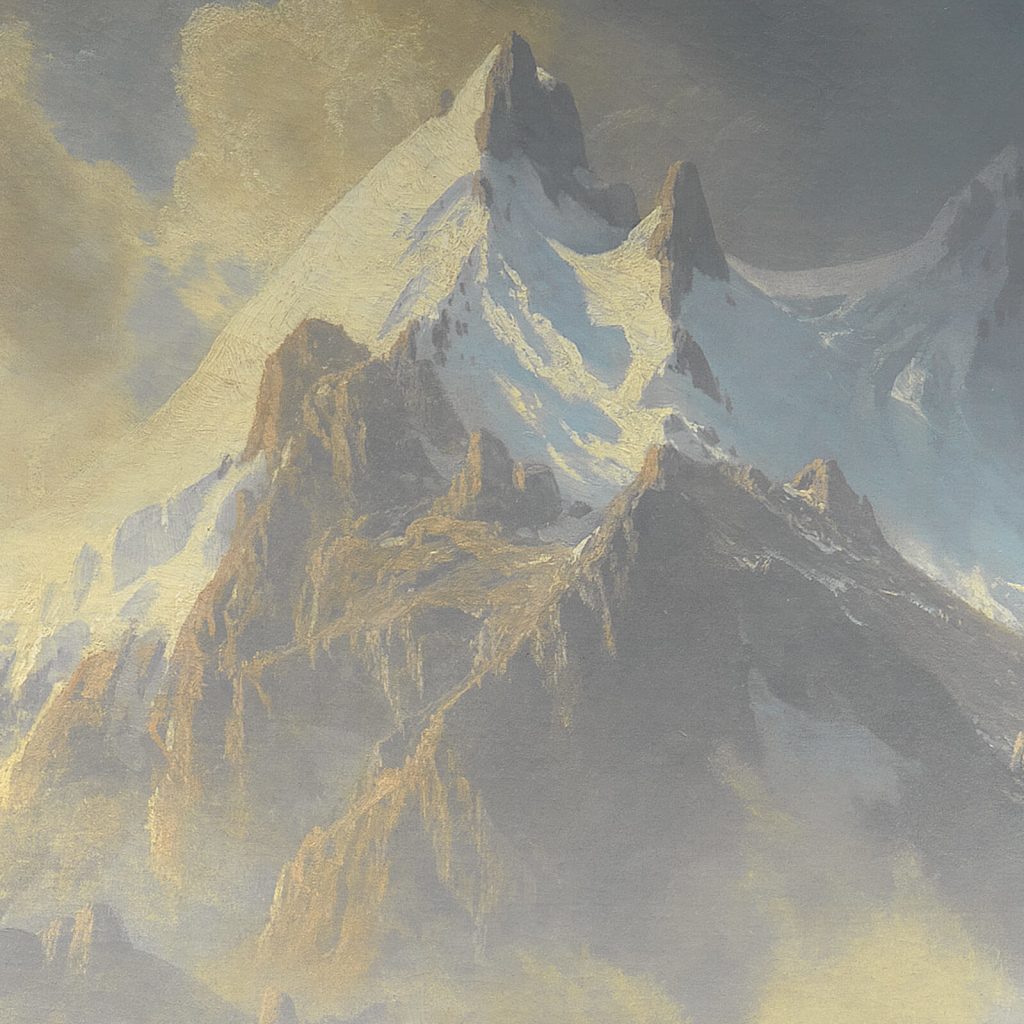
Albert Bierstadt, Among the Sierra Nevada, California, 1868, Smithsonian American Art Museum, Washington, DC, USA. Detail.
Like many 19th-century Americans, Albert Bierstadt believed in Manifest Destiny, which was the belief in the natural progression and westward expansion of the United States to form a continental country. It was believed that the young nation had divine providence to enlarge its domain and influence. It would cultivate the wild frontiers and bring civilization to far borders.
Consequently, expanding imperialist intentions brought concerns about the physical hardship of conquest, the immoral displacement of Native American communities, and the materialistic exploitation of resources. However, none of these controversial issues are addressed in Bierstadt’s painting. He contrastingly presents an optimistic, splendid, and pristine landscape free of any concerns. A blissful ideal land.
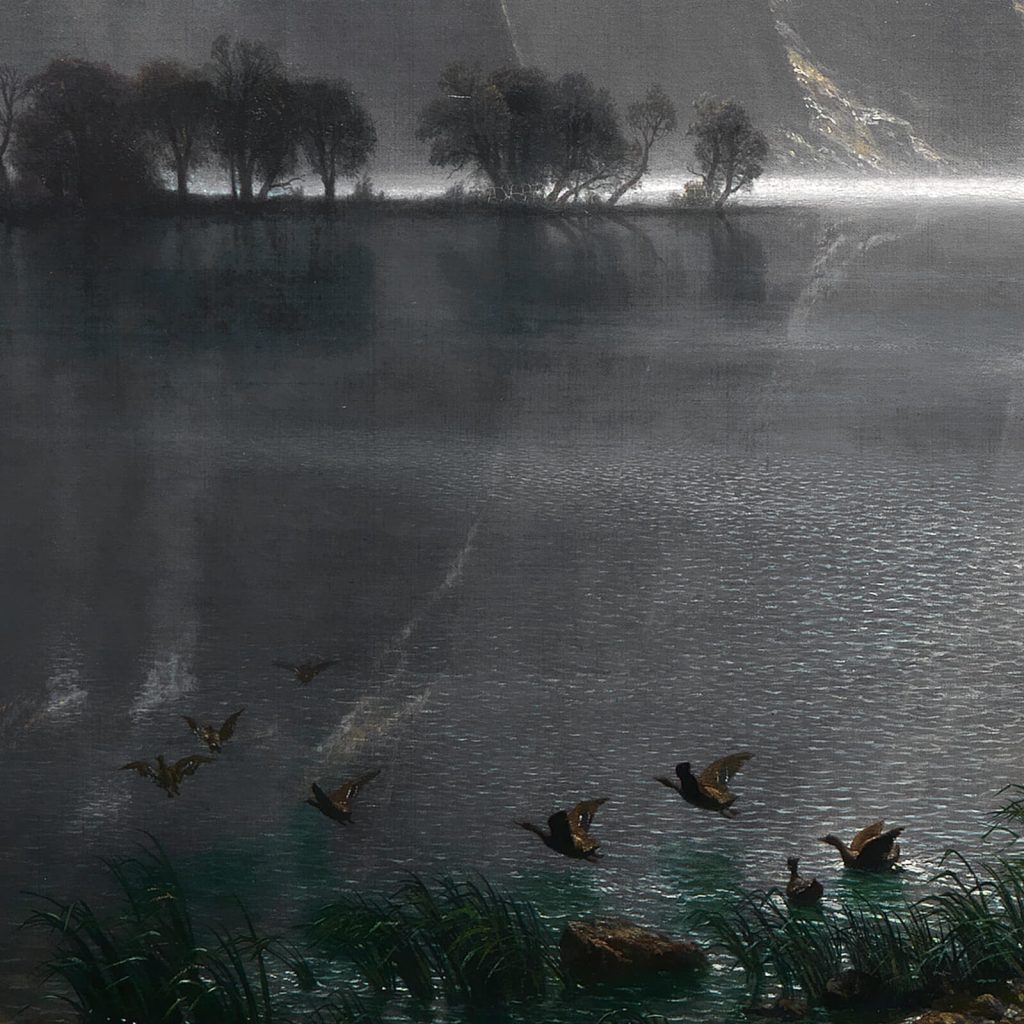
Albert Bierstadt, Among the Sierra Nevada, California, 1868, Smithsonian American Art Museum, Washington, DC, USA. Detail.
Albert Bierstadt’s paintings were wildly popular during his life and frequently collected by westward expansionists such as mail-service magnates and railroad tycoons. However, the natural splendor of his images attracted a wider public audience that felt the hope and optimism of America.
Bierstadt’s landscapes have a transcendental confidence that America is a promised land filled with boundless opportunity and untapped prosperity. It projects the foundations of the iconic American Dream that, despite an ever-changing political landscape, still attracts some visitors and immigrants today. What would Albert Bierstadt think of today’s United States?
Get your daily dose of art
Click and follow us on Google News to stay updated all the time

DailyArt Magazine needs your support. Every contribution, however big or small, is very valuable for our future. Thanks to it, we will be able to sustain and grow the Magazine. Thank you for your help!

James W. Singer is an art historian and fine art photographer. He earned a Bachelor of Arts in Art History from the University of Florida. He later moved to Paris, France. He currently writes “Masterpiece” articles for DailyArt Magazine.

An admirer of antiquity, art, and architecture. An avid reader and amateur photographer. Always curious, always on an adventure.
With sweet putti, handsome gods, beautiful nymphs, vibrant colors, and elaborate compositions, The Setting of the Sun is a testimony to François...
James W Singer 8 February 2026
The Cardsharps is an early masterpiece of Baroque art by Caravaggio that explores the revolutionary theme of crooked card playing. Let’s delve...
James W Singer 11 January 2026
As Europe burned during WWII, Wassily Kandinsky, who had fled Nazi Germany in 1933, lived as a recluse in his Neuilly-sur-Seine apartment. In that...
Javier Abel Miguel 8 January 2026
Green Wheat Fields, Auvers by Vincent van Gogh is a masterpiece of landscape painting, capturing a beautiful moment in nature. Painted during the...
James W Singer 28 December 2025