
10 Paintings About Love from the Dutch Golden Age
Love is everywhere in 17th-century Dutch painting, but it rarely announces itself loudly. Instead, it is subtle and nuanced, seen through half-open...
Tom Anderson 12 February 2026
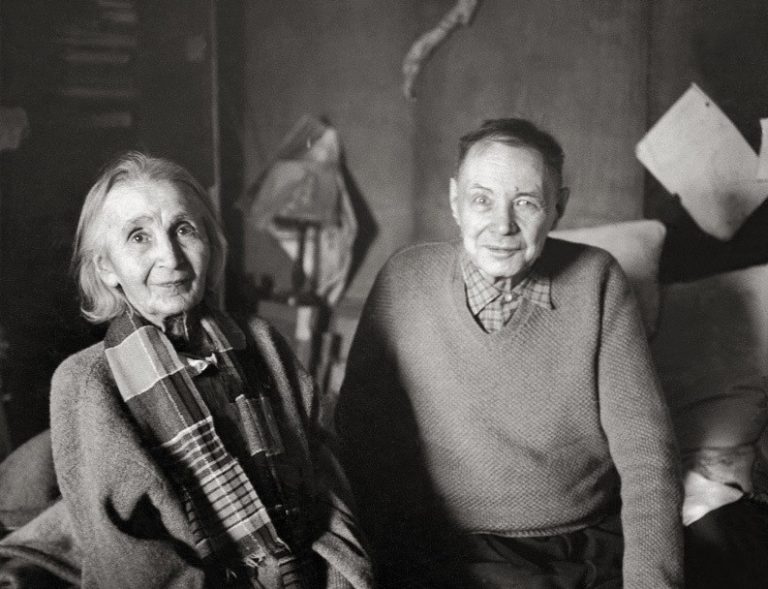
Natalya Goncharova and Mikhail Larionov, 1956. Arzamas. Detail.
At the dawn of the modern avant-garde, two uncompromising young artists, Natalia Goncharova and Mikhail Larionov, found in each other both a lifelong muse and a creative partner. Their bond ignited a revolution in art, where love, rebellion, and radical innovation intertwined.
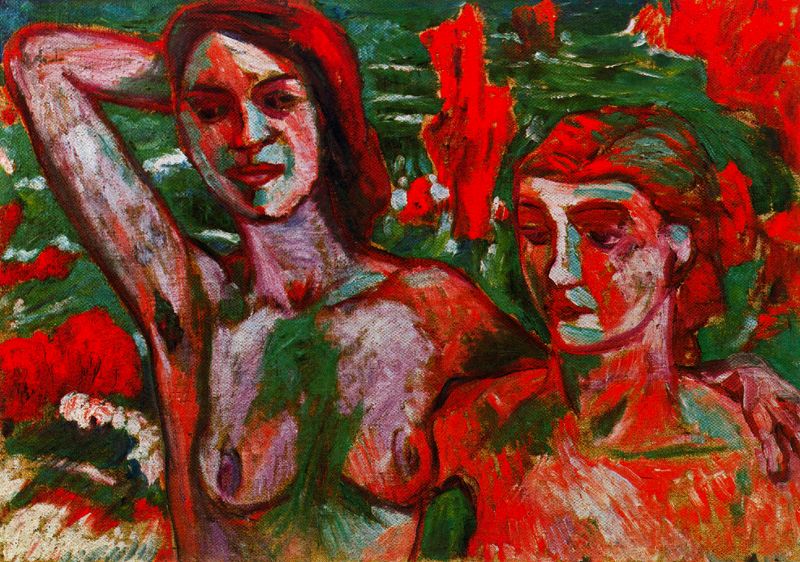
Those who believe in numerology would say that the fate of these two was written in the numbers from the start: Mikhail was born on June 3, and Natalia a month later on July 3, 1881.. Just a month apart, they arrived at the School of Painting, Sculpture, and Architecture, after both of their families had moved to Moscow the same year. There are no coincidences in life, one could say. Although Natalia enrolled in a sculpture course, Mikhail chose painting (he studied under the painter Konstantin Korovin), and soon they met and fell for each other.
Larionov was not the best student, he often skipped classes and was defiant of school rules, while Natalia was a dedicated student who, after three years, resigned from her 10-year-long course convinced by her boyfriend who saw a painter in her, not a sculptor.
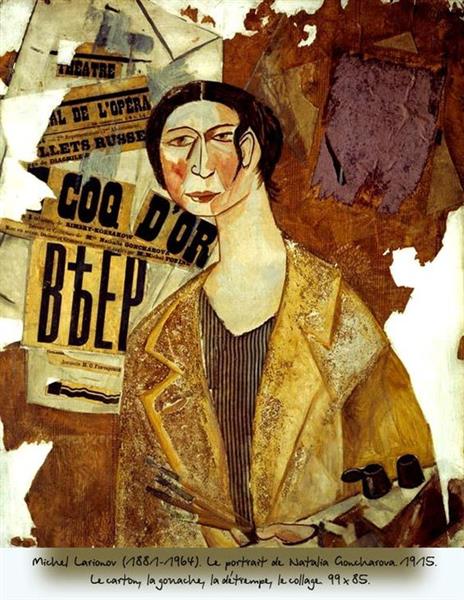
Suddenly, I understood that something I wanted in sculpture was, actually, to be found in painting… and it was painting.
Natalia Goncharova. Arthive.
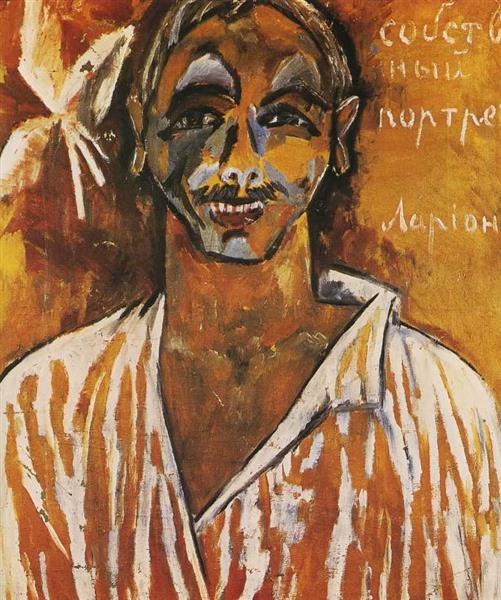
The lovers didn’t care about the conventions of their era: they moved in together although they weren’t married. This upset Natalia’s parents who first didn’t accept poor Mikhail. They changed their mind, however, when the Tretyakov Gallery bought his first painting. The couple was allowed to move into an apartment owned by Natalia’s parents, where they lived until 1915, leading a scandalous lifestyle: they founded avant-garde groups such as Jack of Diamonds, Natalia walked topless through Moscow’s wealthy streets and faced a trial over alleged pornography in nude studies at an exhibition, was kicked out from school (Mikhail), had a trial on alleged pornography for presenting two nude studies in one of the exhibitions, Mikhail was kicked out of school and tattooed himself and others.
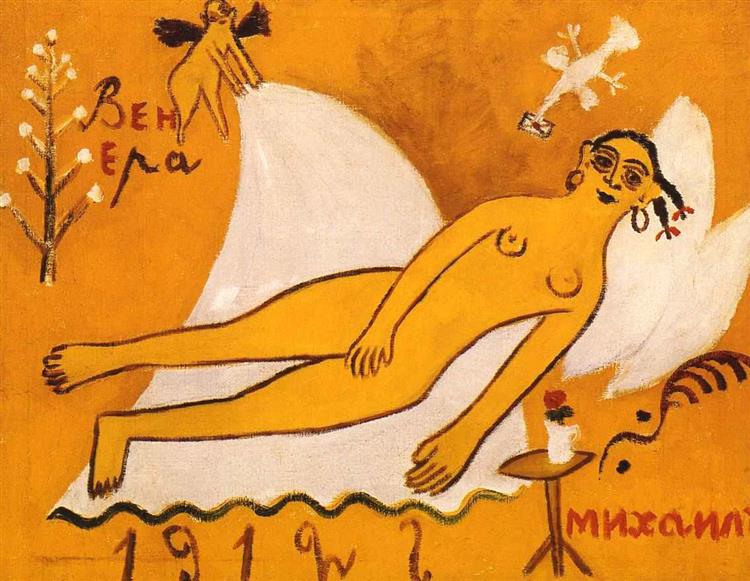
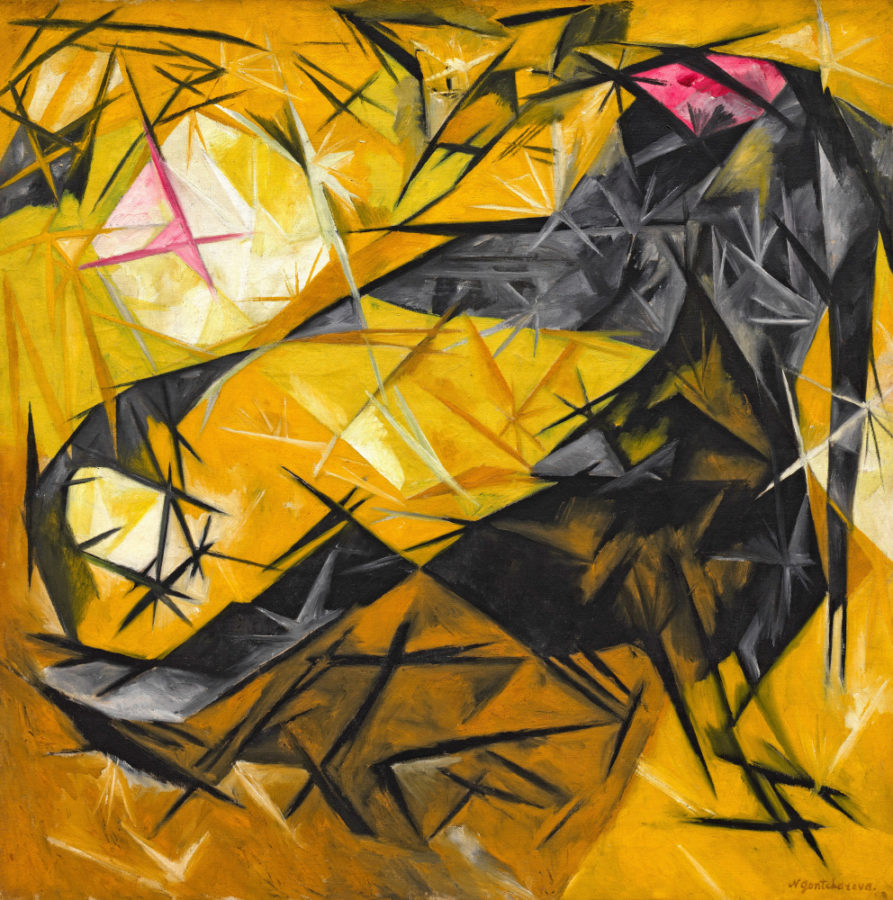
When Jack of Diamond’s exhibition became a huge scandal for the avant-garde nature of the works exhibited, the couple didn’t stop pushing the boundaries of bourgeoisie taste dominating Moscow. In 1912 Mikhail invented a new painting trend, Rayonism, a style that represented the physical world through color and light. Proud Natalia said of him:
Larionov is my conscience in work, my tuning-fork. My touchstone for whether I do false. We are very different, and he sees me from inside of me, not of him. Like I see him.
Natalia Goncharova. Arthive.
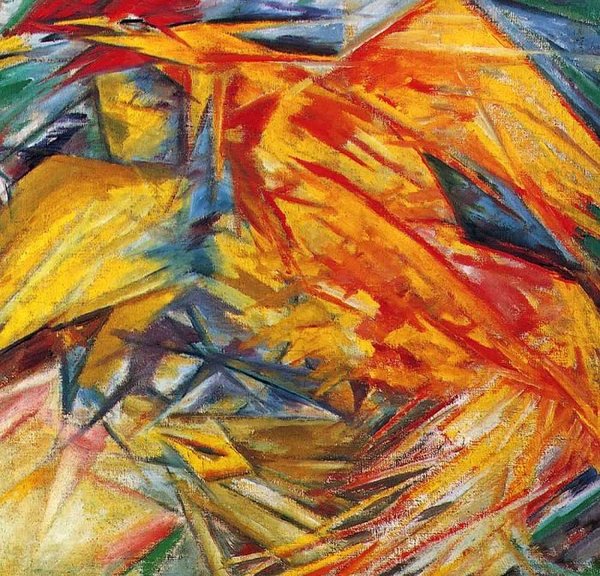
They published the Rayonist manifesto in 1913, signed by 9 other artists. Although Mikhail was its official inventor, it was Natalia who became its most active practitioner, hailed by her contemporaries as “the artist with the richest paints.” Their art laid the foundations for abstraction in Russia, and the couple quickly became famous. They did various commissions: illustrations for books, patterns for textiles, women’s clothes, and wallpapers. Moreover, prior to World War I, they participated in decorating the cabaret Pink Lantern and featured in the first futuristic film Drama in the Futurist Cabaret No. 13 directed by Vladimir Kasyanov.
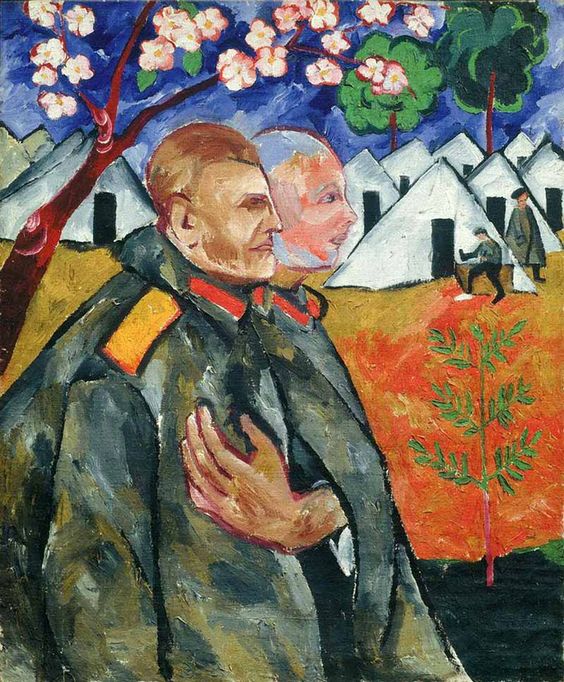
When in 1914 the war broke out, Mikhail was drafted. He was heavily wounded and had to be hospitalized for months. In the meantime, Michel Fokine, Sergei Diaghilev, and Alexandre Benois came to Moscow intrigued by Goncharova and Larionov’s art. Benois offered Natalia a position as a stage designer for Diaghilev’s ballet The Golden Cockerel. In 1915 the couple officially left Natalia’s parents flat and moved to Switzerland and then France. There they made a career in stage and costume design working for Diaghilev and other troupes, while Mikhail even choreographed the dances.
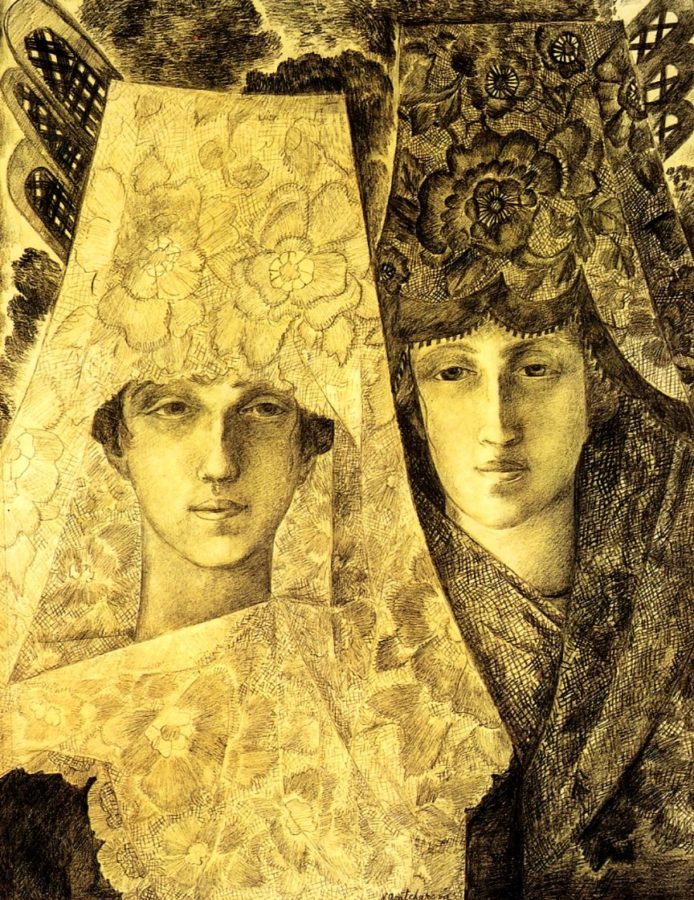
Surprisingly, the two found new life partners when in Paris: Natalia got together with a family friend Orest Ivanovich Rosenfeld, editor-in-chief of the newspaper Populaire, and Mikhail with his secretary and model Alexandra (Sashenka) Tomilina (she even moved into the same block of flats and rented the apartment below). This was apparently in order to facilitate Larionov’s work, who would spend days at Tomilina’s, but returned home for the night.
Both artists accepted their new unions, but they continued to work together and travel for holidays with both their “dear friends.” They even decided to eventually marry each other, yet, as Natalia explained, it was purely for legal reasons—so that each could inherit the rights to the art of another.
Get your daily dose of art
Click and follow us on Google News to stay updated all the time

DailyArt Magazine needs your support. Every contribution, however big or small, is very valuable for our future. Thanks to it, we will be able to sustain and grow the Magazine. Thank you for your help!

Magda, art historian and Italianist, she writes about art because she cannot make it herself. She loves committed and political artists like Ai Weiwei or the Futurists; like Joseph Beuys she believes that art can change us and we can change the world.
Love is everywhere in 17th-century Dutch painting, but it rarely announces itself loudly. Instead, it is subtle and nuanced, seen through half-open...
Tom Anderson 12 February 2026
Vincent van Gogh produced dozens of sketches of his live-in lover Clasina Maria Hoornick, known as Sien. Let's take a look!
Candy Bedworth 31 July 2025
The American painter Georgia O’Keeffe is best known for her abstract representations of flowers and desert landscapes. American photographer Alfred...
Mary Margaret Swets, 30 March 2026
Soulmates in both life and art, Sonia and Robert Delaunay formed what is probably the most extraordinary creative partnership in art history. Cubism, colour and passion - read on!
Candy Bedworth 24 October 2025