10 Paintings by Helene Schjerfbeck That You’ll Never Forget
Helene Schjerfbeck, famous in her native Finland, is not nearly as well known in the rest of the world. A genuine one-off, she studied in Paris and...
Catriona Miller 11 March 2026
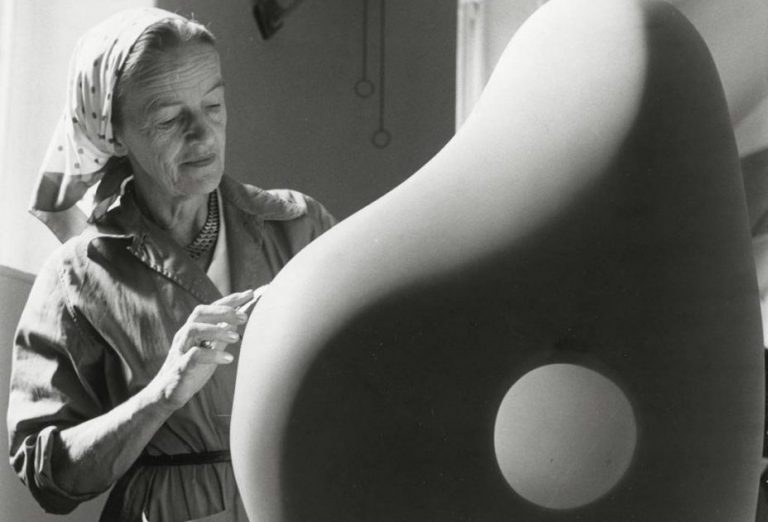
Rosemary Mathews, Barbara Hepworth at Trewyn Studio, 1961. Bowness, Hepworth Estate.
Barbara Hepworth’s 1973 bronze-cast sculpture Conversation with Magic Stones is mythic, mysterious, and interactive. Hepworth (1903–1975) was an English artist famous for her modernist sculptures.
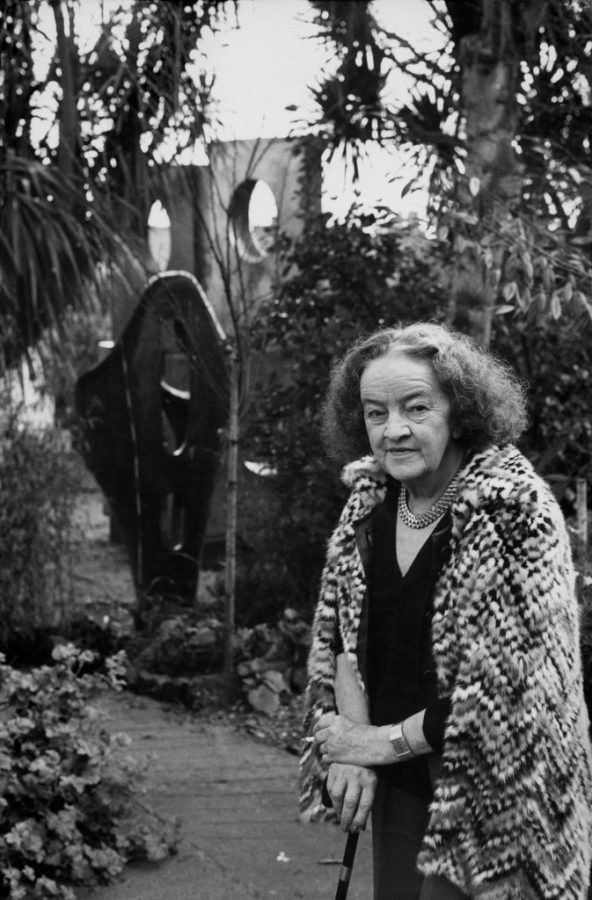
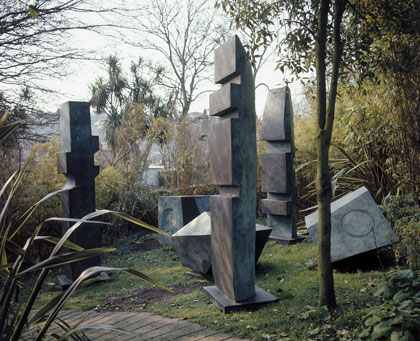
Made up of six parts, Conversation with Magic Stones is in conversation with itself, with us, and with its surrounding landscape. Because it is a bronze cast, Conversation with Magic Stones is not a one-off sculpture – four identical castings exist. Dispersed across the world, one copy is in a private collection in Switzerland, another is at the Scottish National Gallery of Modern Art, one sits on the campus of Trinity University in San Antonio, Texas, USA, and the artist’s copy is owned by the Tate in London, UK.
Bronze-cast works are reproducible because their creation process involves a mold. Although identical copies of Conversation with Magic Stones exist, they are individualized by the space they occupy and the unique mythic character they invoke.
For example, the copy at Trinity University carries the myth that students who study alongside the magic stones will do better on an exam. In this way, students at Trinity University have assigned magical properties to the sculpture that suit its specific university setting.
Created in the last few years of Hepworth’s life, the sculpture consists of three tall, vertical forms which the artist described as “figures,” and three squatter, horizontal forms which she described as “stones”. Hepworth’s description of the vertical forms as “figures” suggests their anthropomorphism. Conversely, the identical eight-sided polyhedron “stones” could almost be mistaken for actual carved stones; Hepworth convincingly made what was once a liquid material look like organic rock.
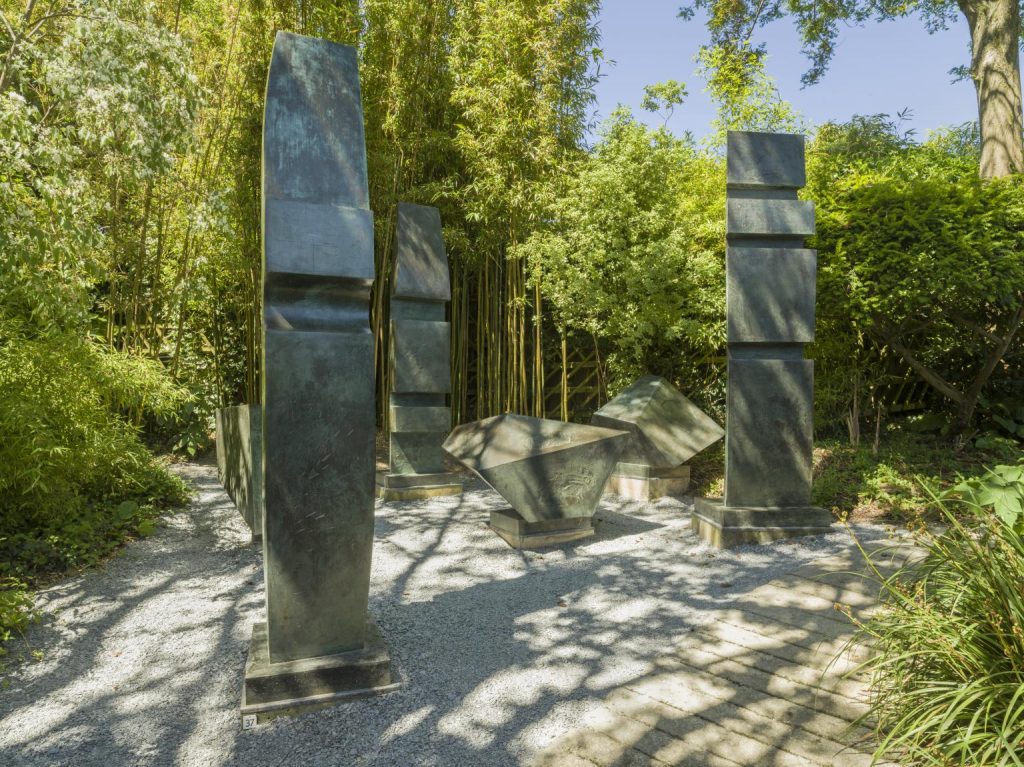
The equal number of anthropomorphic figures and fixed stones balance the sculpture. For each figure, there is an accompanying stone. With each part’s distinct attributes in mind, the six parts of the sculpture interact in a unified conversation amongst themselves.
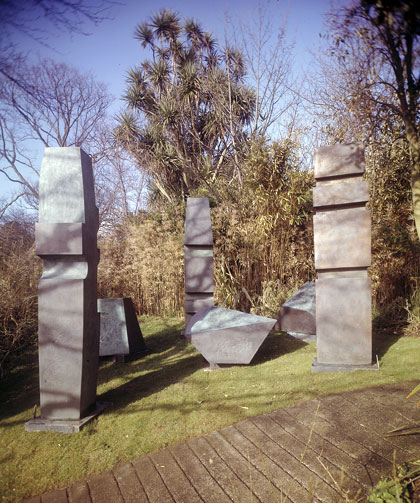
We as viewers are also included in this conversation – we can disrupt, confuse, and add to it. Hepworth would have wanted viewers to circumambulate, walkthrough, and even climb on the sculpture. The interactive possibilities and new perspectives are endless as the conversation is extended to the viewer.
The stones create their own space that you must enter into for the conversation to be whole. The “conversation” mentioned in the title of the work is ambiguous and abstract, however, in one sense, this is a conversation about space: how a human relates spatially to the sculpture and how parts of the sculpture interact with each other.
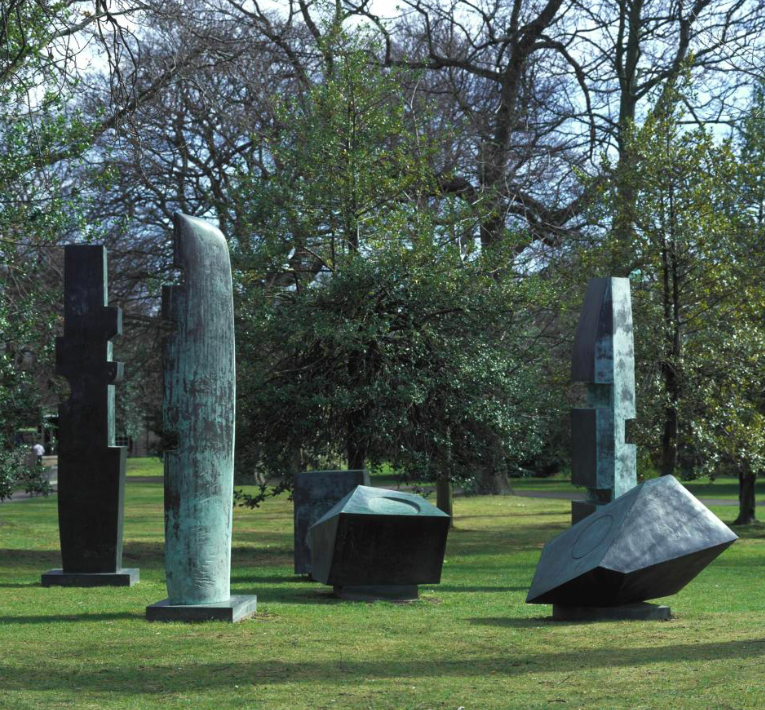
For Dore Ashton, writer, professor, and critic of modern and contemporary art, Hepworth’s Conversation with Magic Stones satisfies the desire for an origin story:
The stones I find in Hepworth – whether the bronze analogies in Conversation, or real stones – are nearly always the bones of the Earth Mother, carrying their ineffable message of origin. They subsume all of our longings for beginnings; for truths that escape pragmatics.
Dore Ashtone, quoted in “Conversation with Magic Stones,“ Tate.
In my mind, Conversation with Magic Stones, in conjunction with its various settings and its adopted myths, evokes a sense of knowledge — possessed or (more often than not) unpossessed. The stones have answers, although they tend to conjure up more questions. Nevertheless, the sculpture contains power in the hidden wisdom of its parts.
Author’s bio
Get your daily dose of art
Click and follow us on Google News to stay updated all the time

DailyArt Magazine needs your support. Every contribution, however big or small, is very valuable for our future. Thanks to it, we will be able to sustain and grow the Magazine. Thank you for your help!

This is our guest profile for occasional authors. If you have an interesting story about art to tell, send it to our Editor-in-chief Kate at [email protected]. You might be the next here!
Helene Schjerfbeck, famous in her native Finland, is not nearly as well known in the rest of the world. A genuine one-off, she studied in Paris and...
Catriona Miller 11 March 2026
If you are a frequent visitor to museum stores and bookshops, or a regular reader of The New Yorker, you have probably encountered the work of Maira...
Aniela Rybak-Vaganay 9 March 2026
Clementine Hunter taught herself to paint in her fifities and spent the rest of her life chronicling the Black Southern experience, not with slogans...
Wen Gu 23 February 2026
Élisabeth Vigée Le Brun was one of the most accomplished portraitists of her generation. At the peak of her fame, the doors of the highest European...
Edoardo Cesarino 2 March 2026