

10 Paintings You Need to See at the Cassirer Exhibition in Berlin
If impressionist masterpieces make your heart beat, then you need to visit Berlin this summer. The Alte Nationalgalerie on Museum Island recently...
Kate Wojtczak 8 June 2026
29 December 2025 min Read
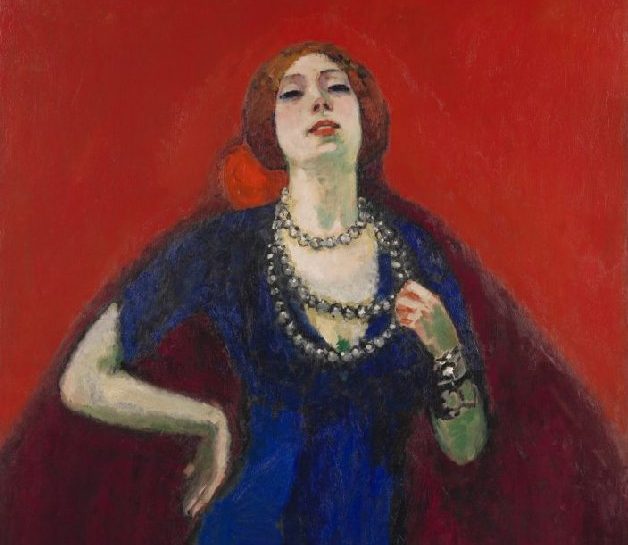
Kees van Dongen, The Blue Dress, c. 1911, Van Gogh Museum, Amsterdam, Netherlands. Detail.
The Van Gogh Museum is dedicated to the life and works of Vincent van Gogh. It holds the largest collection of Van Gogh paintings and drawings in the world and is the go-to institution for the painter’s extensive correspondence. However, within the museum’s collection, there are artworks from other artists as well. Artists who were friends and acquaintances of the Dutch painter, others who were simply his contemporaries, and others who came after him but carry Van Gogh’s legacy in their art. Through their work, we get a better idea about van Gogh himself, his art, as well as new insights about the world he lived in. Here are 6 best works from Van Gogh Museum that are not by Van Gogh:
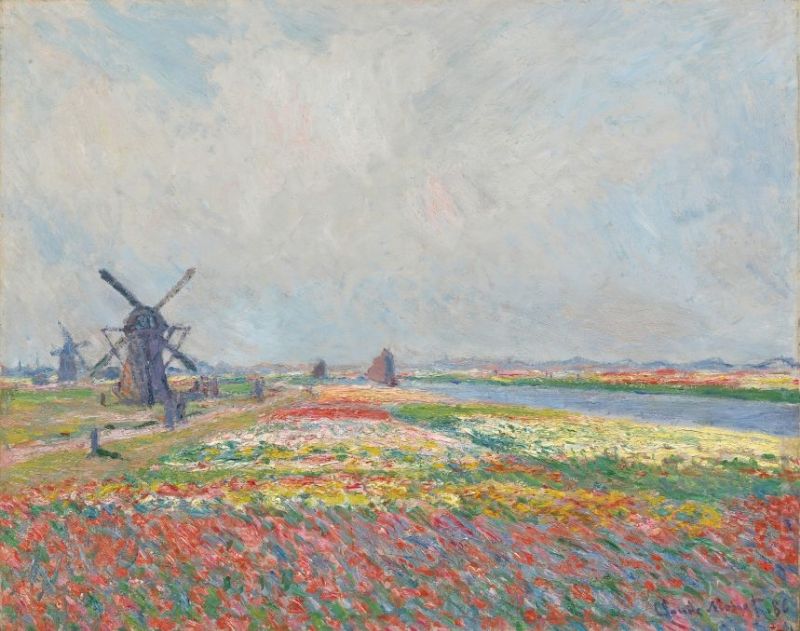
Claude Monet, Tulip Fields Near the Hague, 1886, Van Gogh Museum, Amsterdam, Netherlands.
The father of Impressionism visited Holland in 1866 and was duly impressed by the colorful tulip fields. In his characteristic style, he presents an image full of sunshine and movement. With small and rapid brushstrokes, the flowers give the impression of a unified whole, a sea of flowers moving with the wind.
Monet sold this painting through the art dealership where Theo van Gogh, Vincent’s brother, worked, and it is possible that Vincent saw it there. When Van Gogh moved to Paris in 1886, Impressionism was the word of the day. The new style had a lasting impact on Van Gogh’s work, making him adopt the brighter palette he is known for.
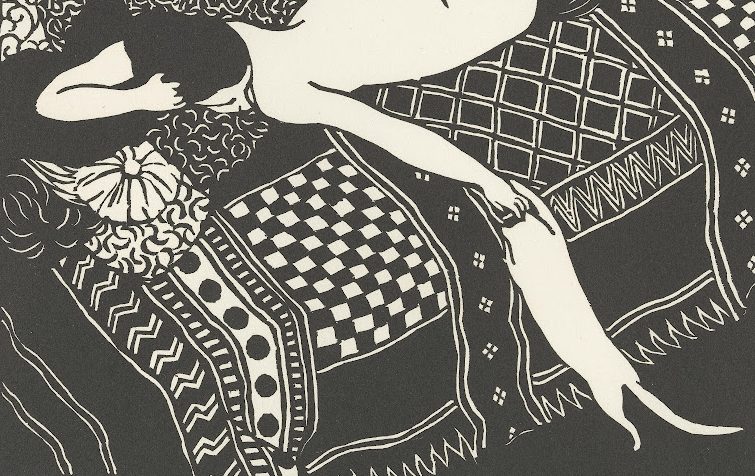
Félix Vallotton, Laziness (La Paresse), 1896, Van Gogh Museum, Amsterdam, Netherlands.
Félix Vallotton is mostly known for his woodcut prints in stark black and white. Laziness is, perhaps, the most famous of all. A naked woman languidly lies on a plush sofa and plays with her cat. Woodcut prints were not preferred by artists in the 19th century as an artistic method. However, the surge of Japanese woodcut prints in Paris helped to revive the technique, with Vallotton as a leading figure. Whereas the Japanese used a variety of colors, Vallotton preferred black and white.
In this print, the biggest white areas are the naked body of the woman and the cat. The forms are simple; however, through the strong contrast, the artist can suggest pattern, depth, and shape.
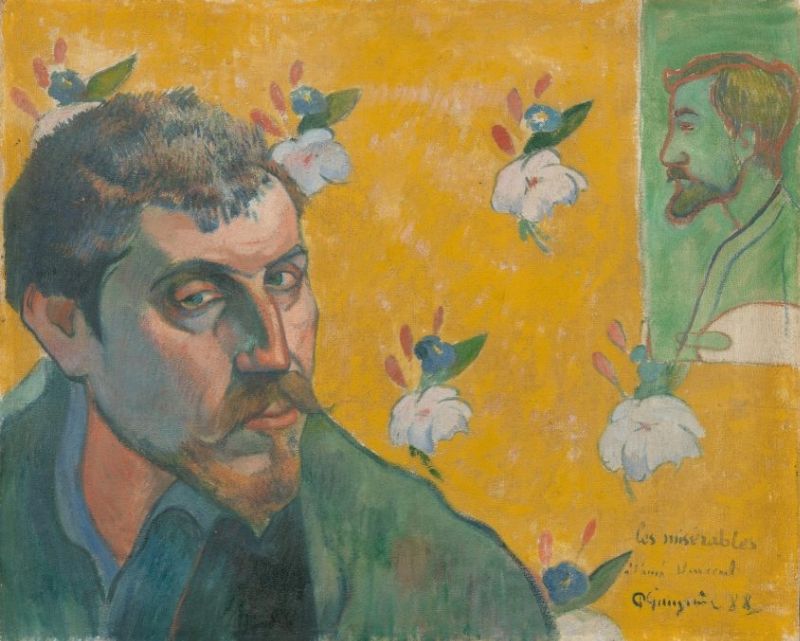
Paul Gauguin, Self-Portrait with Portrait of Emile Bernard (Les Misérables), 1888, Van Gogh Museum, Amsterdam, Netherlands.
Before Gauguin moved to the south of France to live with Van Gogh, he and the Dutch artist exchanged self-portraits. Gauguin painted himself as Jean Valjean, the main character of Victor Hugo’s novel Les Misérables. In a letter to Van Gogh, he explains this decision:
By doing him with my features, you have my individual image, as well as a portrait of us all, poor victims of society, taking our revenge on it by doing good.
Stylistically, Gauguin contrasts the flowery and very bourgeois wallpaper in the background with what his contemporaries would consider garish colors and stark shadows in his self-portrait.
In the top right corner, there is the sketch of another French painter, Emile Bernard, with whom Gauguin lived at the time in Bretagne. In the museum collections, there is also a self-portrait by Bernard himself, featuring a sketch of Gauguin, which was also a gift to Van Gogh.
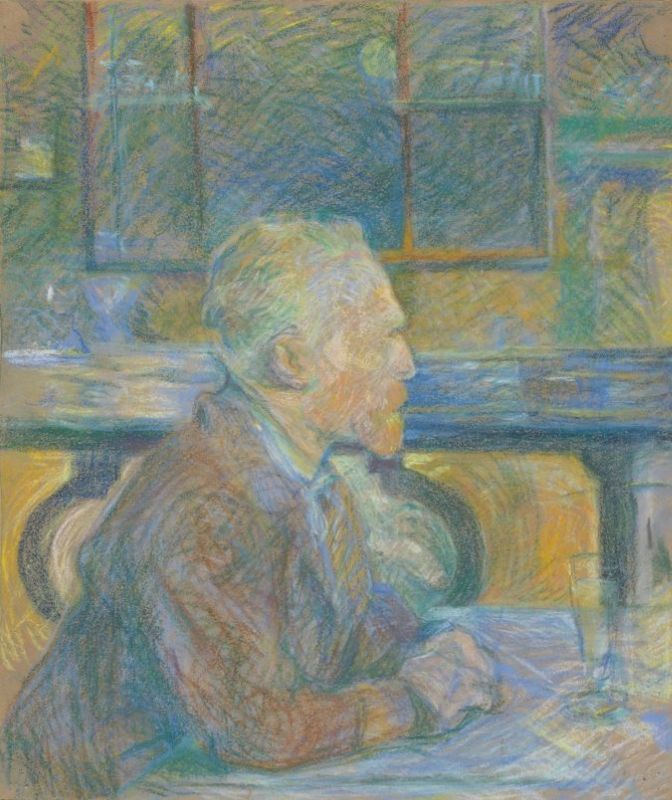
Henri de Toulouse-Lautrec, Portrait of Vincent van Gogh, Van Gogh Museum, Amsterdam, Netherlands.
Through his many self-portraits, we are very familiar with Van Gogh’s likeness. However, those paintings show how the artist saw himself. It is quite interesting to see Van Gogh through the eyes of others, namely his friends and colleagues.
Toulouse Lautrec did this chalk sketch when they both frequented the bars of Paris. Not much is known about their friendship apart from that they both took lessons in the same studio and that Toulouse-Lautrec supported Van Gogh’s paintings in an exhibition in Brussels in early 1890.
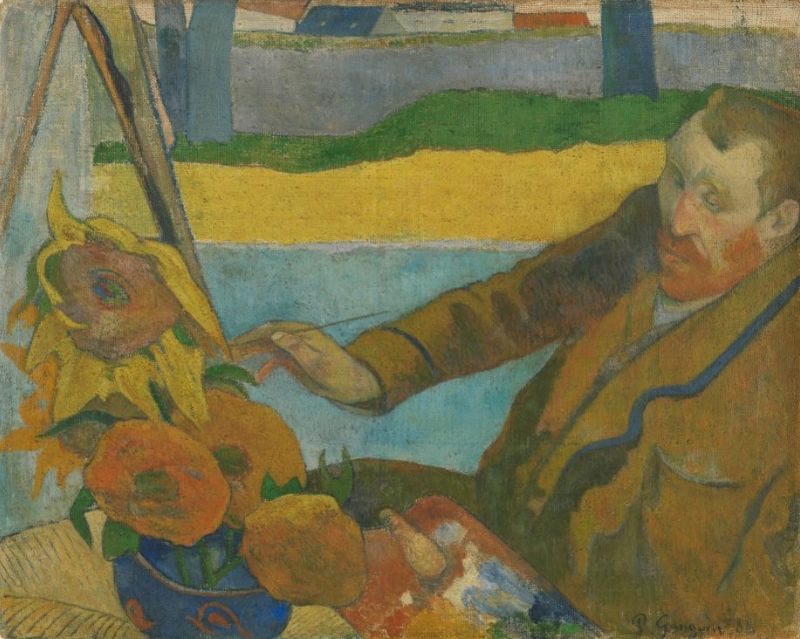
Paul Gauguin, Vincent van Gogh Painting Sunflowers, 1888, Van Gogh Museum, Amsterdam, Netherlands.
On the other hand, the relationship between Gauguin and Van Gogh is well documented. Gauguin painted Vincent hard at work, creating one of the emblematic sunflower paintings.
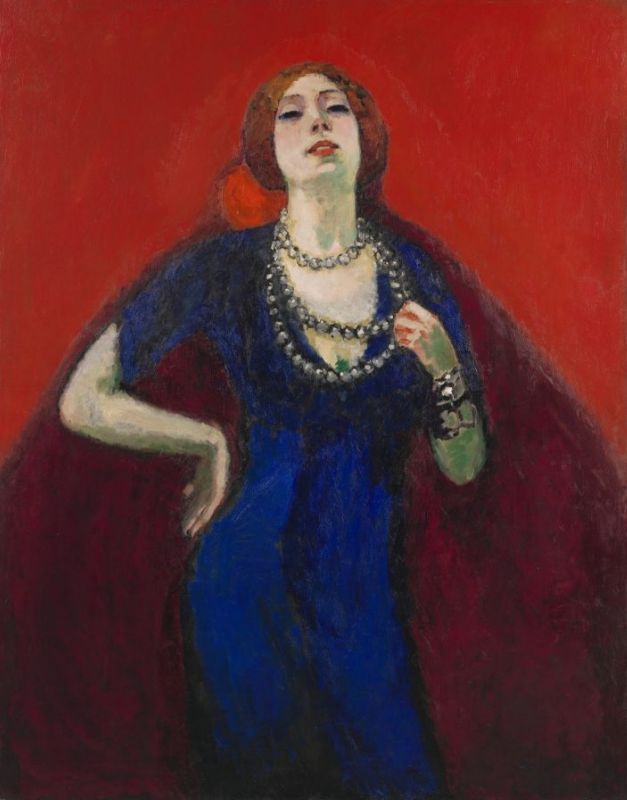
Kees van Dongen, The Blue Dress, c. 1911, Van Gogh Museum, Amsterdam, Netherlands.
Kees van Dongen was a Dutch painter working in Paris in the first decades of the 20th century. On this canvas, the artist’s wife, wearing a cobalt blue dress and a set of pearls, looks out at us with a provocative expression.
The stark contrast of the colors marks the piece as Fauvist. Notice the blue dress with the red background, as well as the pale complexion of the woman with the greenish shadows. Indeed, Van Dongen was affiliated with the Fauves and took part in the infamous Salon d’Automne of 1905, which gave them their name. However, it can’t be ignored that Van Gogh’s style with large, bold blocks of color and expressive brushwork was an integral inspiration to van Dongen.
DailyArt Magazine needs your support. Every contribution, however big or small, is very valuable for our future. Thanks to it, we will be able to sustain and grow the Magazine. Thank you for your help!

Art Historian, she graduated from the Department of History and Archeology of the University of Athens and has an MA in Art History from the University of Sussex. She is a member of the Association of Greek Art Historians. Her articles have been published in Ta Nea tis Technis and avopolis.gr.

Bec is an art nerd, bicycle enthusiast, cat mom, artist/crafter/maker from sunny Toronto, Canada.
If impressionist masterpieces make your heart beat, then you need to visit Berlin this summer. The Alte Nationalgalerie on Museum Island recently...
Kate Wojtczak 8 June 2026
With the collection spanning more than 7,000 artworks, the American Folk Art Museum, located in Manhattan, New York, celebrates some of the most...
Szymon Jocek 21 May 2026
Our first guide, presenting 15 masterpieces of European Painting, barely scratched the surface of the vast collection held at the Metropolitan Museum...
MJ Rivera 20 April 2026
How does anyone begin to navigate 5,000 years of global art without feeling instantly overwhelmed? Do not despair—DailyArt Magazine has you...
MJ Rivera 9 March 2026