The legendary 15th-century painter Leonardo da Vinci has an impressive legacy of artworks. The maestro left behind a huge number of works that played a pivotal role in adding momentum to the Renaissance movement. Get to know 10 important facts about The Last Supper by Leonardo.
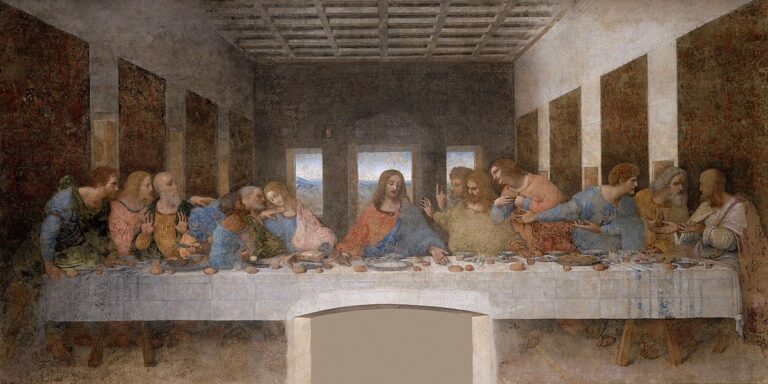
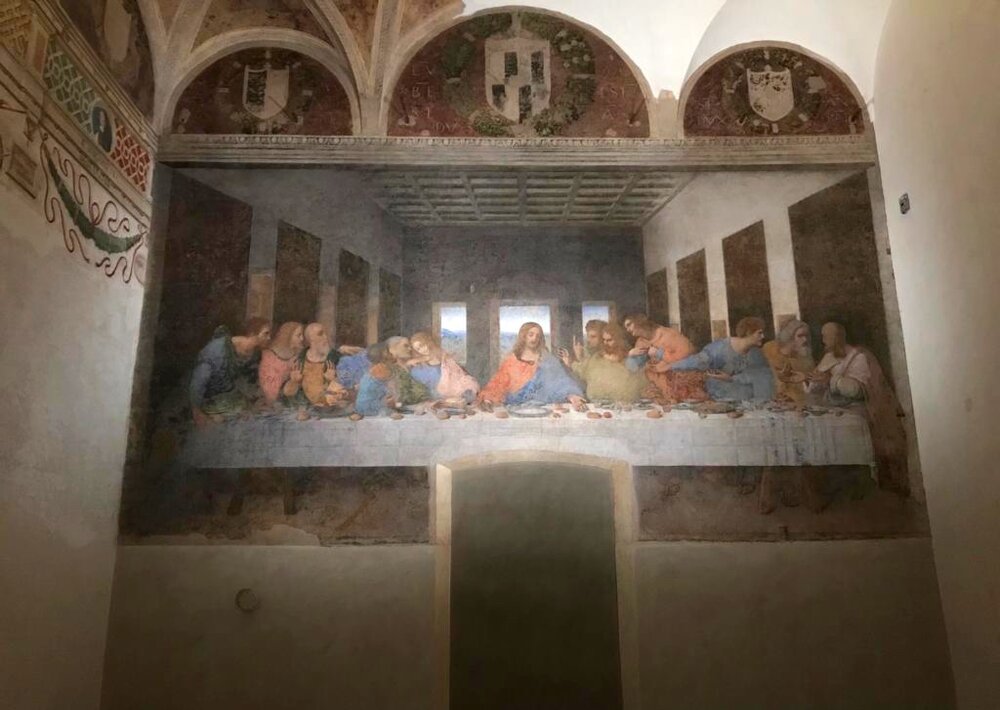
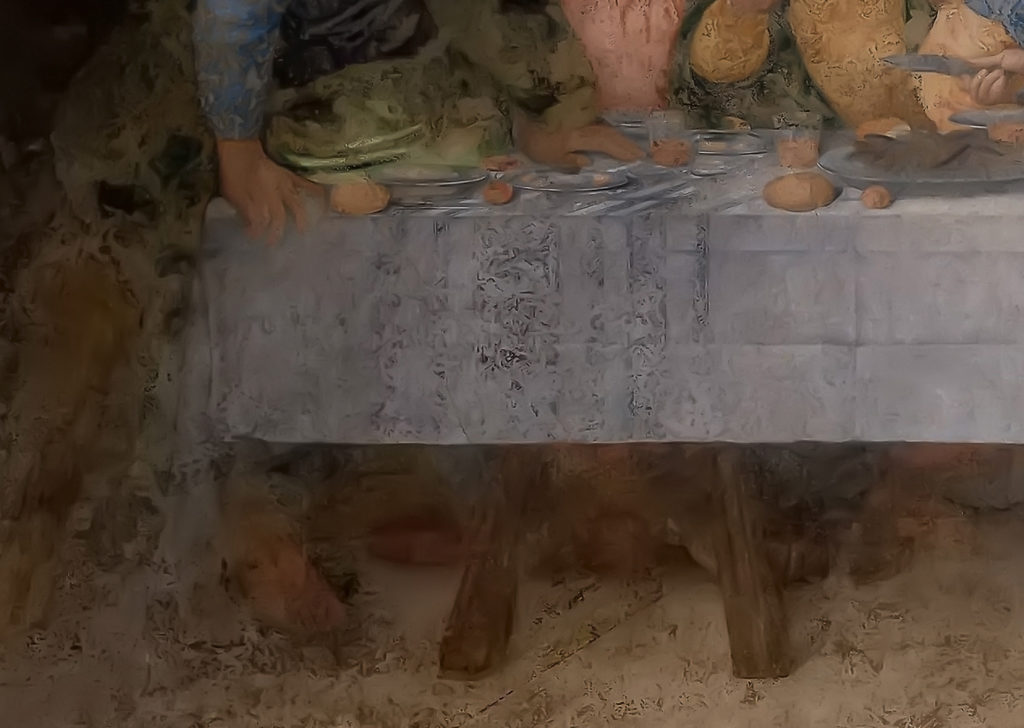
Leonardo da Vinci, The Last Supper, 1495–1498, Santa Maria delle Grazie, Milan, Italy. Detail.
Leonardo’s da Vinci’s artworks have always impressed critics and the masses for their subtlety, hidden meanings, and artistic appeal. However, some of his creations have reached cult status – leading to numerous interpretations and leaving a huge impact on the art and culture scene. One such legendary religious artwork by the maestro is The Last Supper.
Nuances of the Last Supper
This mural painting, created in the late 15th century was completed 3 years after work was started in 1495. Located in Milan’s Convent of Santa Maria delle Grazie, it is hailed as one of the most iconic paintings by da Vinci. The original painting has a dimension of 4.6 meters x 8.8 meters (15 ft x 28.8 ft). The topic is the last meal taken by Jesus and his apostles before he is betrayed by Judas. The painting is in fact a visual interpretation of the event chronicled in the Christian New Testament. It depicts the reaction of the apostles after Christ reveals that one of them is going to betray him.
1. Little of the original painting remains today
When Da Vinci started painting the mural, he did not have much expertise. He did a bit of experimentation and pigmentation was done on a dry plaster wall. That is why the painting did not stand the test of time well. Even when it was in progress, problems of flaking appeared. Da Vinci had to face much hassle fixing those issues at that time. Over the years, it underwent a number of restoration efforts. Therefore, very little of the original masterpiece remains now.
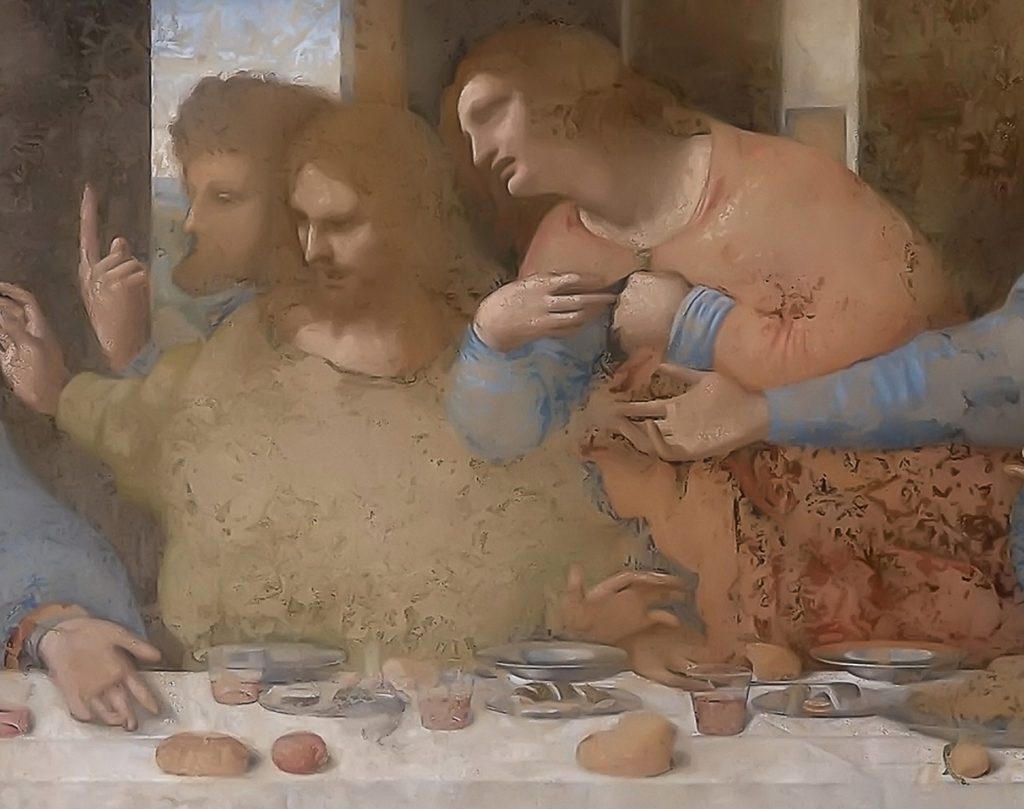
Leonardo da Vinci, The Last Supper, 1495–1498, Santa Maria delle Grazie, Milan, Italy. Detail.
2. The painting captures a crucial and climactic moment
It is well known that The Last Supper depicts the last meal of Jesus with his 12 apostles. This event was followed by his capture and crucifixion. However, Da Vinci was keener to capture the reactions of the apostles through the painting when they came to learn of Jesus’ knowledge about a betrayer. The expressions captured on their faces are what makes the painting even more captivating.
3. It is not kept in a museum
Unlike some other paintings by Leonardo da Vinci, The Last Supper cannot be found in any museum. It is kept at a convent in Milan, Italy. Moving it from the wall of the Convent of Santa Maria delle Grazie would be tricky as well.
Interior of Santa Maria delle Grazie, Milan, Italy. Doing Italy.
4. It is not a fresco
Contrary to widespread belief, this iconic painting cannot be classified as a fresco. Frescos are not painted on dry plaster. Furthermore, deviating from the usual methods led to deterioration of the work.
5. The painting has undergone many restorations
It is among those famous Christian paintings that underwent several rounds of restoration to survive the test of time. The tempera-on-stone experiment of Da Vinci was not very successful. The paint started decaying and flaking as early as the 16th century. There were several restoration efforts that left little of the original painting intact.
Leonardo da Vinci, The Last Supper, 1495–1498, Santa Maria delle Grazie, Milan, Italy. Detail.
6. The authentic look of the apostles
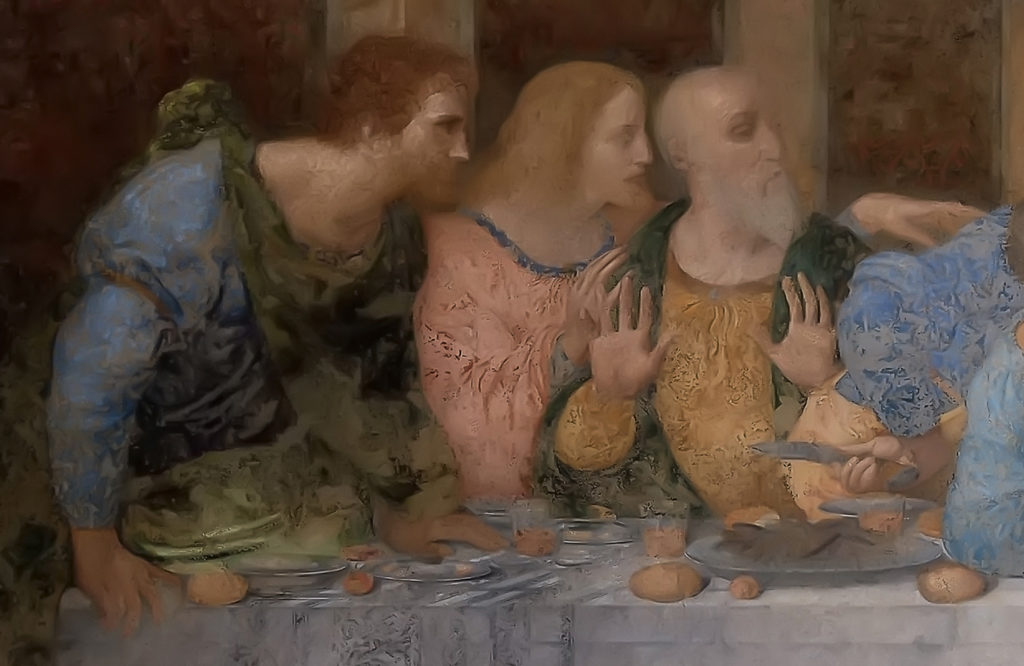
Viewers cannot help admiring the look of the apostles in the painting. There is a theory that each of these apostles was modeled on real life people. For depicting Judas, Da Vinci reportedly chose a criminal.
7. John may actually be Mary Magdalene
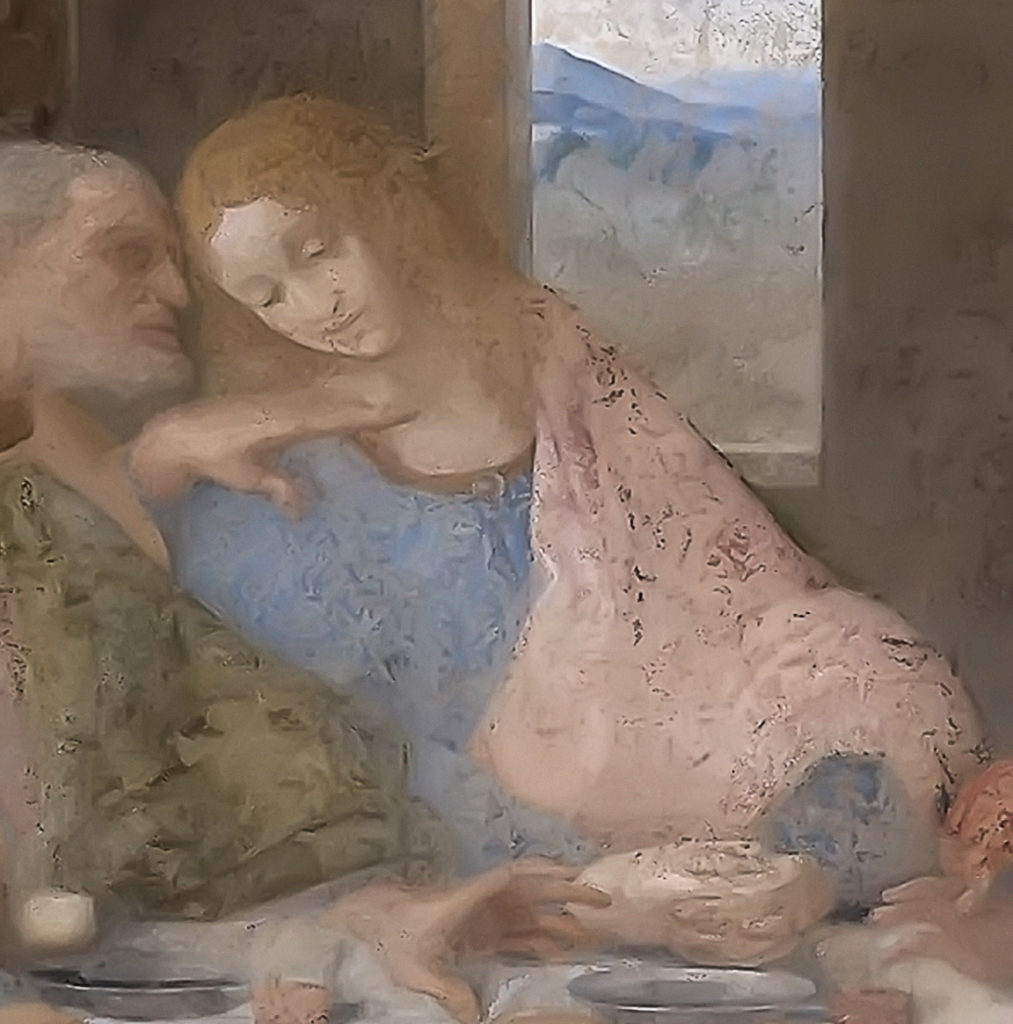
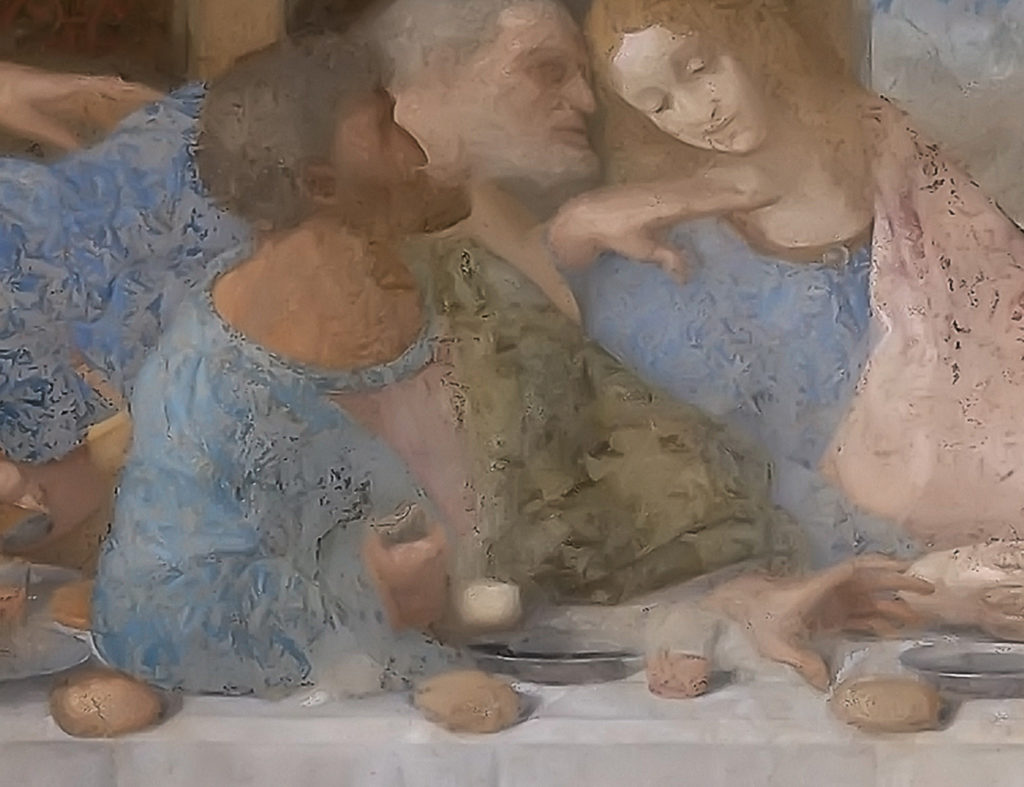
To the right of Jesus in the painting is John the Apostle. However, a section of biblical scholars feels the person depicted in the painting is not actually the apostle John. The figure in the composition is the only one wearing a pendant or necklace, which suggests that this could be Mary Magdalene in disguise.
Leonardo da Vinci, The Last Supper, 1495–1498, Santa Maria delle Grazie, Milan, Italy. Detail.
8. Judas is depicted as a stereotypical Jew
By analyzing the painting closely, it becomes clear that Da Vinci depicted Judas in a typical way to make him resemble a cliché of a Jew. Judas is the only person among the apostles with dark skin. He has a crooked nose. He is seen drinking milk while others are sipping wine. He is seen with a bag of money as well.
Leonardo da Vinci, The Last Supper, 1495–1498, Santa Maria delle Grazie, Milan, Italy. Detail.
9. Numerological Significance
It is well known that Da Vinci used maths and numerological aspects in his works and The Last Supper is no exception. In this painting, number 3 has been depicted in many ways which stands for the Holy Trinity. The apostles are present in groups of 3 and there are 3 windows behind the group. Jesus is positioned as a triangle in the painting as well.
10. Damaged by Warfare
It is not only weather elements that ravaged the painting. In the late 17th century, the painting was damaged by French revolutionary soldiers. Later, in World War II, bombing vibrations damaged the building where the painting is kept.
Leonardo da Vinci, The Last Supper, 1495–1498, Santa Maria delle Grazie, Milan, Italy. Detail.
Author’s bio:
Vandana Sethi is the Co-founder and Editor of Historyly, a teacher by profession. She has a passion for reading and writing about different historical periods. Historyly was started with the view to make ancient history meaningful and interesting to the everyday reader.
We love art history and writing about it. Your support helps us to sustain DailyArt Magazine and keep it running.
DailyArt Magazine needs your support. Every contribution, however big or small, is very valuable for our future. Thanks to it, we will be able to sustain and grow the Magazine. Thank you for your help!
This is our guest profile for occasional authors. If you have an interesting story about art to tell, send it to our Editor-in-chief Kate at [email protected]. You might be the next here!
Venetian color often feels immediate: a blue robe, a crimson sleeve, a flash of yellow, a shadow beneath living skin. Yet before these colors became...