From Finland with Love: Akseli Gallen-Kallela in 10 Paintings
Akseli Gallen‑Kallela (1865–1931), one of Finland’s most famous painters, holds a distinctive place in European art at the turn of the 20th...
Catherine Razafindralambo 19 February 2026
4 May 2026 min Read
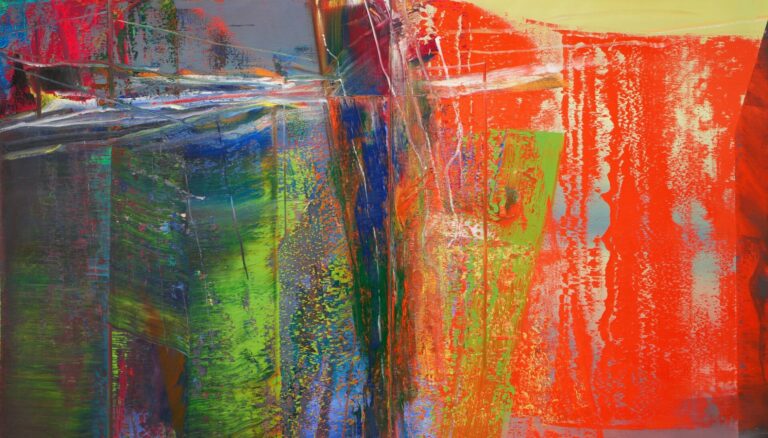
Gerhard Richter, Abstraktes Bild (596), 1986. Sotheby’s.
Gerhard Richter is a widely-known and revered German artist, as well as one of the world’s most expensive living artists. Several of his works held record prices at auctions. Known for blending photorealism and abstraction—often within a single canvas—Richter’s influence is hard to overlook. Watch this video on his practice and explore the 10 most impressive artworks of Gerhard Richter’s career.
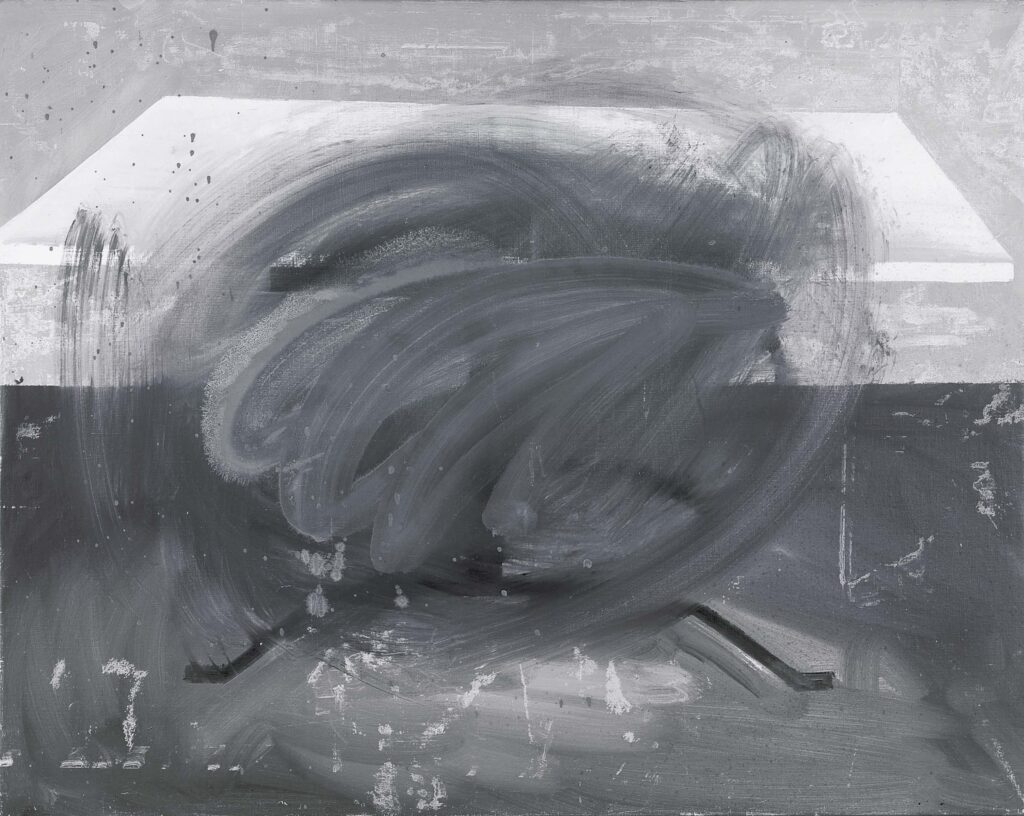
Gerhard Richter, Tisch (Table), 1962, private collection. David Zwirner Gallery.
In the early years of his career, Gerhard Richter merged two seemingly opposite modes of painting—photorealism and abstraction in works such as Tisch (Table). Taking the image of an ordinary table from an Italian design magazine, Richter rendered it with photographic clarity, yet introduced an abstract element that lifts the mundane object into the realm of abstract ambiguity.
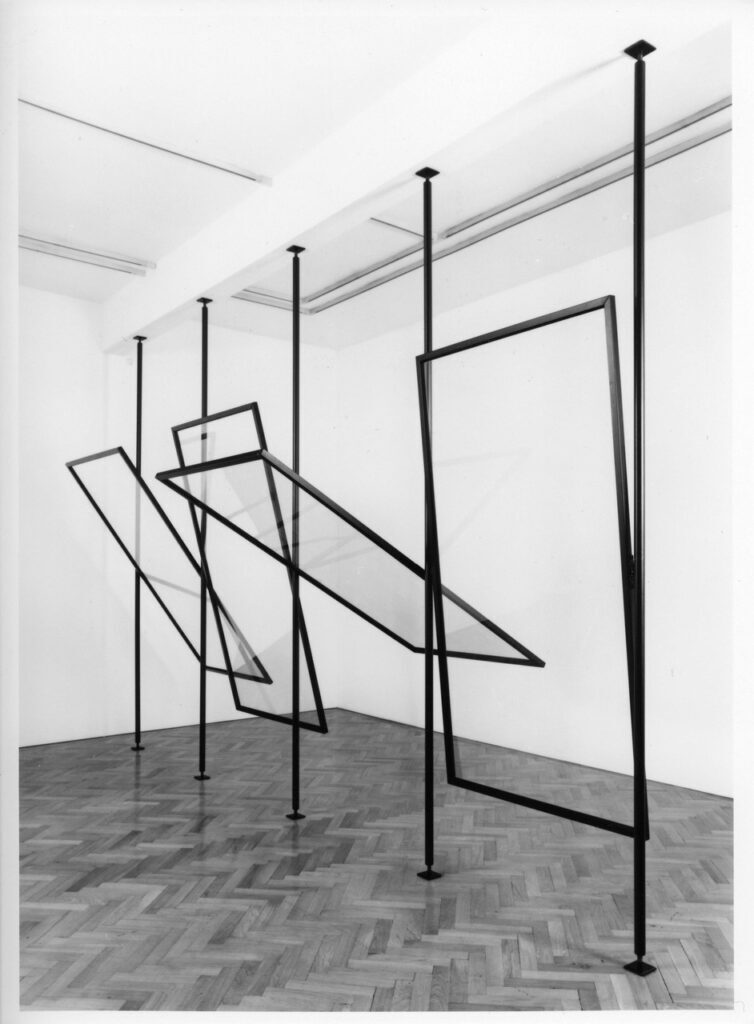
Gerhard Richter, 4 Panes of Glass, 1967, Herbert Foundation, Ghent, Belgium. Source.
Richter’s oeuvre goes beyond painting. In 1967, he started to create a lesser-known but long-running body of work using mirrors and glass and titled the first piece in this series 4 Panes of Glass. Over the years, he built a range of related installations by varying the number of panes, which reached as many as 14 in 2008. His most recent one, 3 Scheiben (3 Panes of Glass), was presented in 2023 at the David Zwirner gallery.
Richter’s interest in glass speaks to the way reflections and refractions keep changing depending on where you stand, what is around them, and how many layers you are looking through. Glass art never quite holds still—and neither does its meaning.
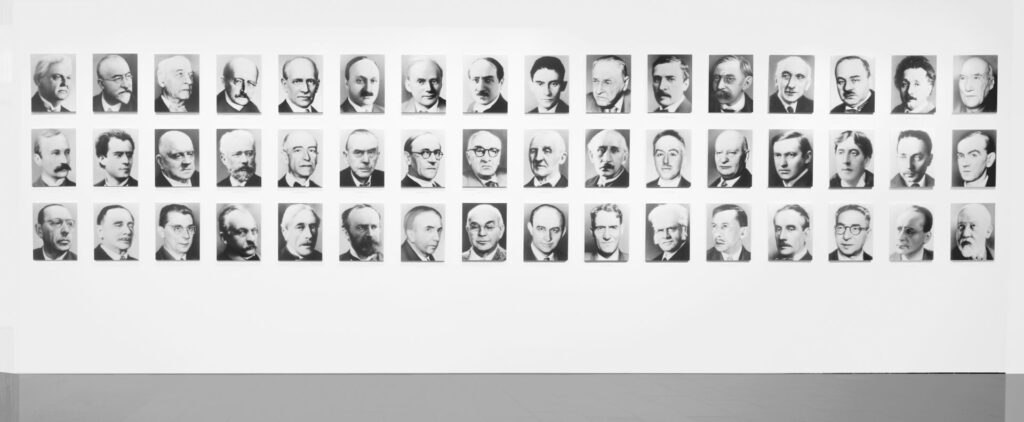
Gerhard Richter, 48 Portraits, 1972, Museum Ludwig, Cologne, Germany. Source.
For the German Pavilion at the 1972 Venice Biennale, Gerhard Richter conceived an artwork about people that shaped Germany’s collective identity and cultural memory. He selected 48 European and North American personalities from the 19th and 20th centuries. The series excluded religious and political figures, as well as artists. Women were also absent, though Richter stated that this was not a determining factor in his selection.
Richter painted each black-and-white portrait at the same scale and arranged them in a row. Most figures are shown with a slight tilt, while Franz Kafka is notably depicted facing forward. The neoclassical design of the German Pavilion in Venice inspired him to create an installation reminiscent of a mausoleum. Another interesting detail is the way these well-known figures are rendered strangely anonymous. This effect was also enhanced by his signature blurry effect achieved by dragging a dry brush across a wet canvas.
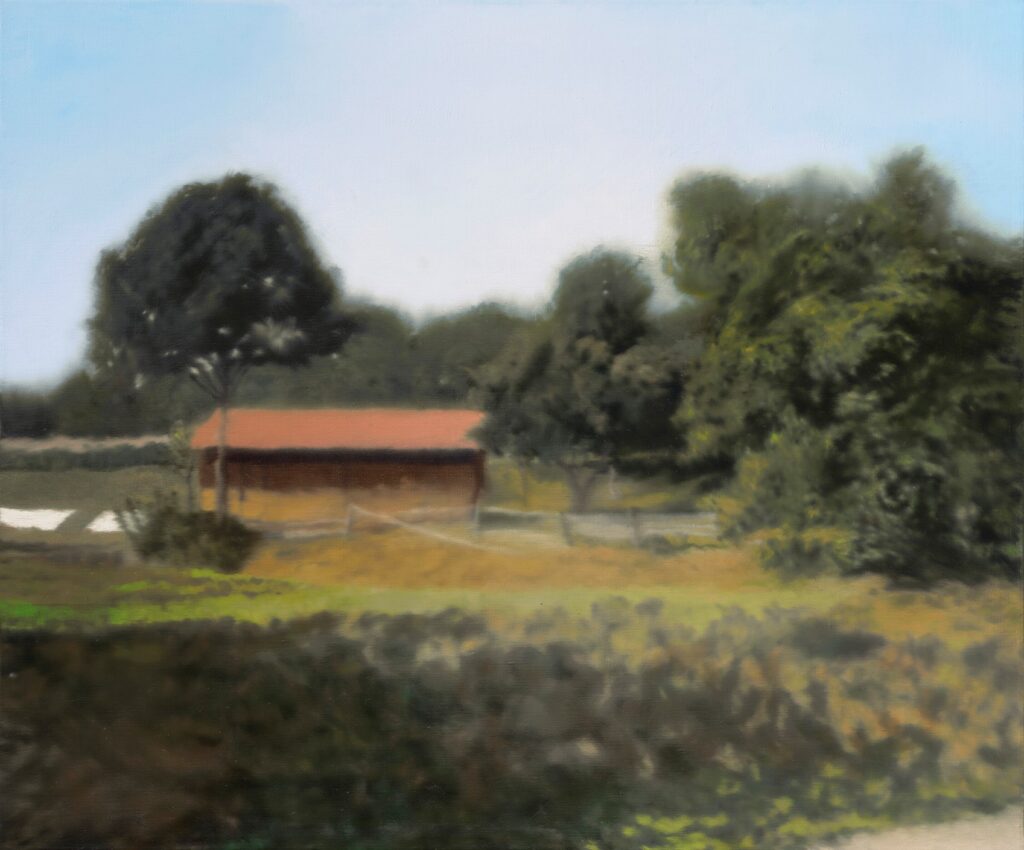
Gerhard Richter, Schober (Haybarn), 1984, private collection. Christie’s.
With Schober (Haybarn), Richter returns to his established practice of working from photographs, employing once again the blur that has become his visual signature.
I paint landscapes or still lifes between abstract works. They make up about one-tenth of my production. On the one hand, they are useful because I like to work from nature—although I naturally use a photograph—because I believe that every detail from nature has a logic that I would also like to see in abstraction. On the other hand, painting from nature or painting still lifes is a distraction and creates a balance. I could also say that the landscapes are a kind of longing, longing for an undamaged, simple life. A bit nostalgic.
The artwork was sold for £8,405,000 at Christie’s in London on March 5 2026. Watch the video to explore what makes this work so distinctive.
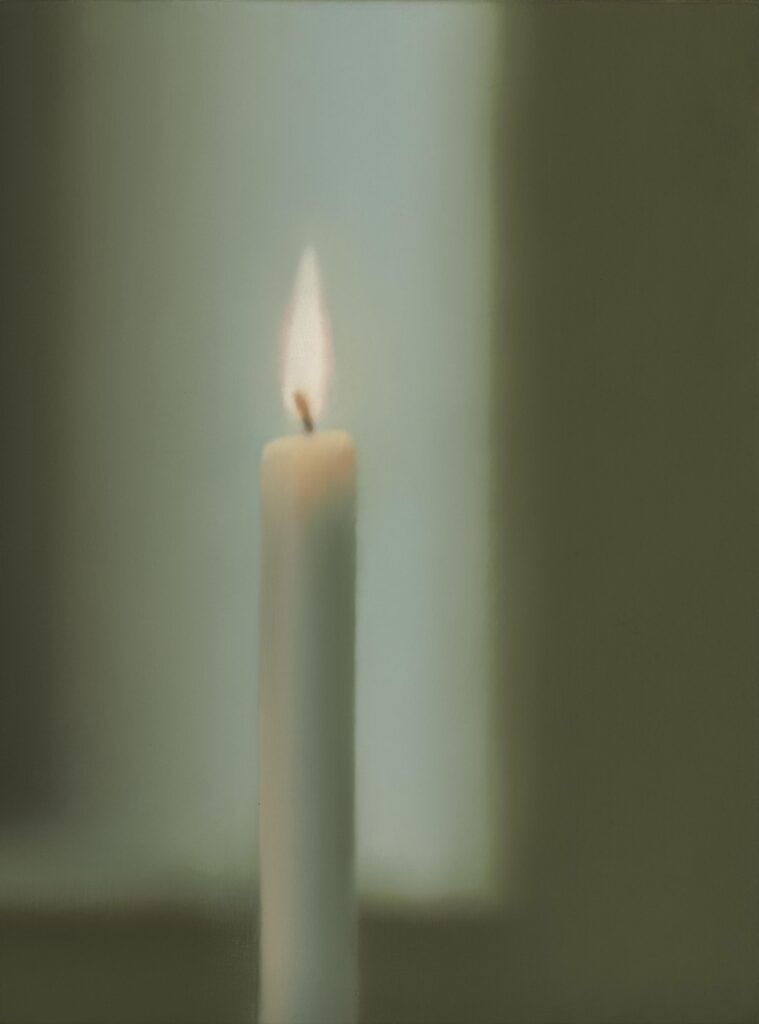
Gerhard Richter, Kerze (Candle), 1982. Christie’s.
Kerze is one of Richter’s most iconic paintings. A single candle burns against a dusky background. Throughout art history, the fleeting flame of the candle has stood as a memento mori—a symbol of life’s ephemerality. The work captures Richter’s lifelong fascination with the nature of painting itself, presenting a perfect mix of meticulous execution and intimate atmosphere.
The flame flickers softly, surrounded by a warm halo. The scene is calm, almost meditative. The glow of the slim candlestick captures a contradictory moment: both empty and emotionally charged. Through his remarkable composition, Richter strikes a unique balance between the concrete image of a candle and the abstract field of color. And he let his painting oscillate between the two.
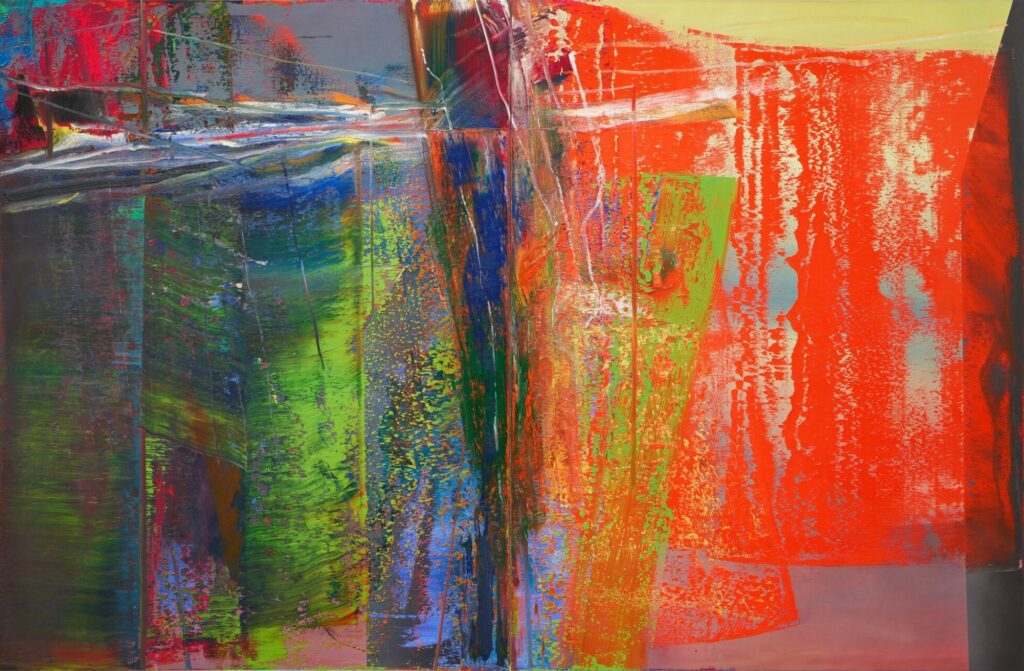
Gerhard Richter, Abstraktes Bild (596), 1986. Sotheby’s.
Painted at his career peak, Abstraktes Bild (596) is a work featuring immersive color, vast scale, and compositional force. Across two canvases that read as a single whole, Richter stages a clash of primary and secondary colors. Under layers of red, sweeping waves of blue-green and purple, a landscape emerges.
In that way, Richter echoes Monet’s Water Lilies. The work becomes an intersection for genres in art history: Abstract Expressionism, Impressionism, and Romantic landscape painting all surface here. Watch this video to find out how Richter’s work made those art traditions meet.
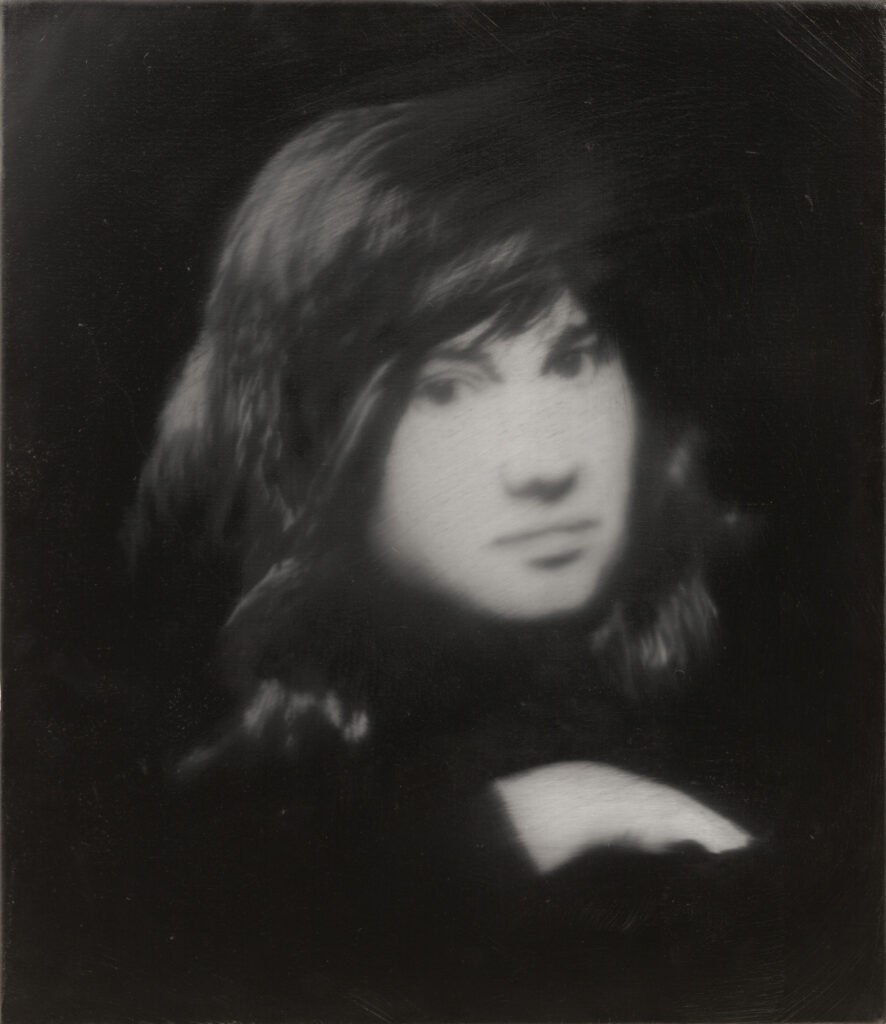
Gerhard Richter, October 18, 1977, 1988, Museum of Modern Art, New York City, NY, USA.
The 15 paintings of October 18, 1977, are based on photographs of moments in the lives and deaths of four members of a German left-wing terrorist group, the Red Army Faction (RAF), that was behind a wave of kidnappings and killings in the 1970s. Richter based the works on newspaper and police photographs, as well as television images. The result is deliberately murky with color being drained away. The motifs blur and slip out of focus.
Repetition across the series creates an almost cinematic effect. It’s like watching a tragedy unfold in slow motion. Richter made these paintings 11 years after the events, during a prosperous and politically conservative era. By insisting that this painful chapter be remembered, he produced what many consider his most controversial work.
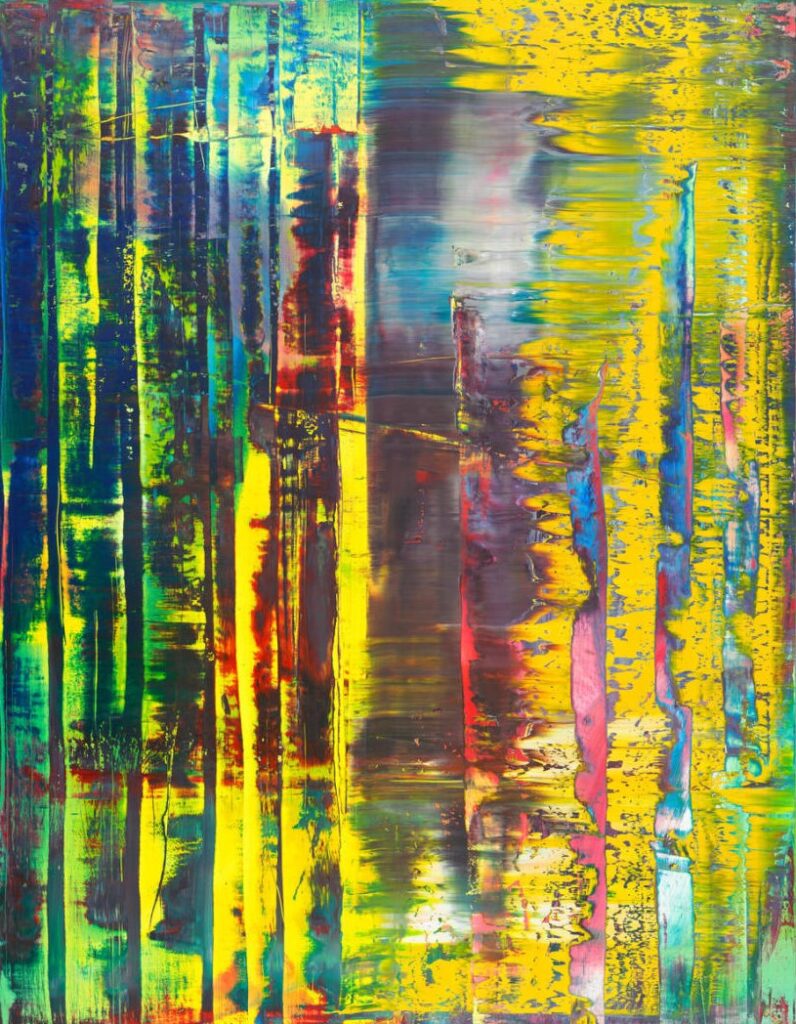
Gerhard Richter, Abstract Painting 780-1, 1992, National Gallery of Art, Washington, DC, USA. Source.
Richter once admitted that his abstractions rarely turned out as planned—and that he often changed them along the way. Abstract Painting 780-1 marked a departure from his earlier gray, textured monochromes. The colors in this painting are exceptionally bold, almost iridescent. Using a squeegee on a canvas covered in technicolor paint, he created a sense of depth through repeated layering of colors. Rather than keeping figurative art and abstraction apart, Richter fused them into a new, complex imagery.
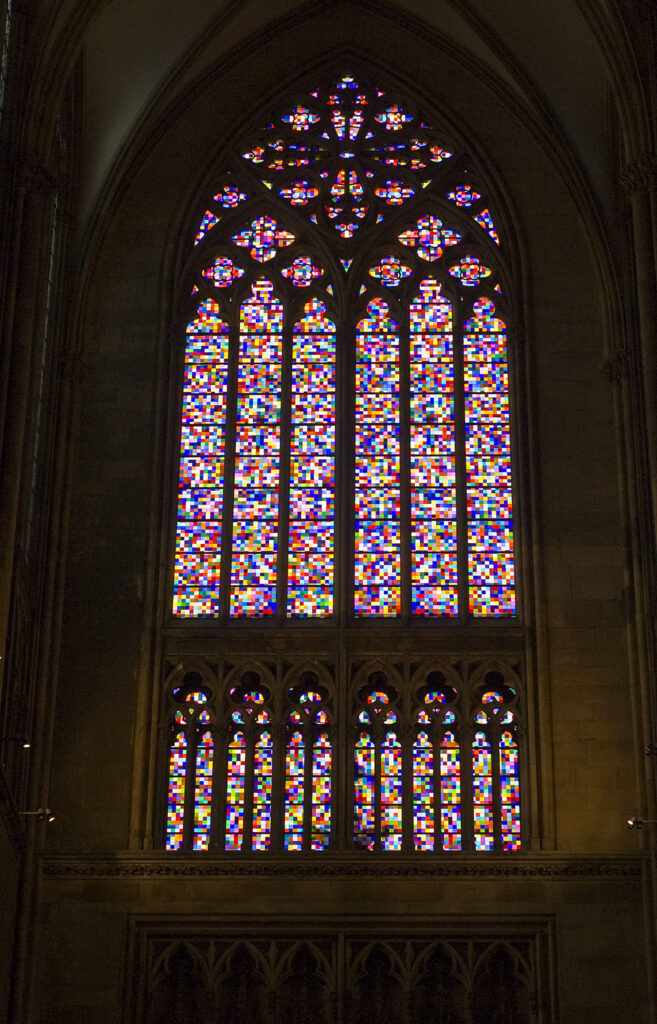
Gerhard Richter, Cologne Cathedral Window, 2007, Cologne, Germany. Public Delivery.
As already mentioned, Richter loved working with glass. His installations of glass panes were exhibited in galleries and museums. And in August 2007, he donated an enormous stained glass window—measuring 23 by 9 meters—to Cologne Cathedral. Some of the cathedral’s original windows were destroyed during the Second World War and replaced in 1948 with simple glass panes that eventually will be replaced again.
Richter’s window consists of small pieces 9.6 by 9.6 centimeters (3.78 x 3.78 inches) of blown glass, covering an astonishing 106 square meters. He selected 72 colors, specifically those found in the cathedral’s surviving medieval windows, and then arranged the squares using a random number generator.
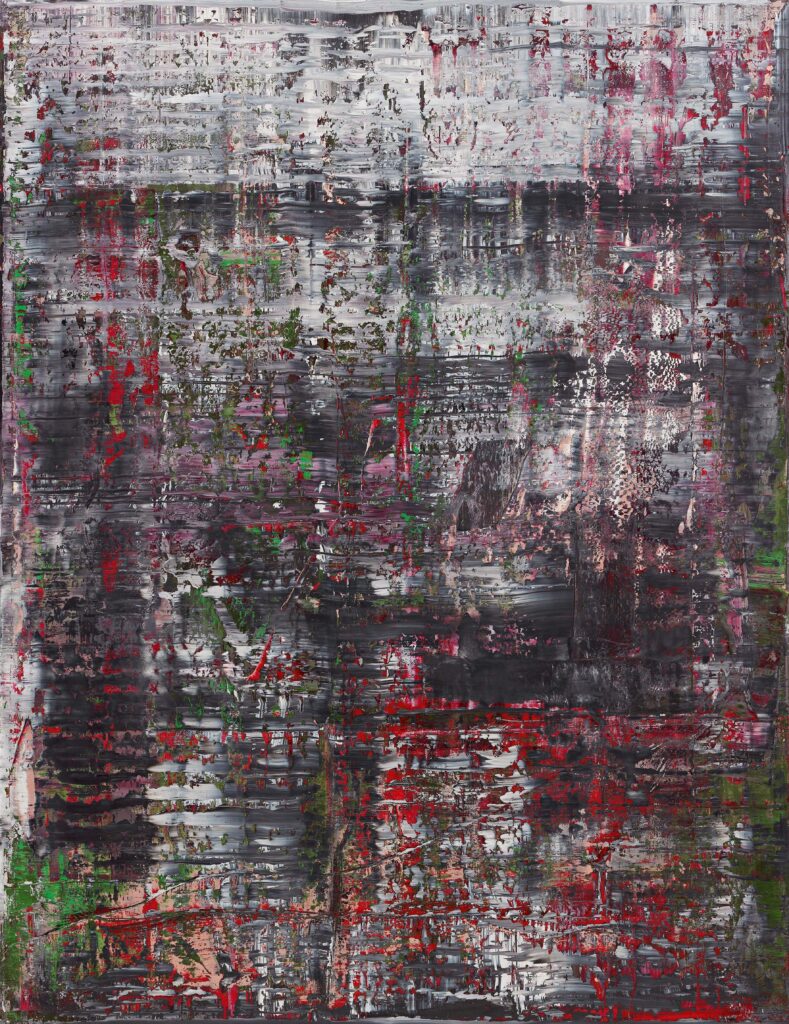
Gerhard Richter, Birkenau, 2014, Neue Nationalgalerie, Berlin, Germany. David Zwirner Gallery.
Birkenau is one of Gerhard Richter’s most powerful artworks, comprising four large-format paintings of equal size. Richter used authentic photographs taken in secret in 1944 by the Sonderkommando (special task force) of the Jewish prisoners in the Auschwitz-Birkenau concentration camp. A Polish resistance group smuggled a camera with black-and-white film into the camp.
Only seven photos were taken, and the film was brought out inside a toothpaste tube. Those images became vital evidence of the crimes at Birkenau. Richter’s Birkenau paintings have helped push these photographs into public view. Yet at the same time, he has completely concealed them within his work; he rendered them invisible. That paradox is what makes the series such a remarkable site of remembrance.
Get your daily dose of art
Click and follow us on Google News to stay updated all the time

DailyArt Magazine needs your support. Every contribution, however big or small, is very valuable for our future. Thanks to it, we will be able to sustain and grow the Magazine. Thank you for your help!

History of art graduate and enthusiastic appreciator of anything art and culture-related. Currently very interested in Catalan Modernism and Postmodernism, Surrealist artist-designer Elsa Schiaparelli, and 15th-century Florentine art.

Akseli Gallen‑Kallela (1865–1931), one of Finland’s most famous painters, holds a distinctive place in European art at the turn of the 20th...
Catherine Razafindralambo 19 February 2026
Art and tourism have a long and complex relationship. At the peak of the Grand Tour in Rome in the 19th century, countless artists had made a living...
Justin Fenech 1 January 2026
As the Roman goddess of hunting, the moon, and nature, it is unsurprising that Diana is often depicted among animals and nature in art. Throughout...
Anna Ingram 8 September 2025
The Crucifixion has permeated practically every period and art movement. The desire to represent the suffering Christ enabled artists to drive and...
Elizabeth Provost 17 April 2025