

Mirrors in Art: Reflections of Femininity
The mirror has functioned as a recurring symbol throughout art, particularly in representations of women. Historically, its presence in art has often...
Martha Teverson 24 August 2026
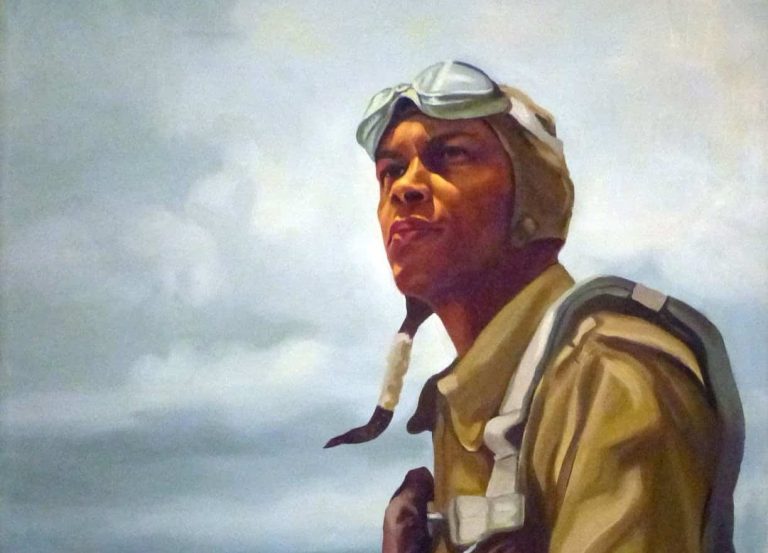
Betsy Graves Reyneau, Portrait of William Ayers Campbell, 1944, National Portrait Gallery, Washington, DC, USA. Detail.
When first unveiled at the Smithsonian in 1944, Betsy Graves Reyneau’s 38 portraits of prominent African Americans were potent weapons in the battle for racial equality. Portraits of Outstanding Americans of Negro Origin, funded by the Harmon Foundation, included works by Reyneau and six paintings by Laura Wheeler Waring, and traveled the United States for 10 years to erode prejudice. Once controversial, Reyneau’s paintings of Marian Anderson, George Washington Carver, and other prominent Black Americans are now hallmarks of the National Portrait Gallery’s collection.
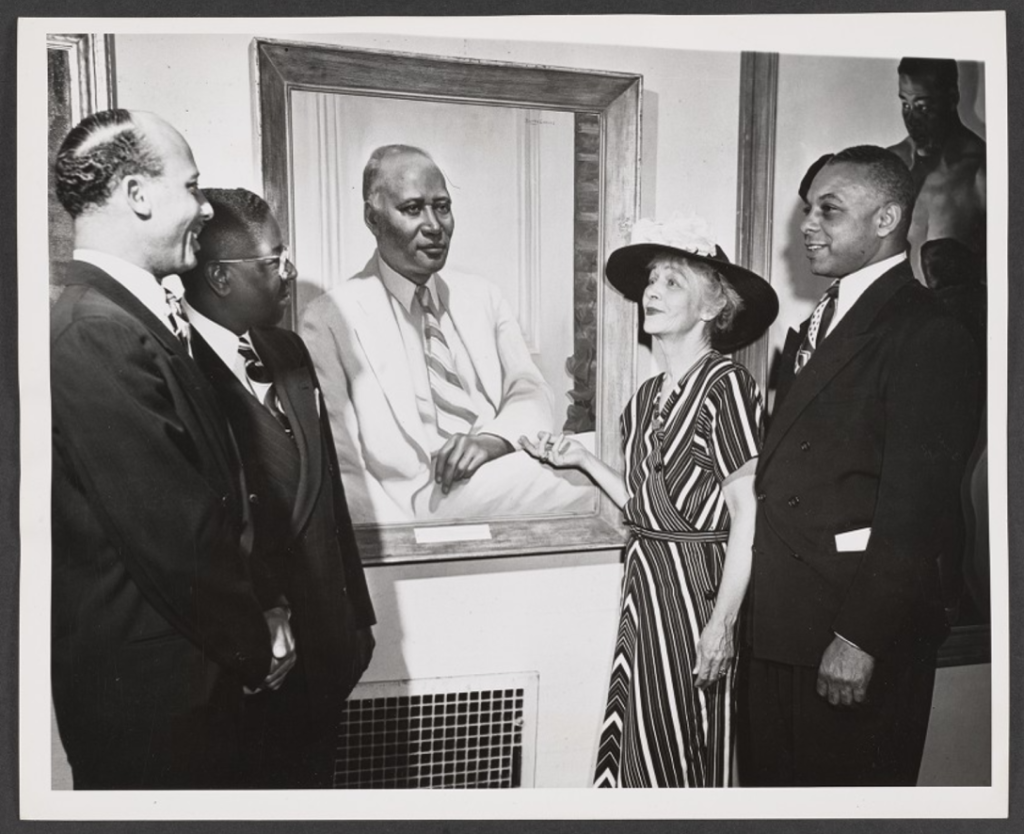
Betsy Graves Reyneau pictured with Edgar J. Johnson, George A. Beavers, Jr., and Norman O. Houston as they look at her portrait of Charles Hamilton Houston, 1948, The University of California, Los Angeles, Library Special Collections, Los Angeles, CA, USA.
As an artist and an activist, Reyneau dedicated her life to fighting for civil liberties. As a suffragist, she picketed the White House. She marched for workers’ rights during the depression. During the rise of the Nazi party in Germany, she harbored refugee Jews in her London home. She spoke out against racial oppression and took part in sit-ins as far back as the 40s. Her friend, the Black poet Robert Hayden, once said of Reynau that to her, “nothing human was alien.”
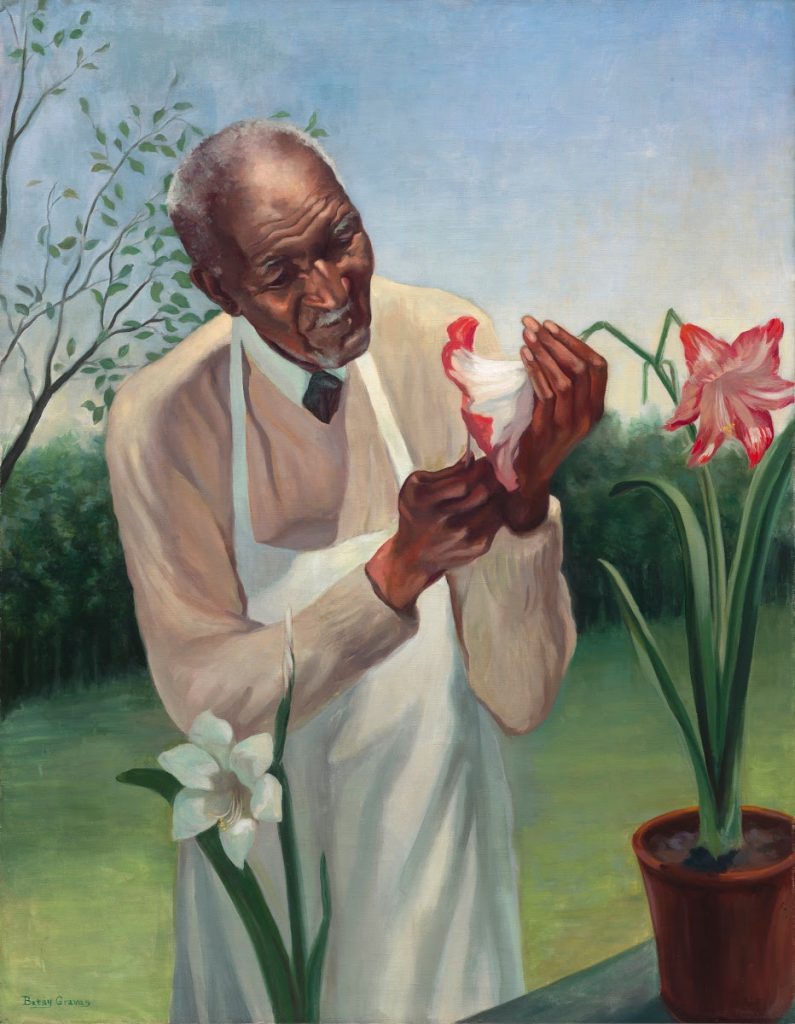
Betsy Graves Reyneau, Portrait of George Washington Carver, 1942, National Portrait Gallery, Washington, DC, USA. © Peter Edward Fayard.
Born in 1888, Betsy Graves’ parents divorced when she was young, and she lived with her father’s family in Michigan. Her grandfather served on the Michigan Supreme Court, and her father, Henry B. Graves, was an attorney as well. Her paternal grandmother, Ann Eliza Graves, was a suffragist and the first woman elected to the Battle Creek, Michigan, School Board.
However, despite her grandmother’s activism, Betsy’s political involvement, as well as her pursuit of an art career, were sources of tension with her father. Nonetheless, he did grudgingly support her financially when she left for Boston’s School of the Museum of Fine Arts. Later, she studied under Frank Duveneck in Cincinnati.
In 1915, Betsy Graves married Paul Reyneau; they initially lived in Michigan. She continued to work for women’s rights with the National Woman’s Party and traveled to Washington, DC to represent Michigan’s state chapter for a 1917 protest in front of the White House. “If American boys can die for democracy, I can go to jail for it,” she said.
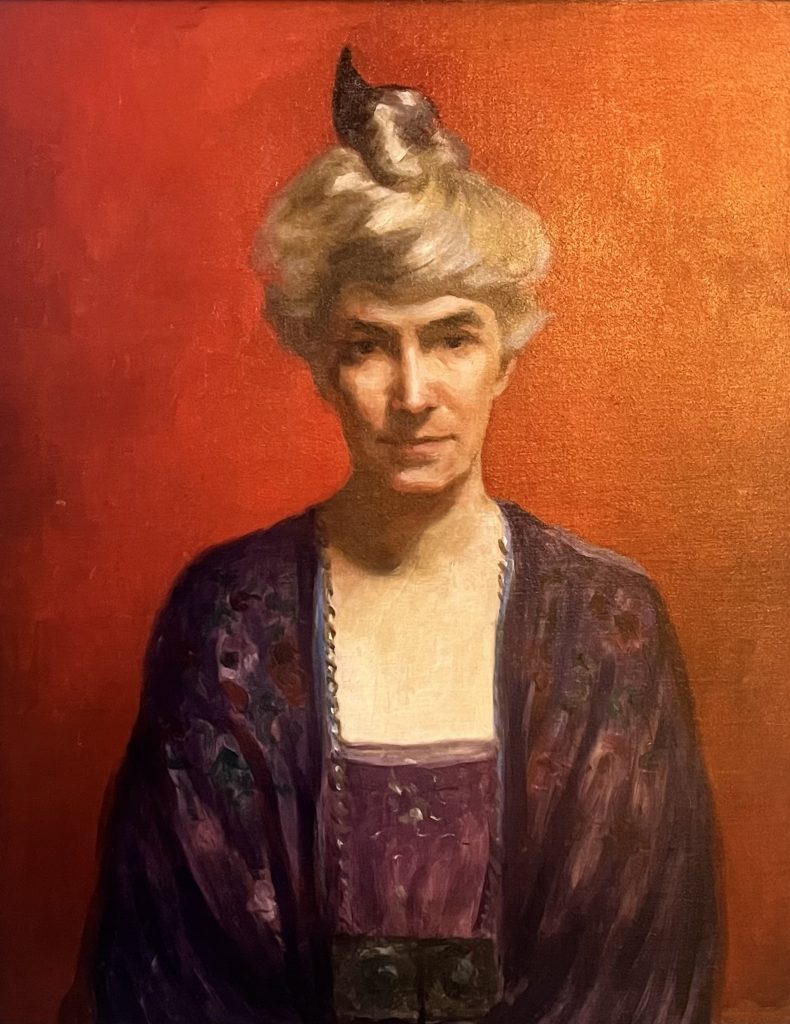
Betsy Graves Reyneau, Portrait of Suffragist Eunice Dana Brannan, 1922, Belmont-Paul Women’s Equality National Monument, Washington, DC, USA. Photograph by the author.
On July 14, 1917, Reyneau and 15 others were arrested for picketing the White House and were sentenced to an unusually long 60 days at the Occoquan Workhouse. However, public pressure led to a release by presidential order within days.
“To test the pardon after we were out, we picketed the White House the next day with banners stating that we asked not for ourselves, but justice for all American women,” Reyneau later said. The National Woman’s Party later honored Reyneau and 88 others arrested that year with a commemorative Jailhouse Door Pin.
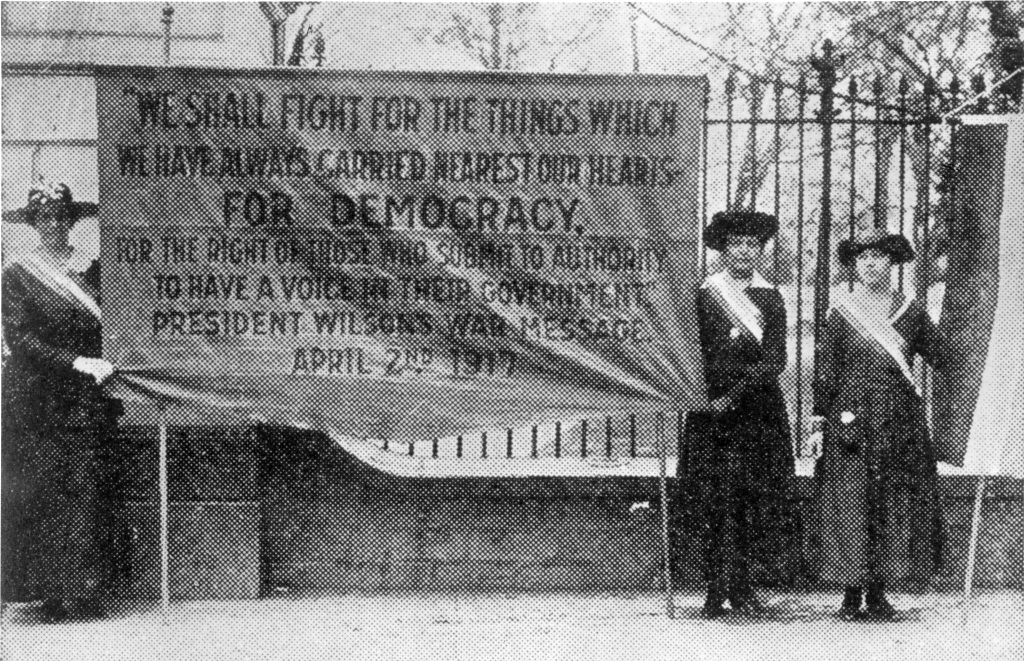
Betsy Graves Reyneau, on the far right, picketing the White House in 1917. Alexander Street.
In 1918, Reyneau gave birth to her daughter, Ann, but to the disappointment of her husband, motherhood did not slow her activism or her pursuit of art. This caused friction in her marriage, and the two divorced in 1921.
That same year, unbeknownst to Reyneau’s father, the Calhoun County Bar Association hired Reyneau to paint a portrait of her deceased grandfather, Benjamin Graves, to be hung in a circuit courtroom. The portrait was unveiled in a public ceremony, and it was on that day that Reyneau’s father, a scheduled speaker for the event, learned for the first time that his daughter had painted the portrait.
Reyneau continued her activism, and police arrested her again in 1930 on “Red Thursday,” an international day of mass protests on behalf of the unemployed. During the protest, William Smith, a Black cook and butcher walking by the protest, was singled out by police and beaten. Reyneau ran to his aid and was promptly arrested. Later, Reyneau testified in court in Smith’s defense, and he was found not guilty.
For much of the 30s, Reyneau lived in Paris and London, where she continued to grow as an artist. She created art for The Bookman, often contributing portraits of well-known writers. When the Nazi regime rose to power, Reyneau opened her home to Jewish refugees looking for a safe stop en route to America. However, with the threat of a Nazi attack looming, Reyneau returned to the United States in 1939, before the onset of the Blitz.
Upon returning to the United States, more than ever, Reyneau saw the hypocrisy of the racial policies in the United States and the similarities between the persecution of Black Americans and those oppressed by fascist European governments. She painted a local Black laborer, Edward Lee, and it was this painting that convinced George Washington Carver, a reluctant subject, to let her paint him as well. The portrait of Carver became the first painting of a Black subject to hang at the Smithsonian, according to the Hartford Courant.
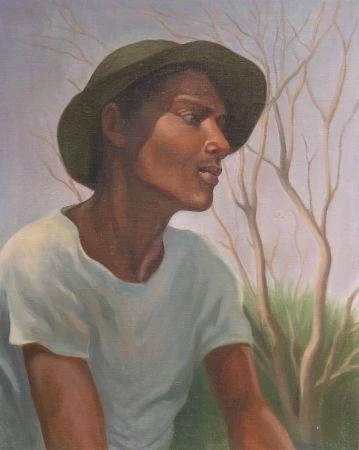
Betsy Graves Reyneau, Portrait of Edward Lee, 1941, private collection. Mutual Art.
While painting at the Tuskegee Institute, Reyneau met Tuskegee Airman William Deiz. Reyneau painted his portrait too and submitted it to the Treasury Department for use in the war bonds poster campaign. According to two Black newspapers at the time, having not heard back for some time, Reyneau was told the painting had been lost. She recreated it, and with the urging of NAACP lawyer Charles Houston, the Treasury Department finally released the poster. Once released, it became wildly popular and made Deiz an iconic figure in American History.
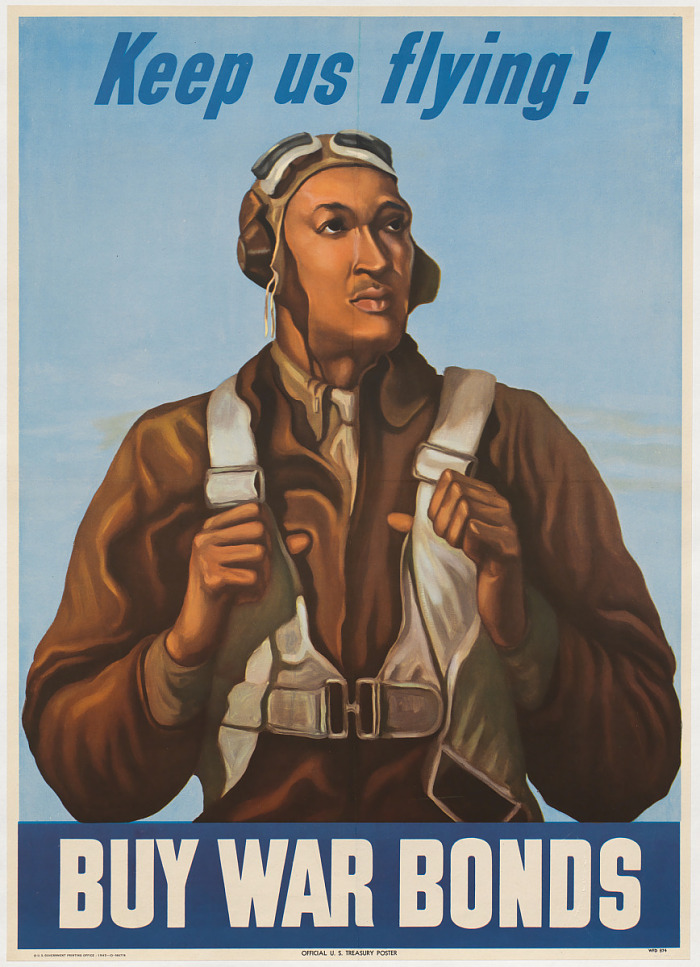
Betsy Graves Reyneau, War Bonds Poster, 1943, National Museum of African American History and Culture, Washington, DC, USA.
The Harmon Foundation, founded by a white real estate developer, William E. Harmon, commissioned Reyneau to complete dozens more portraits of prominent Black figures. In 1944, Reyneau’s work, along with that of Laura Wheeler Waring, was showcased at the Smithsonian in a show titled Outstanding Americans of Negro Origin. Eleanor Roosevelt and Vice President Henry A. Wallace attended the opening.
The exhibition was such a success that the Harmon Foundation took it on the road, touring the paintings from city to city in an attempt to break down racial prejudice. On her travels, Reyneau took on speaking engagements, commissions, and civil rights work. Consistently committed to justice, she routinely spoke out against segregation. According to two accounts, she participated in sit-ins at a San Diego restaurant in 1948 in coordination with the local chapter of the NAACP.
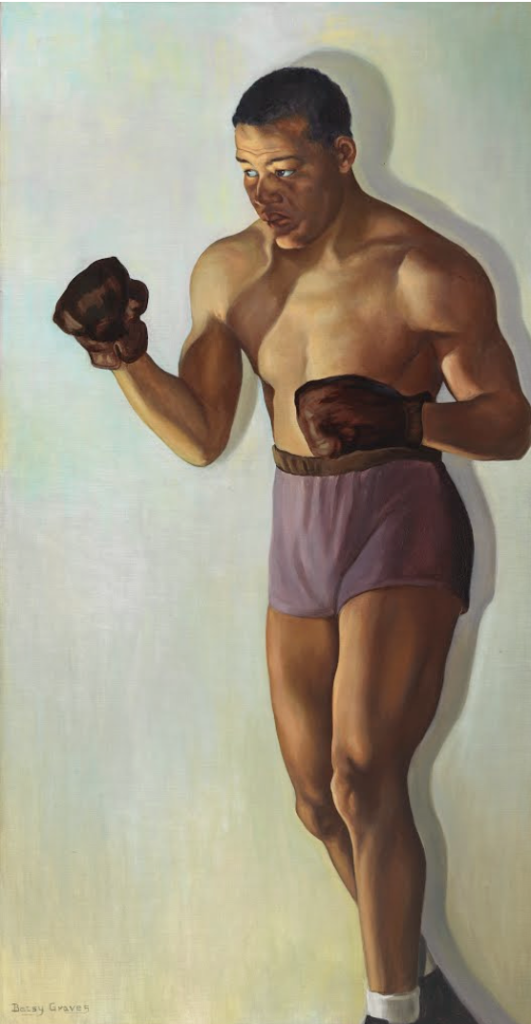
Betsy Graves Reyneau, Portrait of Joe Louis, 1946, National Portrait Gallery, Washington, DC, USA. © Peter Edward Fayard.
The Harmon Foundation continued to fund Reyneau’s portraits, and the exhibition grew to include paintings of Aaron Douglas, Joe Louis, and Charles Hamilton Houston. Despite the success of the traveling show and various other commissions, by 1953, Reyneau was not earning a significant income. Florence Rose, birth control advocate and one-time secretary for Margaret Sanger, the founder of Planned Parenthood, wrote to friends to gather money for Reyneau’s living expenses. Rose secretly worked with others, knowing Reyneau would not have approved of the plan.
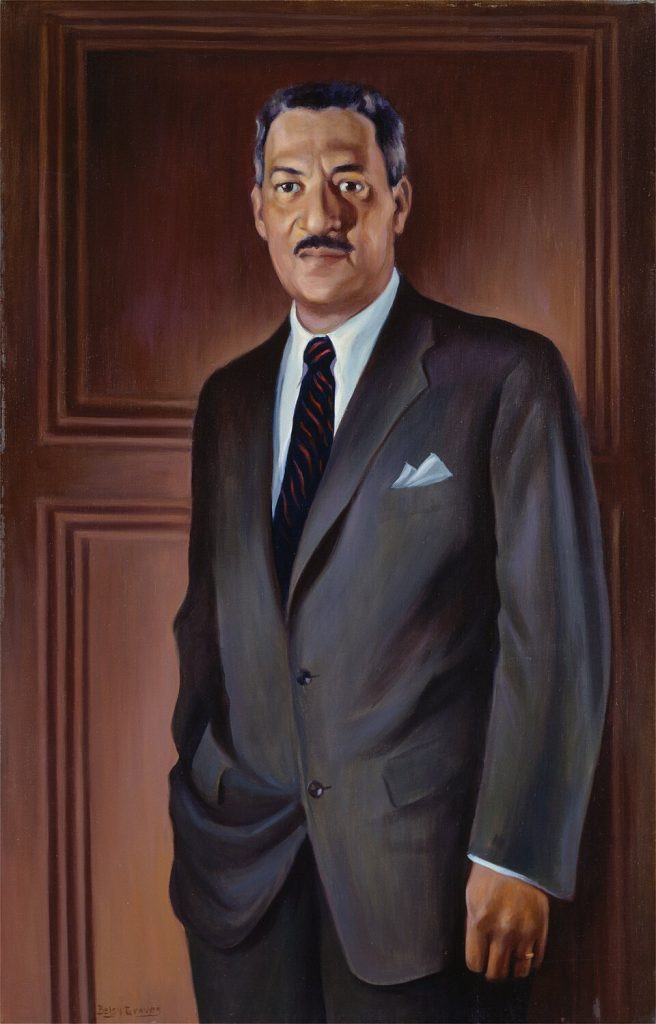
Betsy Graves Reyneau, Portrait of Thurgood Marshall, 1956, National Portrait Gallery, Washington, DC, USA. © Peter Edward Fayard.
In 1954, the Harmon Foundation wound down the traveling show. Once Thurgood Marshall and the NAACP succeeded in winning the Brown vs.The Board of Education case, dismantling the separate-but-equal doctrine, the Foundation considered the legal battle largely settled. The Foundation did fund Reyneau’s 1956 portrait of Thurgood Marshall and a later portrait of Dr. Martin Luther King Jr.
Reyneau’s grandson, Peter Fayard, remembers staying with his grandmother in her Brooklyn Heights, New York, apartment and looking at the half-finished portrait of King on an easel while falling asleep on the sofa. Later, with her health waning, Reyneau moved into her daughter and grandson’s Moorestown, New Jersey, home.
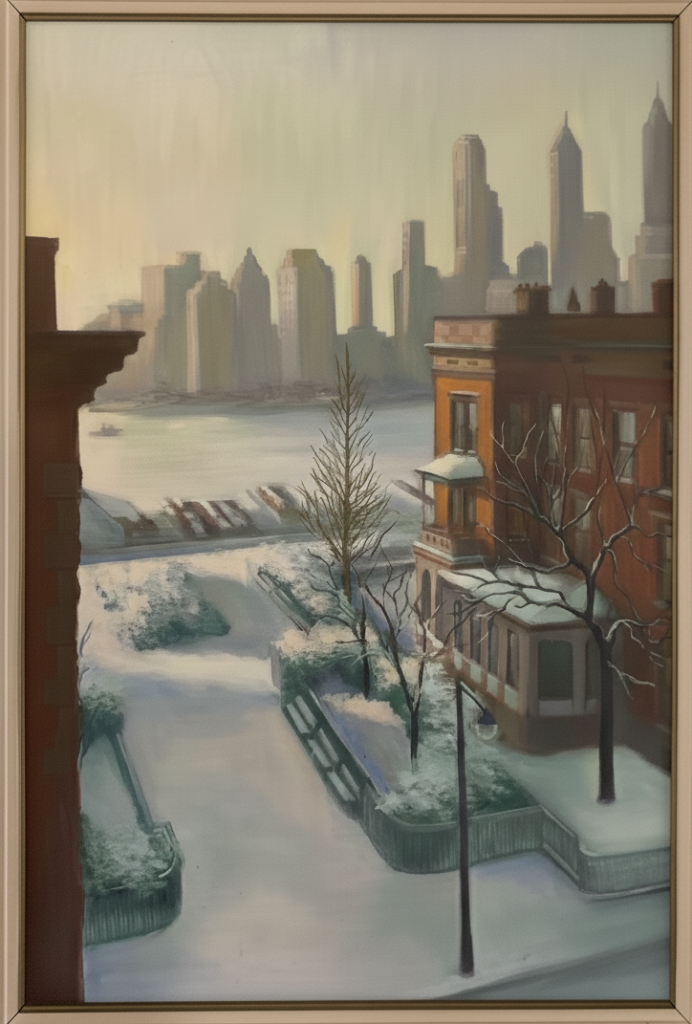
Betsy Graves Reyneau, Untitled (view out of the artist’s New York apartment), private collection. Photograph by Peter Fayard. Courtesy of Peter Fayard.
“Even though I was very young, my grandmother would include me in anything,” Fayard said. He recalled visiting Alice Paul, former chair of the National Woman’s Party, who was also living in Moorestown, New Jersey. Though Fayard did not fully understand what the two women discussed, the meetings left an impression on him. A year before his grandmother died, Fayard remembers sitting with her and watching Dr. Martin Luther King, the man he’d seen looking out from his grandmother’s canvas in the living room, deliver his I Have a Dream speech on television.
Upon Reyneau’s death in 1964, her daughter Marie gave her Jailhouse Door Pin to women’s rights advocate Pauli Murray, a protegee of Reyneau. This began a tradition of gifting the pin to a powerful woman engaged in the fight for civil rights. Murray gave it to Aileen Hernandez. From there, it traveled to Elizabeth Duncan Koontz, Catherine East, Mary Eastwood, Sonia Pressman Fuentes, and then to Jane Picker.
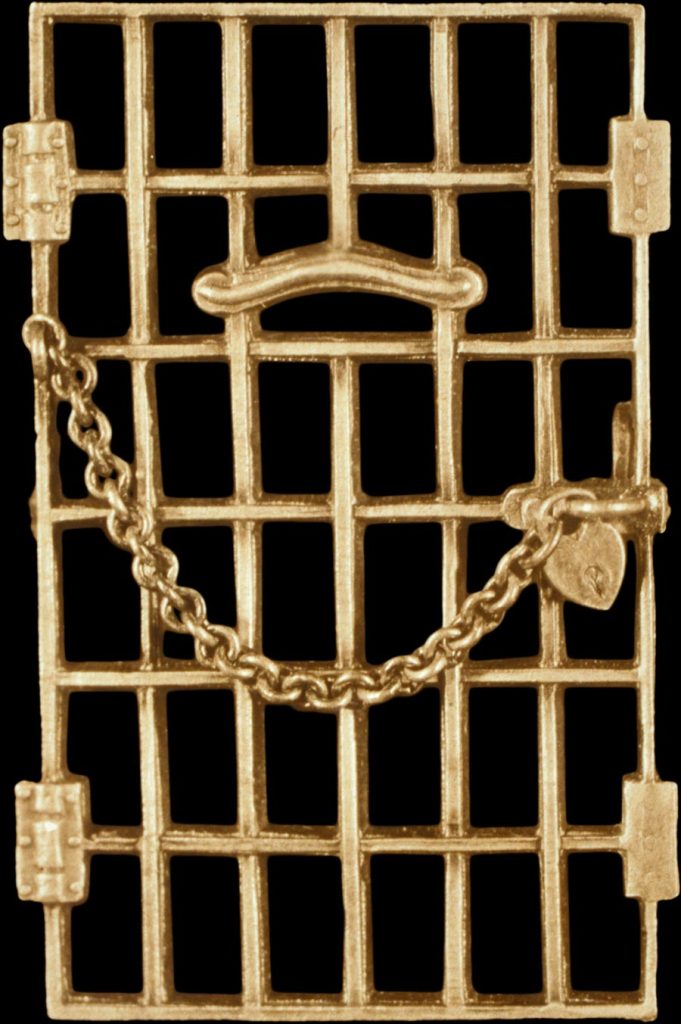
National Woman’s Party Freedom Pin. Clio Visualizing History.
The women knew they were custodians of the pin, not its owners, and after Murray died, the pin returned to the National Woman’s Party. You can now see it on display in the Belmont-Paul Women’s Equality National Monument in Washington, DC.
DailyArt Magazine needs your support. Every contribution, however big or small, is very valuable for our future. Thanks to it, we will be able to sustain and grow the Magazine. Thank you for your help!

Theodore Carter is the author of several books including "Stealing The Scream" and "Frida Sex Dreams and Other Unnerving Disruptions". You can see his art out in the streets of Washington, DC, and on his website: https://theodorecarter.com.

The mirror has functioned as a recurring symbol throughout art, particularly in representations of women. Historically, its presence in art has often...
Martha Teverson 24 August 2026
Explore the stigma of syphilis in Victorian art and society. Science was advancing in this transformative era, but societal attitudes lagged behind. How did the art world respond?
Candy Bedworth 15 June 2026
Rosita Mauri was one of the most talented dancers of her generation, and her mastery on stage drew the attention of countless artists. They created...
Jimena Escoto 11 June 2026
Explore the world of Tove Jansson's Moomins, where adventure, friendship and a love of nature create a delightful narrative for readers of all ages.
Candy Bedworth 2 April 2026