There are many artists and paintings which I return to over and over again. Artists like Giotto, Leonardo, Michelangelo, Vermeer, van Eyck, Cassatt, Degas… The list goes on for what seems like forever. All of these artists, and more, brought ingenuity to their work and new ways of thinking not seen in the world of art prior to their entrance into the world of art.
Masaccio (1401-1428), much like his predecessor Giotto, built on the emergence of realistic figures and atmospheric perspective in order to tell a better story and is considered by many, especially Georgio Vasari, to be the best painter of his time in the Early Renaissance. At such a young age, Masaccio was a master of bringing the audience into the narrative to interact with the scene. He is among the artists who helped to further key characteristics of Renaissance art.
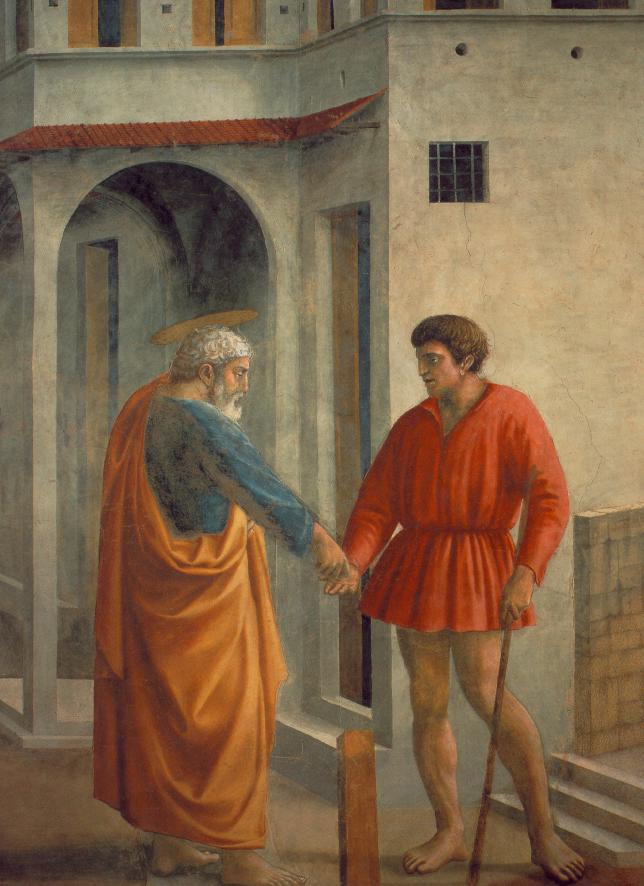
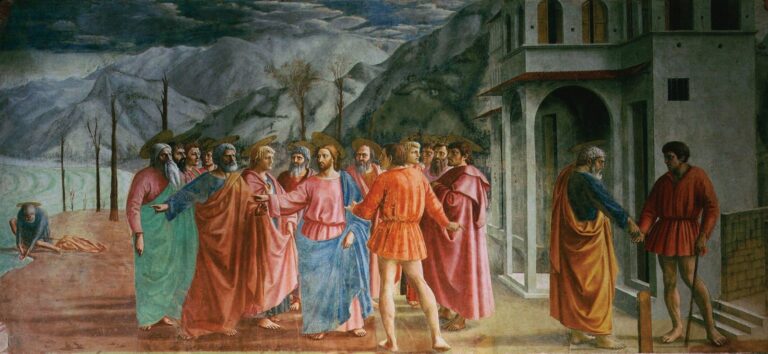
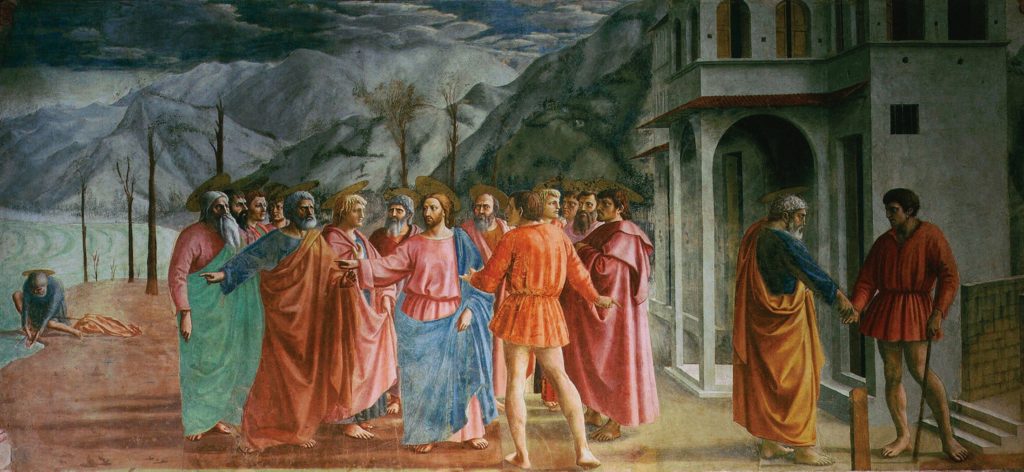
Tribute Money is a narrative fresco of St Peter’s life pulled from the Gospel of Matthew (17:24-27). In the specific passage, Christ has directed Peter to collect money out of the mouth of a fish in order to pay the tax collectors. This religious painting, located at the Brancacci Chapel in Florence, depicts the whole of the passage happening all at once in the same field of view, not separated by any other frames much like what would be expected in a triptych; likewise, the painting of The Tribute Money is only one part of a larger cycle of the life of St. Peter which begins with the beginning of the Christian Bible in the Garden of Eden with Adam and Eve.
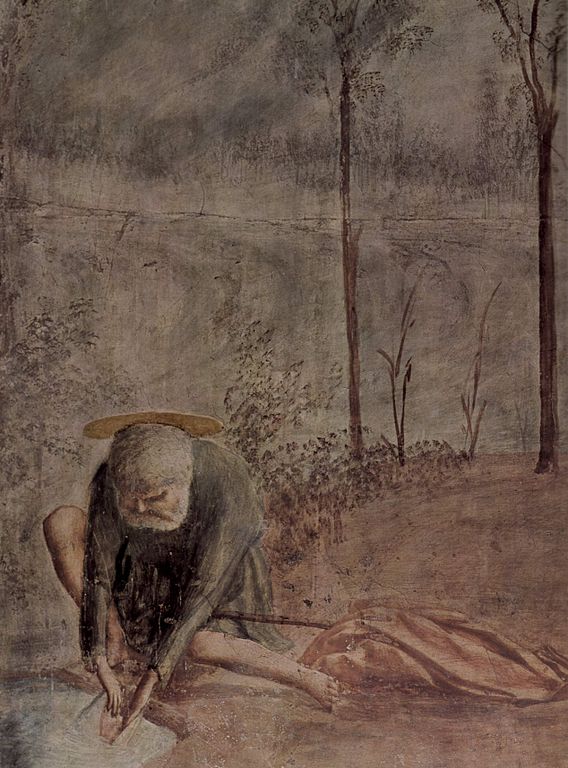
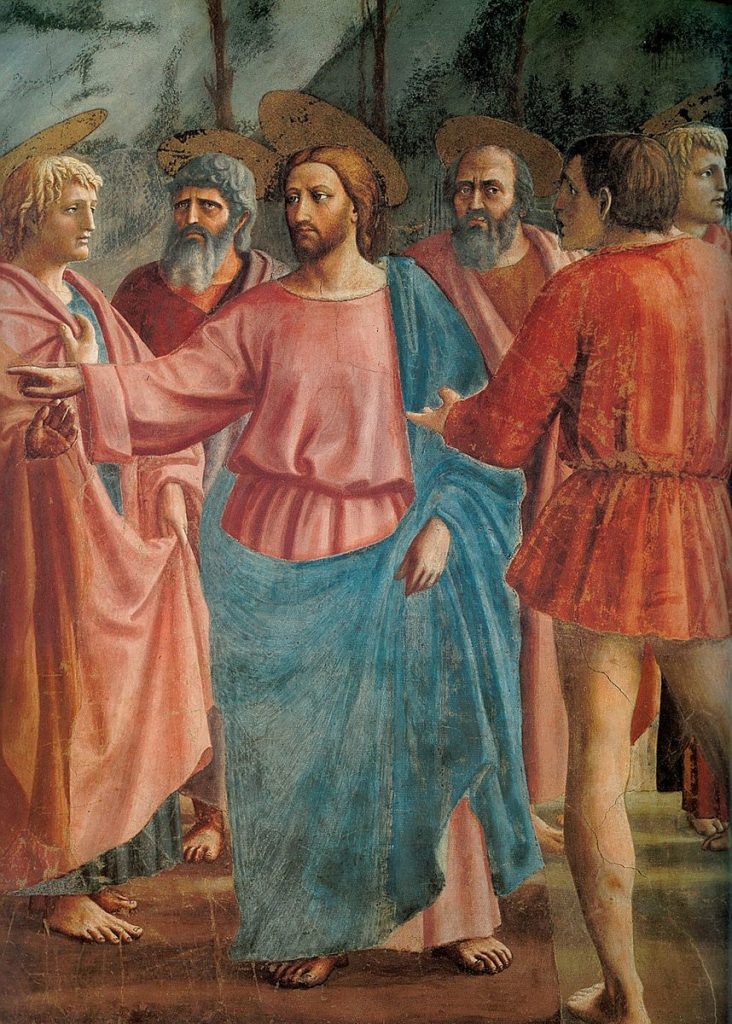
The story does not go from left to right, but rather begins in the middle with Christ as the actual perspective focal point surrounded by the disciples, and branches off to the left and right, with the figure of St. Peter being the binding force tying the narrative together.