




10 Harlem Renaissance Paintings That Defined a Cultural Movement
The Harlem Renaissance paintings capture one of the most influential cultural movements in American history. These extraordinary artists transformed...
Errika Gerakiti 20 July 2026
2 February 2026 min Read
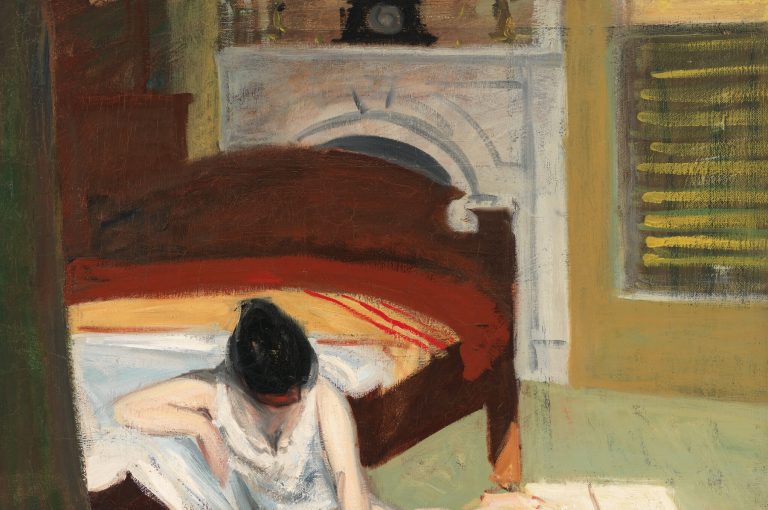
Edward Hopper, Summer Interior, 1909, Whitney Museum, New York City, NY, USA. Detail.
In Summer Interior, we see a solitary woman at the center of an unknown crisis. Edward Hopper‘s women appear frequently within his oeuvre—depicted as looking longingly out of windows, passively into their laps, or engaged in some menial activity.
Through Summer Interior, there is a stark realization in Hopper’s realism. It forces us to look upon a moment in time that we should not have the privilege to observe. His painting evokes within us an array of emotions and gradually forces us to recognize the tragic nature of the subject’s situation.
A young woman sits on sheets pulled from her bed. Red-faced and hunched, she is looking away in shame or upset. An arm is stretched down between her legs, covering what we now see is her exposed bottom half. Certainly, one example of the presentation of Edward Hopper’s women.
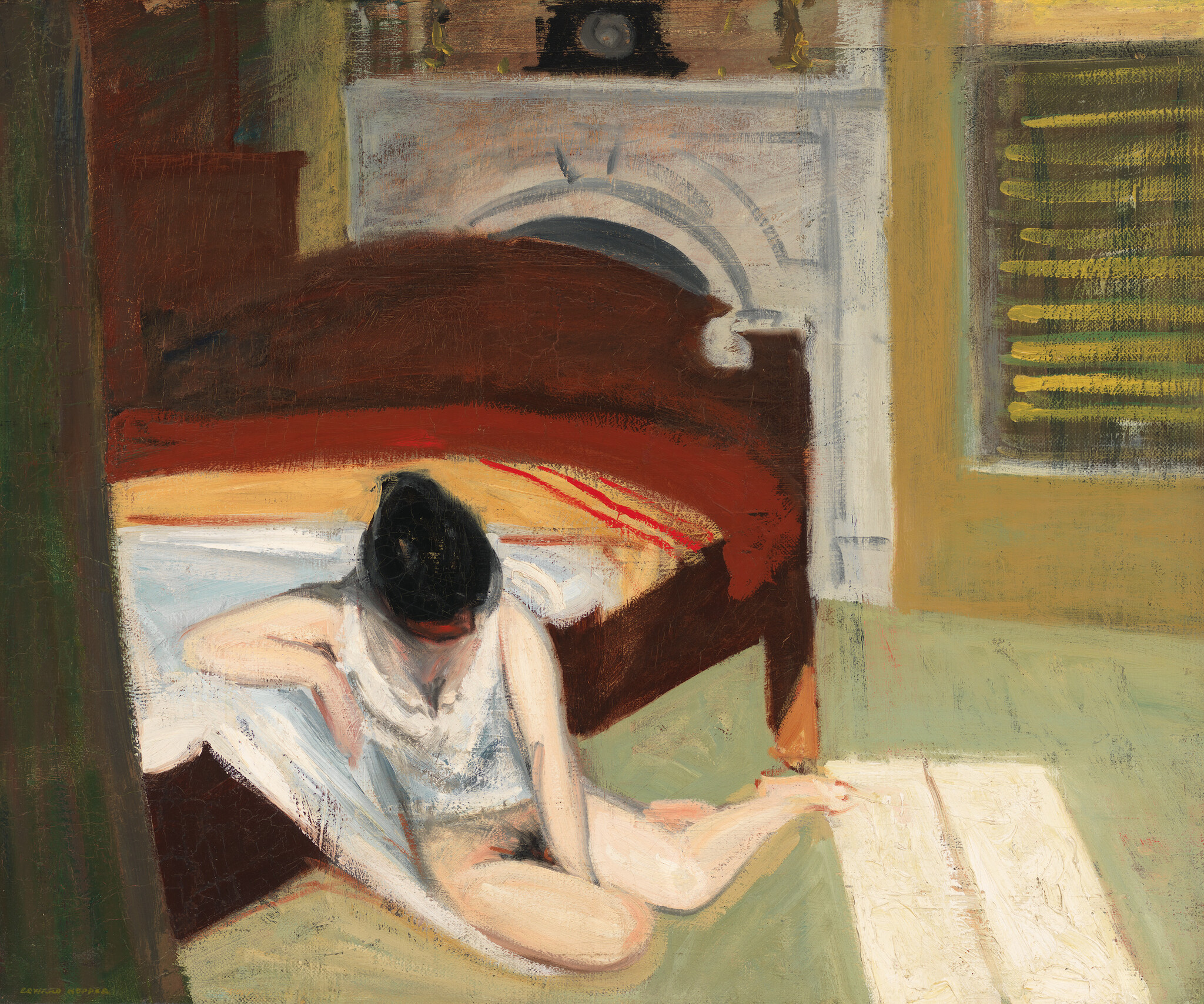
Summer Interior thrusts towards us an array of vulnerable intricacies. We can guess what causes the young girl’s pain. Maybe we can even point to what started her heartache. But while we try to explain it, we notice that the scene leaves us with nothing but a bleak, cynical view. We stay passive and unable to help—outsiders looking through a closed window into a lonely woman’s private life

Hopper’s key strength lies in how he distances the viewer. He takes a simple image and uses it to make us feel like helpless onlookers in someone else’s life. Above all, he uses the dullness of a sepia-color palette, a claustrophobic bedroom setting, and a passive subject to project a reality so far removed from the romanticism of modern-day “love”.
Typically, his subjects never meet the viewer’s gaze. They stare out of windows, at walls, into coffee cups, and at the turned backs of disinterested men. The goings on within the painting never involve the viewer. The relationship portrayed is between Hopper and his expressionless subject alone.
Summer Interior is only one example of this, but, in my opinion, it is one of the most tragically intimate of his paintings. His wife, Josephine, was a common subject of his, and the varying dynamics of Hopper’s relationship with her clearly informed a number of his portraits. Jo, the assertive woman, and Ed, the physically imposing man of the house. Both players brought vices to the table. Despite this, the two remained married and continued to create together for over four decades. The question is, however, were these four decades of happy marriage or relationship turmoil?
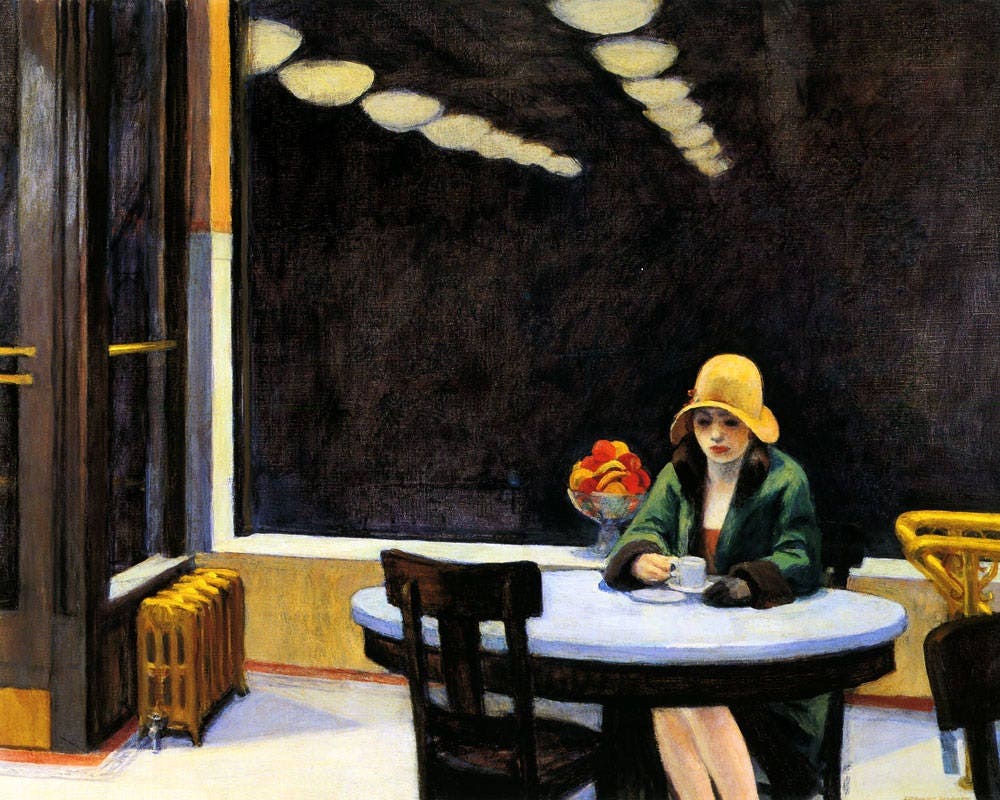
Hopper’s paintings would suggest the latter to be more likely.
DailyArt Magazine needs your support. Every contribution, however big or small, is very valuable for our future. Thanks to it, we will be able to sustain and grow the Magazine. Thank you for your help!

Literary researcher, Ma(Res) student and teacher of all things written. Based outside of London on the sunny side of Kent but close enough to the city to enjoy the coffee shops and theatres.

Melanie is a freelance editor, proofreader, and writer within humanities fields. Follow her on Twitter @melaniesdemmer.
The Harlem Renaissance paintings capture one of the most influential cultural movements in American history. These extraordinary artists transformed...
Errika Gerakiti 20 July 2026
By transforming discarded objects into part of an organic environment and turning personal experience into visual language, Nellie Mae Rowe created...
Carlotta Mazzoli 11 May 2026
Edward Hopper was one of the most iconic American Realist painters and printmakers. He was celebrated for his striking portrayals of American life,...
Zuzanna Stańska, Szymon Jocek 27 March 2026
William H. Johnson’s paintings show a breadth of styles ranging from realism to Post-Impressionism, and later a folk art aesthetic that would...
Theodore Carter 12 February 2026