

Akhenaten: Artistic Development in the Amarna Period
Amenhotep IV, widely recognized as the notorious Akhenaten, was the enigmatic “heretic” pharaoh who ruled during the Eighteenth Dynasty.
Maya M. Tola 10 December 2024
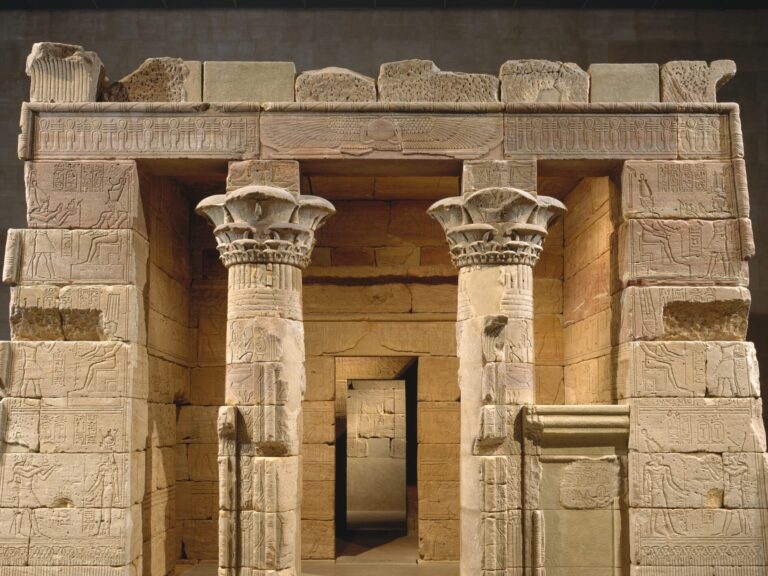
View of the Temple of Dendur, Metropolitan Museum of Art, New York City, NY, USA. Detail.
Built around 15 BCE, the Temple of Dendur honored both Roman authority in Egypt and local Nubian traditions, blending imperial politics with regional reverence. Though modest in scale, it has become unexpectedly iconic in modern times thanks to its transcontinental journey from the Nile to New York. Now housed at The Met, it stands as an accessible piece of ancient history that connects Egyptian enthusiasts across centuries and continents.
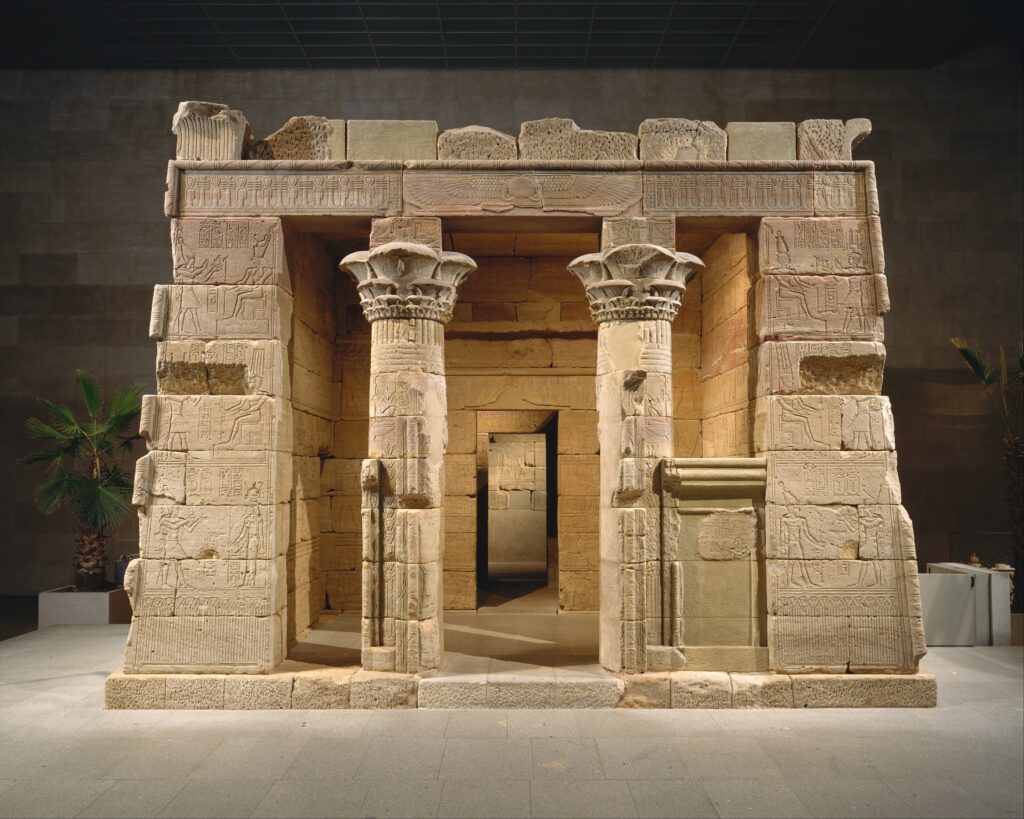
View of the Temple of Dendur, Metropolitan Museum of Art, New York City, NY, USA.
Dendur’s architecture is simple but elegant. Built from Nubian sandstone, the temple reflects both durability and the materials available in the region where it originated. Its layout includes an open-air courtyard, a small columned portico, and a central sanctuary where rituals and offerings were once held. The design blends the traditional Egyptian temple structure with Roman stylistic touches, showing how cultures overlapped during that time. Even though the temple is modest in size, its symmetry and carved details give it a quiet sense of grandeur that still resonates today.
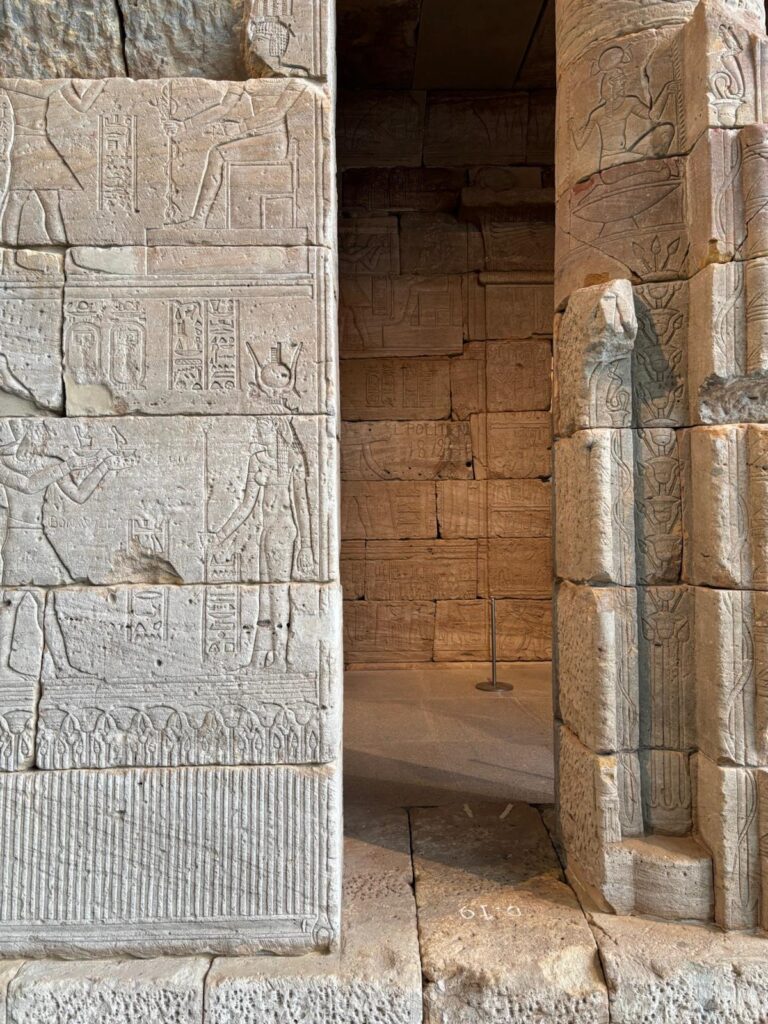
Carvings of Emperor Augustus making offerings to Egyptian gods, Temple of Dendur, Metropolitan Museum of Art, New York City, NY, USA. Photograph by the author.
The carvings on Dendur’s walls tell a layered story. Emperor Augustus is shown as a pharaoh making offerings to Egyptian gods, a visual way to assert Roman legitimacy in a familiar religious setting. Prominent figures like Isis, Osiris, and Harpocrates appear throughout, alongside scenes of agriculture, ritual, and daily life. The style reflects late Ptolemaic traditions with Roman-era touches, illustrating how artistic and cultural influences blended during this period.
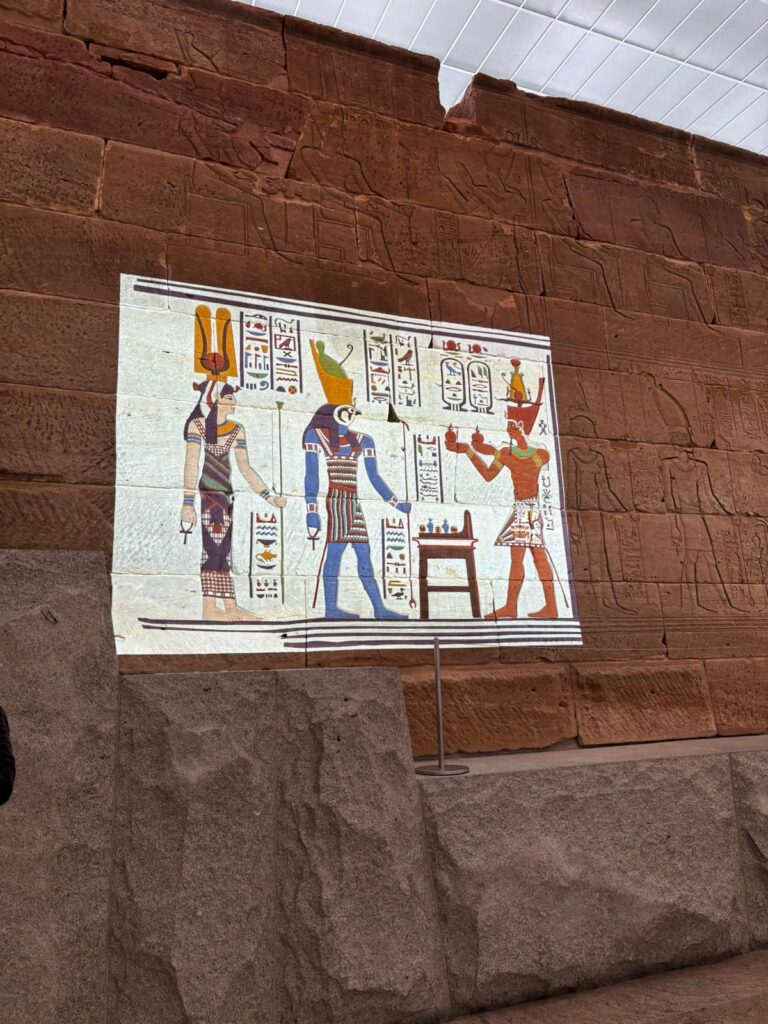
Carvings of Emperor Augustus making offerings to Egyptian gods, Temple of Dendur, Metropolitan Museum of Art, New York City, NY, USA. Photograph by the author.
In the 1960s, the construction of the Aswan High Dam put many ancient sites at risk, including Dendur. Rising waters threatened to submerge the temple, prompting an international campaign led by UNESCO to save the Nubian monum ents. As part of this effort, Egypt gifted Dendur to the United States in recognition of its support. The temple was carefully dismantled, shipped block by block to New York, and reassembled at The Met in a climate-controlled gallery. This move preserved Dendur’s structure and made it accessible to visitors from around the world.
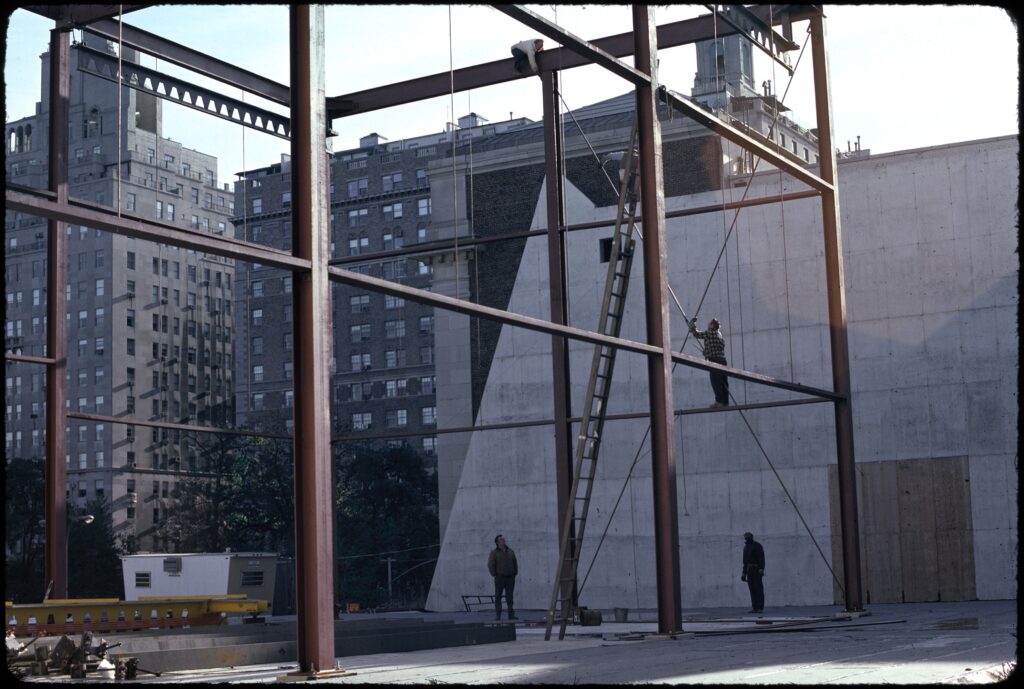
Construction of the Temple of Dendur Wing, 1974, Metropolitan Museum of Art, New York City, NY, USA.
The Temple of Dendur was officially awarded to the Metropolitan Museum of Art on April 28, 1967, by President Lyndon B. Johnson. The temple was opened to the public on September 27, 1978. It was installed in the museum’s Sackler Wing, where a reflecting pool helps evoke the feeling of the Nile. Today, Dendur is one of the most beloved pieces in The Met’s Egyptian collection. Visitors can walk through the temple, study its carvings up close, and experience the space as it was meant to be. It continues to be a highlight for museum-goers and a rare opportunity to connect with ancient history in a modern setting.
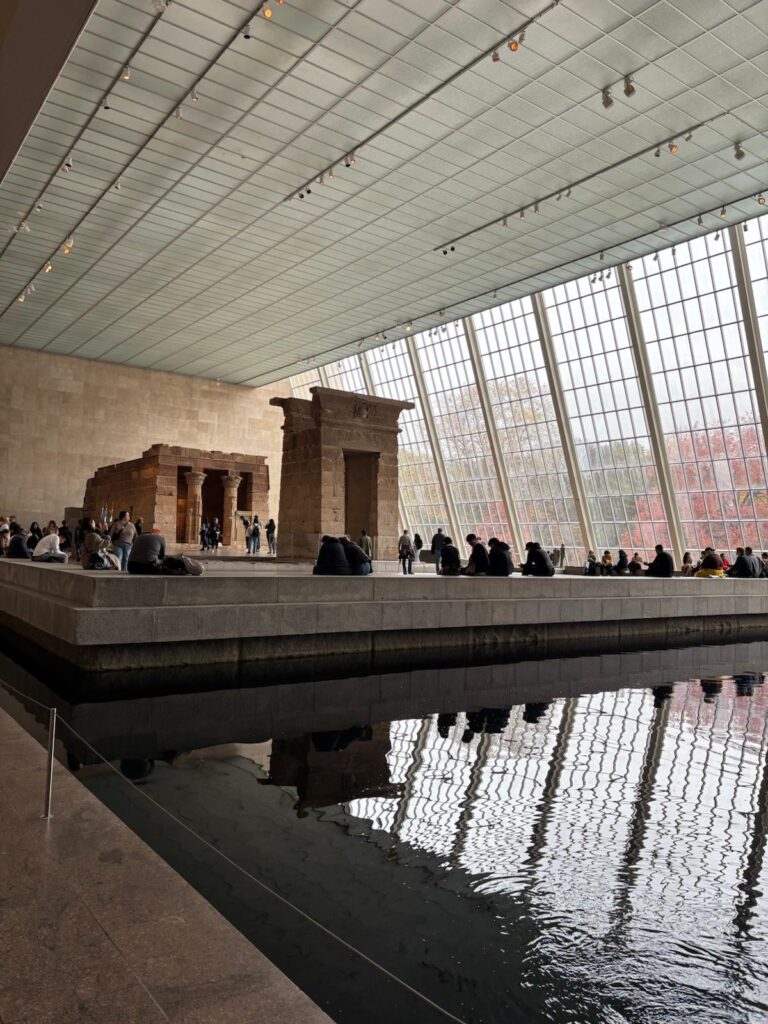
View of the Temple of Dendur, Metropolitan Museum of Art, New York City, NY, USA. Photograph by the author.
Dendur stands as a rare example of an intact ancient temple outside Egypt. Its preservation and relocation reflect a moment of international cooperation in protecting cultural heritage. From its origins in Nubia to its current home in New York, Dendur bridges the ancient and modern worlds. It continues to inspire awe and curiosity in millions of visitors each year, serving as a living testament to the depth, resilience, and continuing intrigue of Egyptian civilization.
Get your daily dose of art
Click and follow us on Google News to stay updated all the time

DailyArt Magazine needs your support. Every contribution, however big or small, is very valuable for our future. Thanks to it, we will be able to sustain and grow the Magazine. Thank you for your help!

Maya Tola is a Dallas-based attorney, with a zest for art history. A time traveler at heart, Maya often finds herself consumed in the contemplation of life in antiquity. She has been sharing her infectious enthusiasm for art and history since 2018 through her posts and articles for the DailyArt App and DailyArt Magazine. When she's not working or writing, you'll find Maya obsessing over plants, animals, and food (in no particular order).

Elizabeth Provost is a visual arts journalist, editor, and scholar of the Italian Renaissance based in New York City and Toronto. She is a PhD student at the Bard Graduate Center. Learn more about her on her website: www.elizabethprovost.com
Amenhotep IV, widely recognized as the notorious Akhenaten, was the enigmatic “heretic” pharaoh who ruled during the Eighteenth Dynasty.
Maya M. Tola 10 December 2024
The ancient African civilization of Nubia thrived along the banks of the Nile, encompassing present-day Sudan and southern Egypt. Nubia gained renown...
Maya M. Tola 25 February 2026
After the United States, and before Australia, France has been, since April 7, the only European country to host a large-scale exhibition around the...
Montaine Dumont 25 May 2023
The discovery of the tomb of Tutankhamun was a landmark event in the study of history and archaeology that captivated the world. The life, death, and...
Maya M. Tola 1 September 2025