


Gustav Klimt in 10 Paintings
Gustav Klimt’s lavish gold motifs, intricate patterns, and sensuous nudes were as innovative as they were controversial. Breaking from his...
Theodore Carter, 2 July 2026
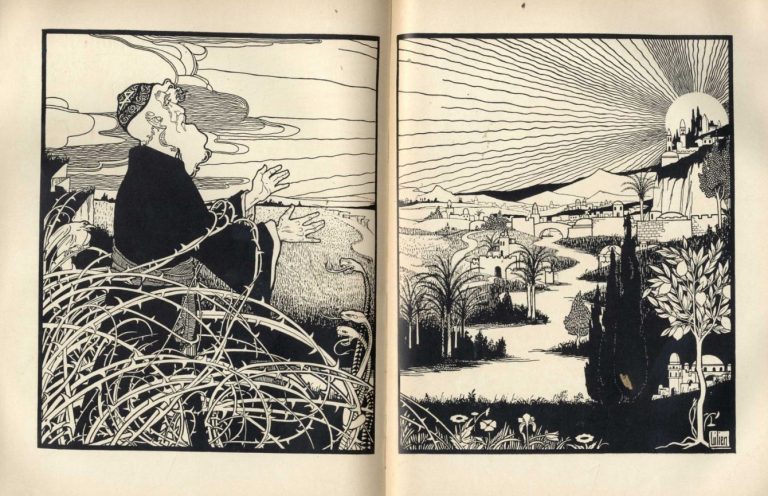
Ephraim Moses Lilien, illustration from Morris Rosenfeld, Lieder des Ghetto, 1902. Dynasty Auctions.
Ephraim Moses Lilien was an Art Nouveau artist who reimagined traditional Jewish motifs for the modern day. He was also an early supporter of the Zionist movement and used his art to promote Jewish cultural renewal and political emancipation in Europe.
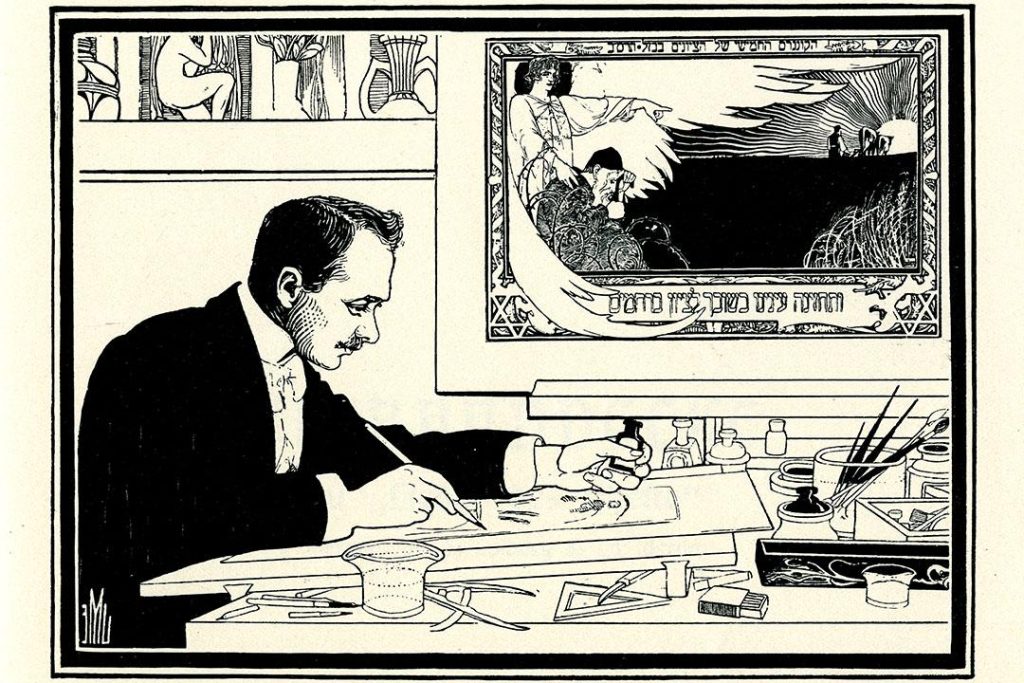
Ephraim Moses Lilien, Self-Portrait, reproduction from Stefan Zweig, E.M. Lilien, Sein Werk, 1903, George Washington University Libraries, Washington, DC, USA. Wikimedia Commons (public domain).
Ephraim Moses Lilien was born on May 23, 1874, in Drohobych, which at the time was part of the Austro-Hungarian Empire and is located in modern-day Ukraine. In his youth, he apprenticed with a sign maker. From 1889 to 1893, Lilien studied at the Academy of Fine Arts in Kraków, an institution then headed by the prominent Polish painter Jan Matejko. In 1899, he moved to Berlin, where he joined the artists’ group Die Kommenden.

Ephraim Moses Lilien, illustration from Morris Rosenfeld, Lieder des Ghetto, 1902. Dynasty Auctions.
Lilien worked primarily in etching and illustration, and he became one of the leading contributors to Jugend magazine, the publication from which the Jugendstil movement—German version of Art Nouveau—takes its name. He was the most prominent Jewish artist associated with Jugendstil. Aside from his works for Jugend, he also produced illustrations for books, often exploring Jewish subjects. This image comes from a set of works created for Lieder des Ghetto (Songs of the Ghetto) by Morris Rosenfeld.
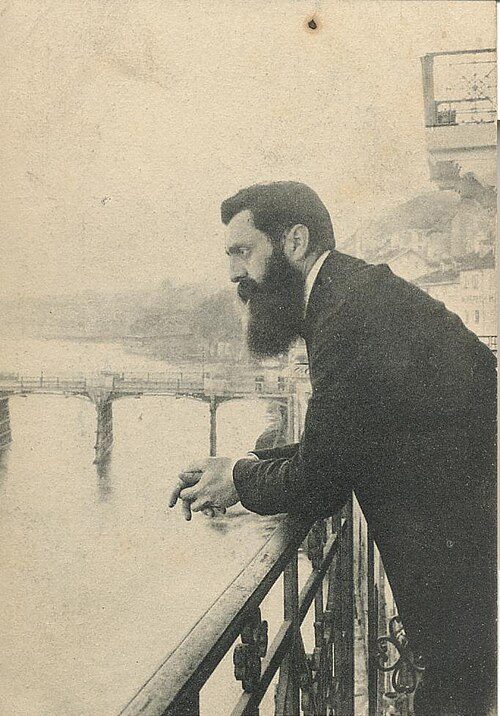
Ephraim Moses Lilien, photograph of Theodor Herzl during the Fifth Zionist Congress, 1901, Basel, Switzerland. Wikimedia Commons (public domain).
In addition to his work as an artist, Lilien was also an early supporter of the Zionist movement. He famously took an iconic photograph of Theodor Herzl during the Fifth Zionist Conference in Basel. He made multiple trips to Ottoman Palestine over the course of his life as well. For one such trip in 1906, he traveled with Lithuanian artist and sculptor Boris Schatz to assist in setting up the Bezalel Academy of Arts and Design in Jerusalem. Lilien also designed the school’s emblem.

Ephraim Moses Lilien, illustration from Edward Reuss, Die Bücher der Bibel, Vol. 1. Creators: Bible, Old Testament, 1908, Leo Baeck Institute, New York City, NY, USA. Institute’s website.
Herzl also served as something of a muse for Lilien. To Lilien, Herzl embodied the strong, modern Jewish man. This was truly a rebellion against the antisemitic stereotypes that abounded in Europe at the time. Here, Lilien presents Herzl as a muscular, Moses-like figure with chiseled features. Indeed, Lilien had a talent for taking traditional Jewish motifs and reinterpreting them in a contemporary style.
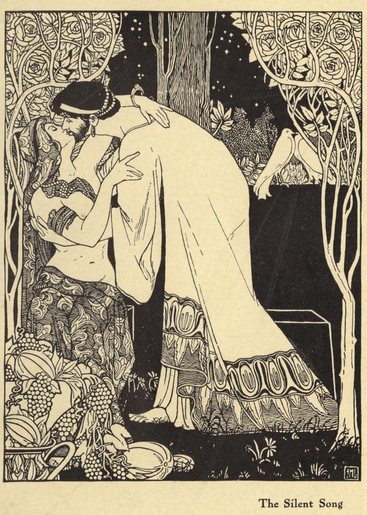
Ephraim Moses Lilien, illustration The Silent Song from Moses Samuel Levussove, The New Art of An Ancient people: the Work of E. M. Lilien, 1905, Leo Baeck Institute, New York City, NY, USA. Institute’s website.
Beyond his depictions of Herzl as a muscular stand-in for biblical heroes, Lilien explored themes of sexuality in many of his works. To Lilien, women were equals and in control of their own sexuality, not mere objects of the male gaze. Emancipation in the form of early Zionism should also coincide with sexual liberation. For example, the illustration The Silent Song offers a woman in full control of her sexuality. Tragically, Lilien suffered a heart attack on July 18, 1925, passing away at just 51 years old.
DailyArt Magazine needs your support. Every contribution, however big or small, is very valuable for our future. Thanks to it, we will be able to sustain and grow the Magazine. Thank you for your help!

Bec is an art nerd, bicycle enthusiast, cat mom, artist/crafter/maker from sunny Toronto, Canada.

Gustav Klimt’s lavish gold motifs, intricate patterns, and sensuous nudes were as innovative as they were controversial. Breaking from his...
Theodore Carter, 2 July 2026
A dragonfly woman, a golden serpent of opals and rubies, and a woman waiting for an octopus are three short descriptions of authentic Art Nouveau...
Jimena Escoto 24 July 2026
Aubrey Beardsley’s legacy endures, etched into the contours of the Art Nouveau movement. His distinctive style, marked by grotesque imagery and...
Lisa Scalone 14 December 2025
Who is Gustav Klimt? His name is associated with gold, women, and eroticism, but is that really all there is from his art? Being the child of the era...
Valeria Kumekina 6 February 2025