


The Art of Falling in 10 Paintings
The Japanese proverb says Nanakorobi yaoki, meaning “fall seven times, get up eight.” No matter how much you stumble, the essential is to...
Guest Author 13 August 2026
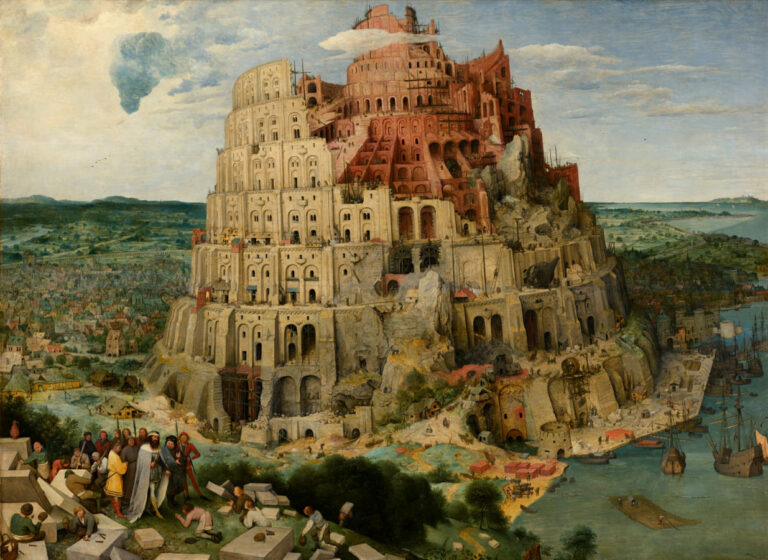
Pieter Brueghel the Elder, The Tower of Babel, c. 1563, Kunsthistorisches Museum, Vienna, Austria.
The Tower of Babel, the legendary monument built to reach the heavens, has fascinated artists for centuries. From Pieter Bruegel the Elder’s iconic works to other striking depictions, these paintings bring the famous biblical story to life.
The Tower of Babel is a Near Eastern myth recorded in the Book of Genesis in the Old Testament, which explains the origin of different languages. According to the story, the generations that followed the Great Flood spoke a single language. As they migrated eastward, they settled in the land of Shinar, where they decided to build a city and a tower that would reach the heavens. Displeased by this act of pride, God confused their language so they could no longer understand one another, scattering them across the world.
The Tower of Babel was not a frequent subject in art. The most famous depictions are, of course, those by Pieter Bruegel the Elder. His first version—a miniature on ivory painted during his stay in Rome—is now lost. The other two, which you can see below, remain his most celebrated interpretations of the theme.
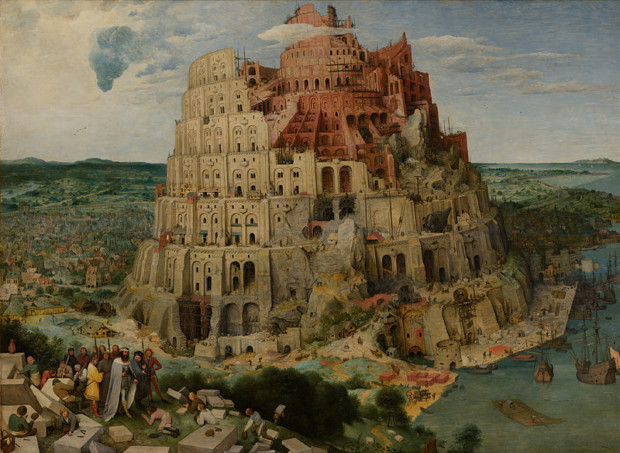
Bruegel’s monumental vision did not emerge in isolation—several Netherlandish painters had already explored the subject. In his painting, the tower dominates the landscape, dwarfing the Flemish-style port city below. Bruegel was famous for his meticulous precision and encyclopedic curiosity. He filled the scene with technical and mechanical details: ships unloading building materials in the harbor, workers hauling supplies, cranes lifting heavy loads, and scaffolding surrounding the unfinished brick foundations.

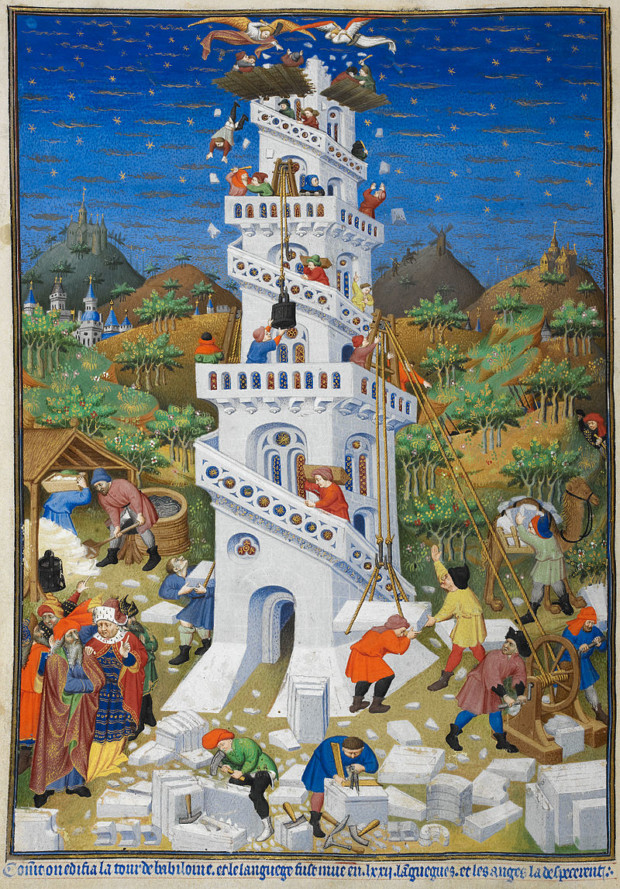
The Bedford Hours is a late medieval French book of hours, a richly illuminated devotional manuscript. In 1430, the Duke and Duchess of Bedford presented it to their young nephew, Henry VI of England. The artists behind the manuscript remain unknown, but they are collectively referred to as the Bedford Workshop, with the leading illuminator known as the Bedford Master.
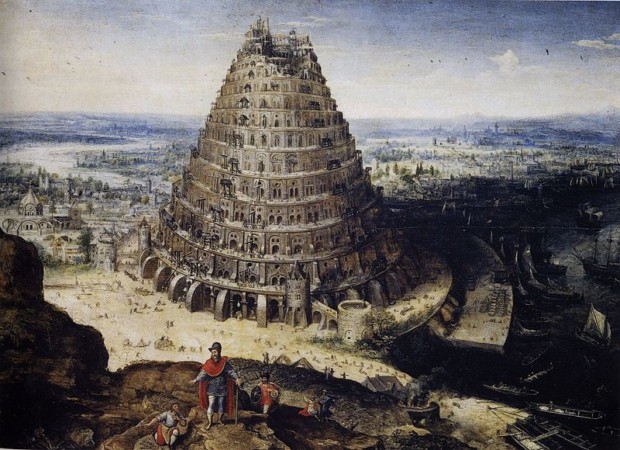
Lucas van Valckenborch was a Flemish painter best known for his landscapes, though he also created portraits, allegories, and lively market scenes. Court painter to Archduke Matthias, the governor of the Spanish Netherlands in Brussels, he later migrated to Austria and then Germany, joining members of his extended family of artists who had moved there for religious reasons.
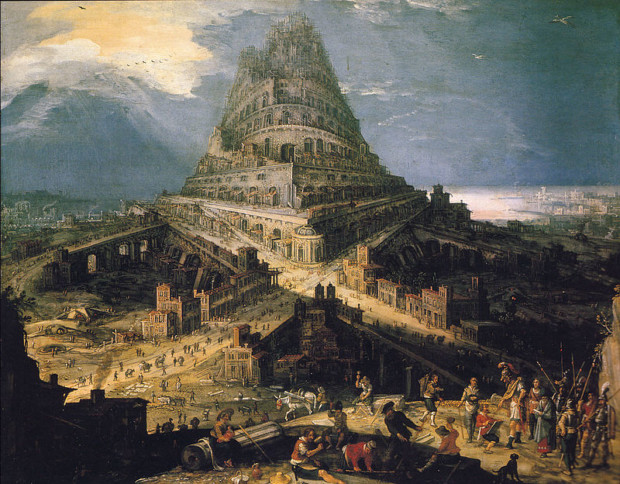
Hendrick III traveled to Italy in his youth and returned to his homeland as a skilled landscape painter. His works are noted for their delicate touch and harmonious use of color. Hendrick van Cleve was also active as an engraver.
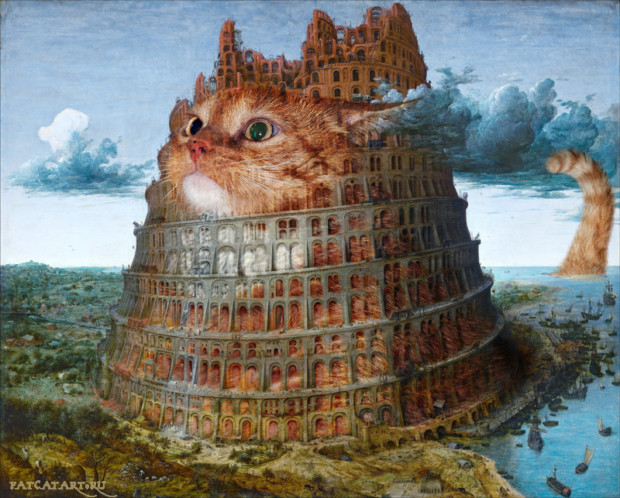
Fat Cat Art is a project of Svetlana Petrova who uses her cat, Zarathustra, and pastes him into famous classic artworks. Here you will find more info about them.
P.S. You can get high-quality print of Peter Brueghel’s The Tower of Babel in our online shop!
DailyArt Magazine needs your support. Every contribution, however big or small, is very valuable for our future. Thanks to it, we will be able to sustain and grow the Magazine. Thank you for your help!

Art Historian, founder and CEO of DailyArtMagazine.com and DailyArt mobile app. But to be honest, her greatest accomplishment is being the owner of Pimpek the Cat.

The Japanese proverb says Nanakorobi yaoki, meaning “fall seven times, get up eight.” No matter how much you stumble, the essential is to...
Guest Author 13 August 2026
This July, DailyArt Magazine turns 10. On this occasion, we asked people who create it for symbolic artistic gifts. We asked for artworks that are...
Kate Wojtczak, Szymon Jocek 21 July 2026
In a world filled with happy couples and dating apps, it’s easy to feel down about being single. However, it’s time to change your perspective!...
Katerina Papouliou 11 November 2025
Vincent van Gogh is probably the first artist you think of when the Starry Night painting is mentioned. But he shouldn’t be the only one! Let...
Marta Wiktoria Bryll 30 June 2026