

The Artist Behind Egon Schiele’s Famous Portrait
For most art lovers and historians, Karl Zakovsek is merely a name on a museum label—the introspective figure captured in Egon Schiele’s...
Guest Author 5 October 2026
28 September 2026 min Read
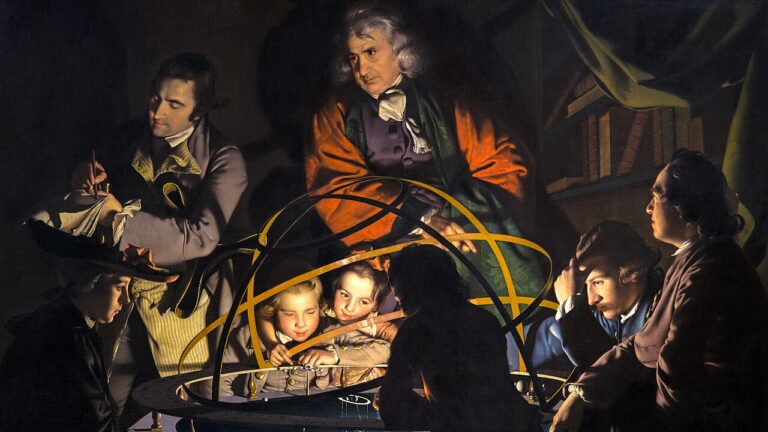
Joseph Wright of Derby, A Philosopher Giving That Lecture on the Orrery in Which a Lamp Is Put in Place of the Sun, c. 1766, Derby Museum and Art Gallery, Derby, UK. Detail.
Artists at the turn of the 17th and 18th centuries started secularizing traditional subject matter—as science and intellectual exploration began replacing religion and dogma, greatly shifting the course of the represented world and intellectual understanding. Joseph Wright of Derby was such an artist and a key Enlightenment figure. Let’s take a closer look at three of his paintings that capture the essence of the era.
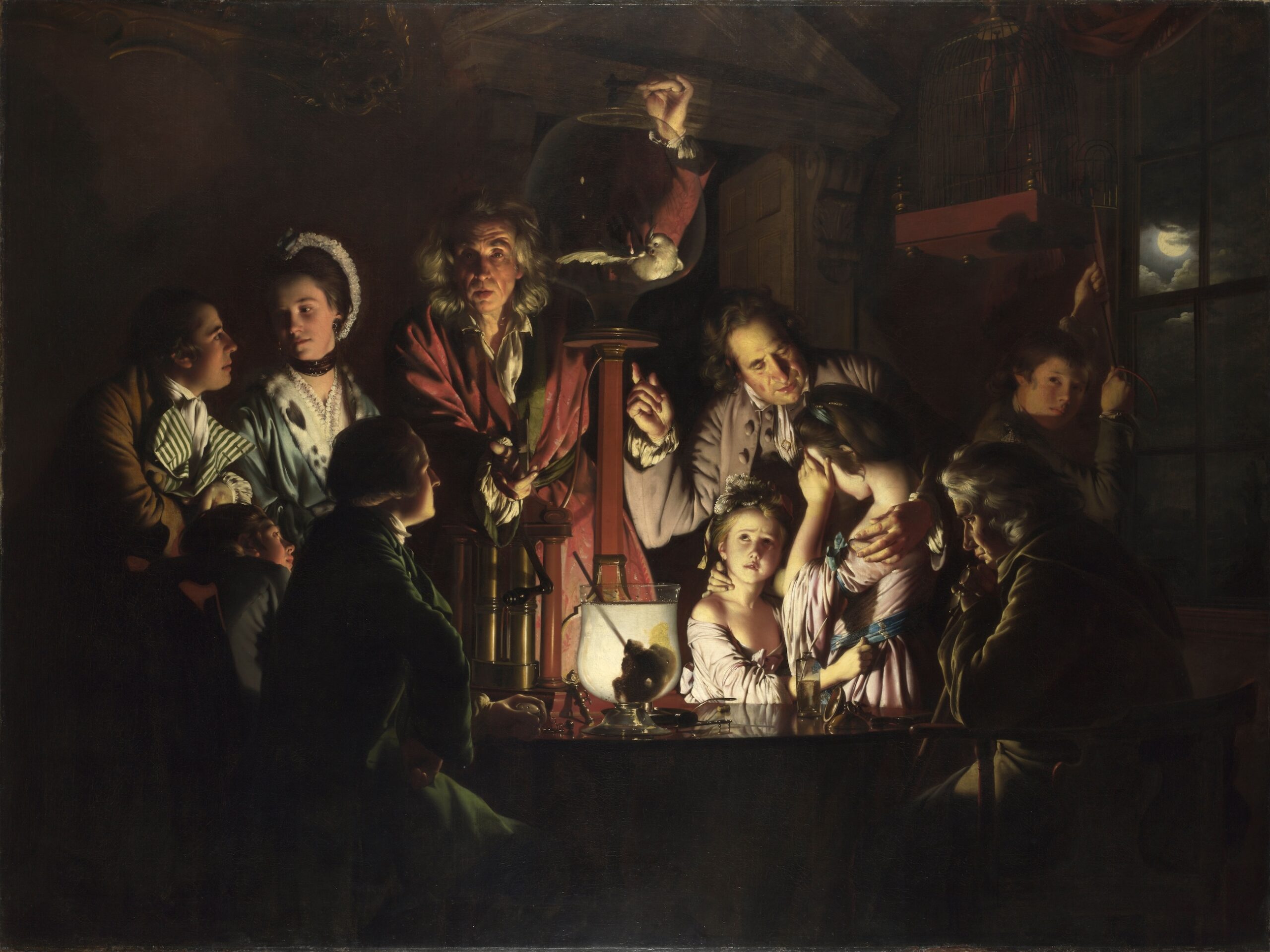
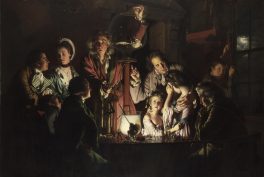
Joseph Wright of Derby was the first artist to depict industry and the scientific experiments of the Enlightenment. Such a choice of subject matter was a radical departure from mythological or historical scenes popular in the Baroque. His paintings convey a sense of awe at man’s achievements, a feeling previously reserved only for religious iconography. In An Experiment on a Bird in the Air Pump, Wright shows a traveling experimenter at the home of a well-heeled family. The man is drawing air out of a glass jar with a white cockatoo. He wears a red bathrobe and looks a little like a mad scientist, doesn’t he?
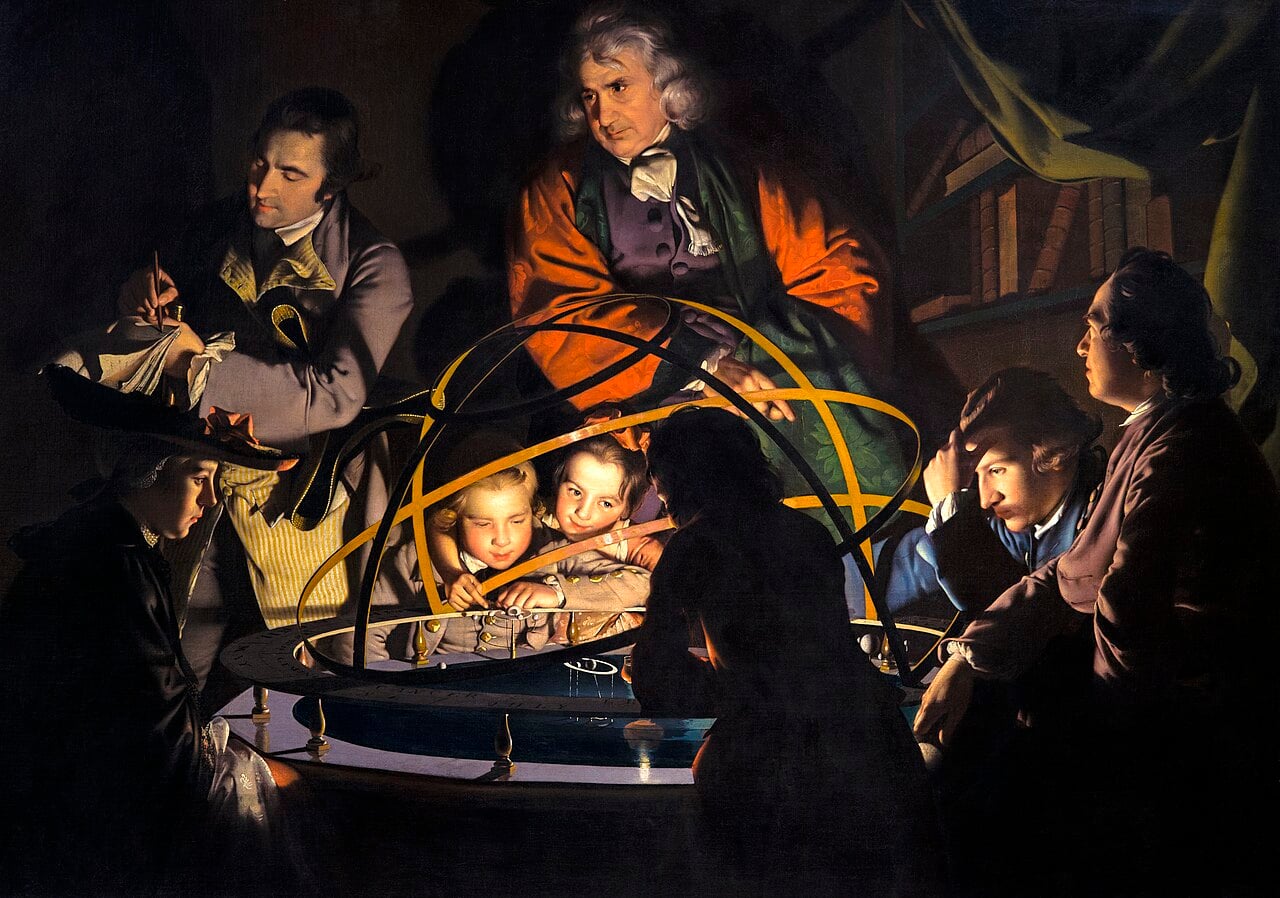
An orrery was a mechanical model of the solar system, or of just the Sun, Earth, and Moon, used to represent their relative positions and motions. The clockmaker who made them named them after Charles Boyle, 4th Earl of Orrery, the patron of their creation. People kept instruments like orreries, air pumps, barometers, and electrical machines in their parlors, as objects of scientific interest. The philosopher from the painting above might have traveled around the country, and might have belonged to the Lunar Society founded in 1765, since Wright made many portraits of its members.
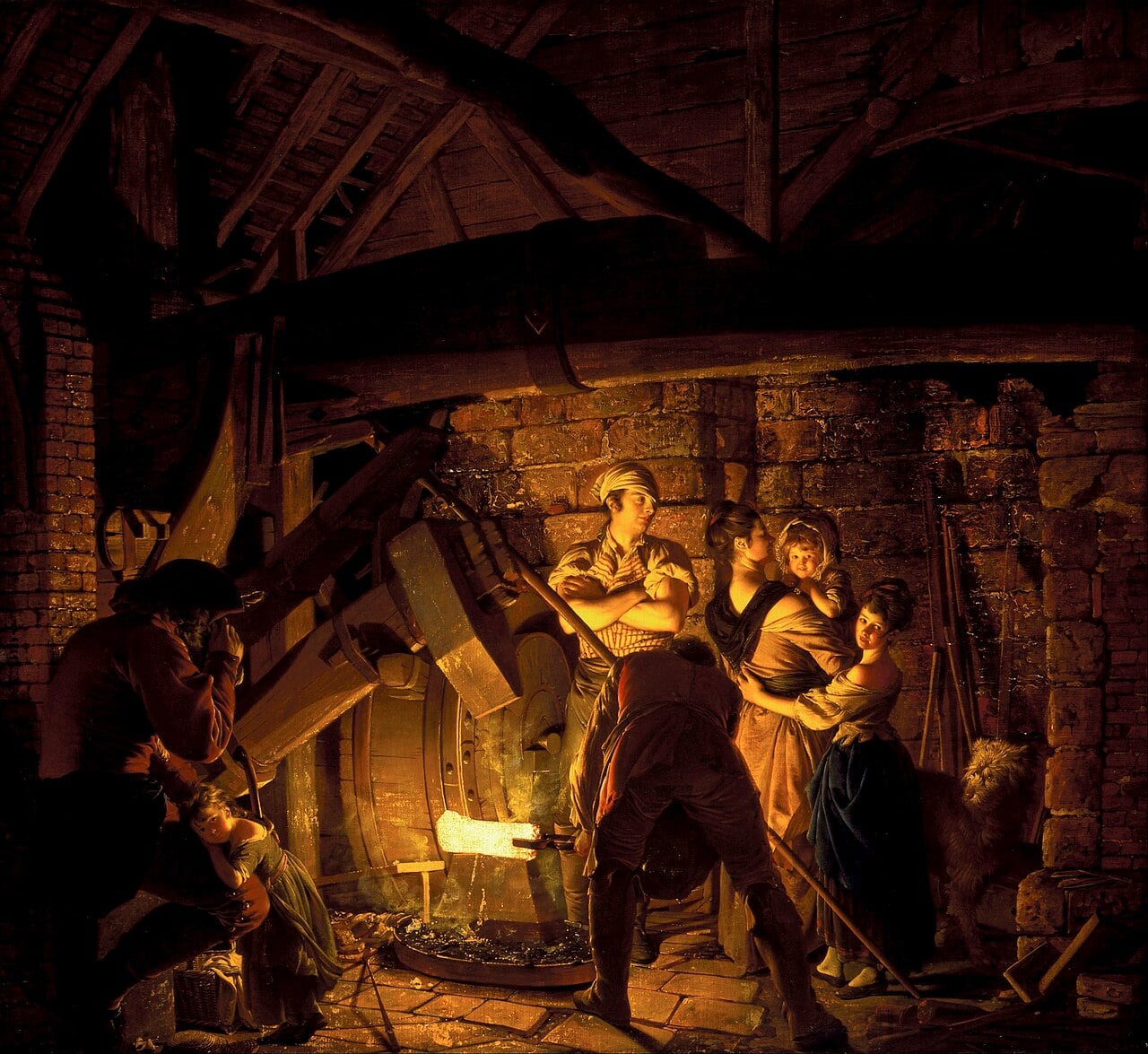
Here, Wright creates an almost religious atmosphere when depicting the work of iron founders. The contrast of light and shadow, and the setting, allude to the image of Nativity scenes. However, instead of a glowing image of Christ, we see someone hammering a glowing piece of iron. The theme of the Ages of Man also seems depicted in another element here, as we can see three generations of iron-founders.
Wright was a friend of Erasmus Darwin (the artist painted his portrait at least five times), a member of the Lunar Society, and an outspoken atheist. Darwin saw heat as a fundamental force in the processes of creation and transformation in nature. Wright seems to echo this idea in the painting, equating the transformative power of heat with the act of creation.
DailyArt Magazine needs your support. Every contribution, however big or small, is very valuable for our future. Thanks to it, we will be able to sustain and grow the Magazine. Thank you for your help!

Magda, art historian and Italianist, she writes about art because she cannot make it herself. She loves committed and political artists like Ai Weiwei or the Futurists; like Joseph Beuys she believes that art can change us and we can change the world.

Melanie is a freelance editor, proofreader, and writer within humanities fields. Follow her on Twitter @melaniesdemmer.
For most art lovers and historians, Karl Zakovsek is merely a name on a museum label—the introspective figure captured in Egon Schiele’s...
Guest Author 5 October 2026
Despite being a Jew in a city still grappling with religious freedoms, Simeon Solomon rose to become one of London’s notable painters only to come...
Theodore Carter 28 August 2026
In Rembrandt’s prints, you can see the whole of life passing you by, from the cradle to the grave. Every stage of life held something...
Guest Author 12 June 2026
There is a dead man on the table. His skullcap has been removed, and someone loosens the meninges with a lancet. Not an easy sight, yet fascinating:...
Guest Author 14 May 2026