
Masterpiece Story: Judith and Holofernes by Caravaggio
Judith and Holofernes is a Caravaggio masterpiece that captures Biblical murder and drama. Rarely has death been captured so intensely and violently...
James W Singer 13 September 2026
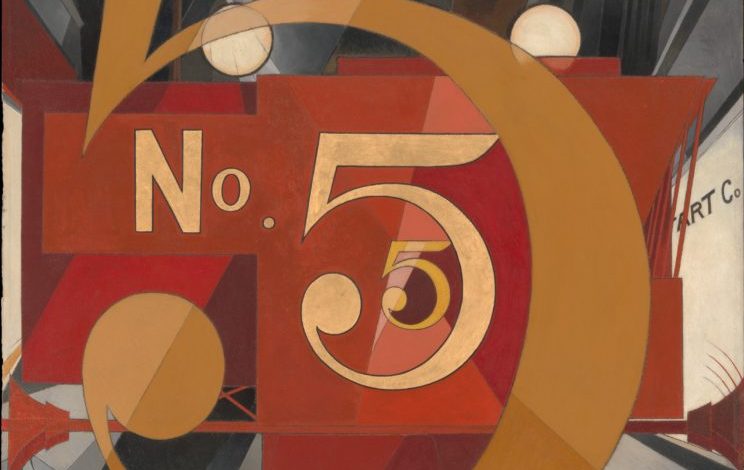
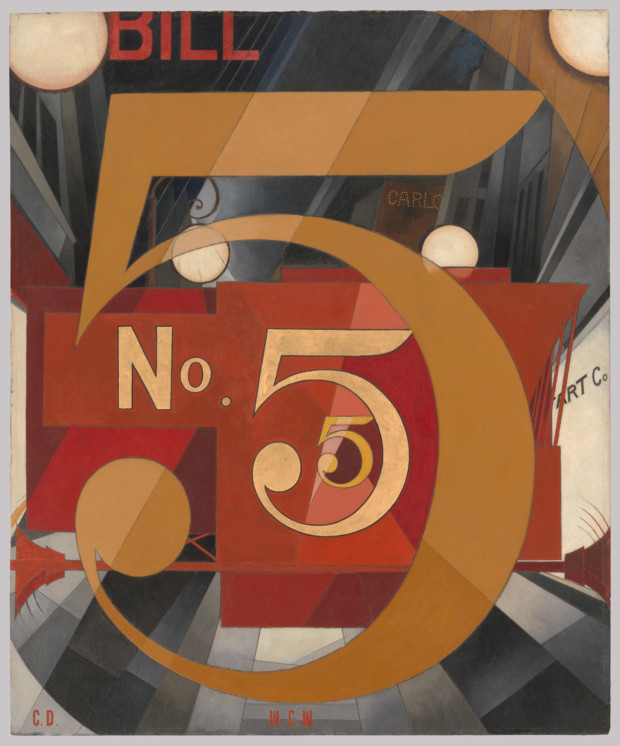
Charles Demuth, The Figure 5 in Gold, 1928, The Metropolitan Museum of Modern Art, New York City, NY, USA. Detail.
This one-sentence poem by the American poet William Carlos Williams was the inspiration for an incredible abstract work by American artist, Charles Demuth, I Saw the Figure 5 in Gold (1928).
Among the rain
and lights
I saw the figure 5
in gold
on a red
firetruck
moving
tense
unheeded
to gong clangs
siren howls
and wheels rumbling
through the dark city.
– The Great Figure by William Carlos Williams
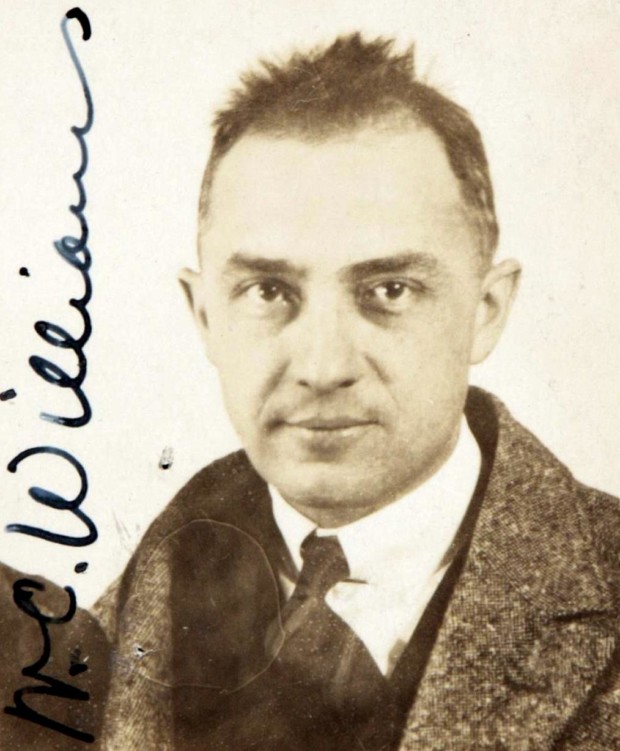
Demuth and Williams were good friends and the story goes that Williams was walking along Ninth Avenue in New York, one evening when the clanging sounds of a fire truck broke through his revery. While turning, he saw the number of the red truck speeding away. Williams, who at the time was creating poems that were precise, clean, and devoid of metaphor, concentrated on the sight and sound of this common event to evoke the speed and anxiety that the sound of sirens can create in a person.
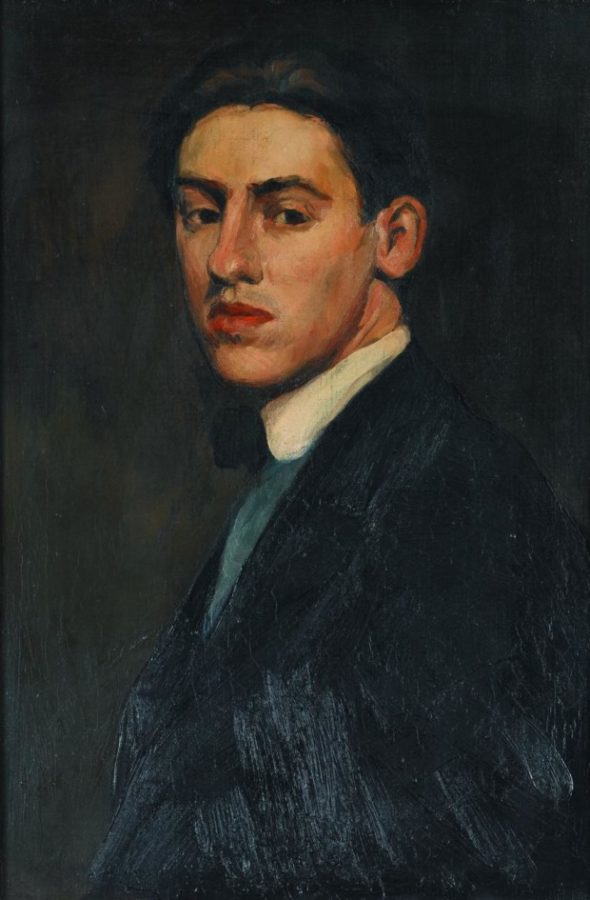
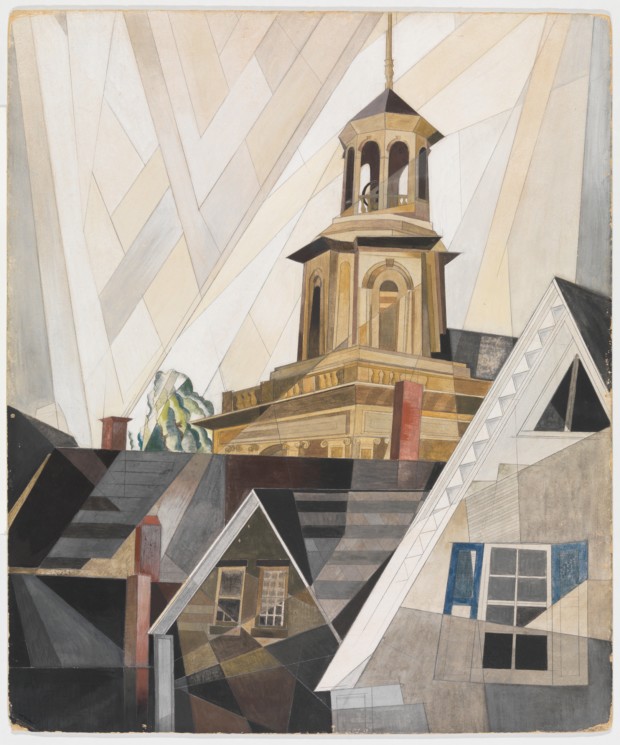
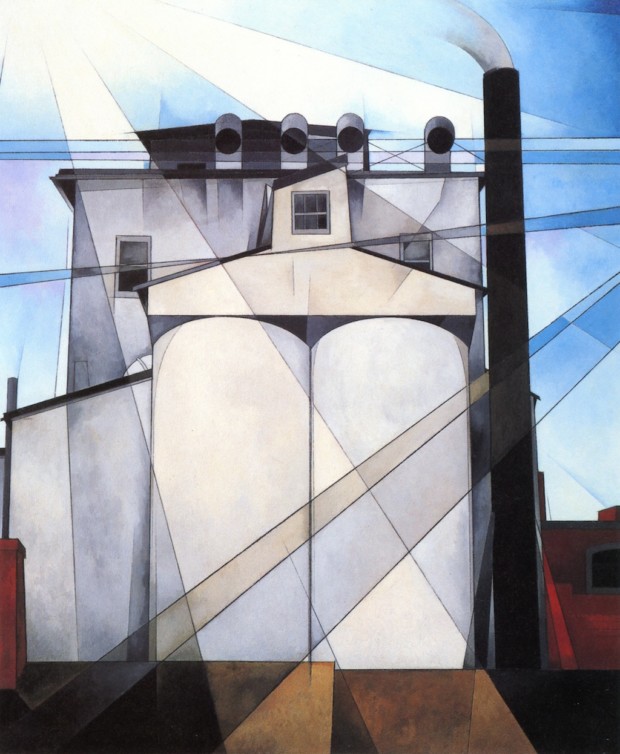
This lack of figurative language matched the style of the Precisionist painters, of whom Charles Demuth was a leading exponent. Works such as After Sir Christopher Wren (1920) and My Egypt (1927) used devices such as rectangles and triangles to portray light diffraction and geometric shapes for buildings. In scenes devoid of human interaction, the Precisionists celebrated the new and the bold as the 20th century progressed.
In this 1928 work, Demuth concentrates on the number designation of the fire truck as speeds away from our viewpoint. Oil, graphite, ink, and gold leaf on paperboard combine to create a vibrant abstract. The circular elements of the number are reflected in the lights on the back of the truck and the repetition of the gold ‘5’ creates a sense of depth. Elements of the fire truck are still obvious: the axle, the lamps, the ladder, and the abstracted forms of the rain, represented by grey streaks across the canvas, cause the red of the truck to stand out even more.
Not only did Demuth use ekphrasis: the interpretation of poetry in art form, as a way of immortalizing his friend’s work, but he also placed the poet’s initials “WCW” and the name “BILL” in the painting in honour of their friendship. What is interesting is that the two works are now symbiotic – to understand the painting, one needs to hear the poem; to visualize the poem, the painting allows the viewer to experience what Williams did on that rainy night in New York.
DailyArt Magazine needs your support. Every contribution, however big or small, is very valuable for our future. Thanks to it, we will be able to sustain and grow the Magazine. Thank you for your help!

Teacher by trade; art lover by choice. Like all manner of artists and movements but somehow always end up back in 1910!
Judith and Holofernes is a Caravaggio masterpiece that captures Biblical murder and drama. Rarely has death been captured so intensely and violently...
James W Singer 13 September 2026
Explore an astonishing 1915 nude self portrait by American modernist painter Florine Stettheimer.
Candy Bedworth 21 September 2026
Winslow Homer (1836–1910) was one of the leading American Realist painters. His painting The Veteran in a New Field is a masterpiece of late...
James W Singer 30 August 2026
At first glance, A Goldsmith in His Shop (1449) appears to depict an ordinary visit to a jeweller. Yet Petrus Christus transformed an ordinary...
Shivani Gupta 23 August 2026