Conception of the Museum
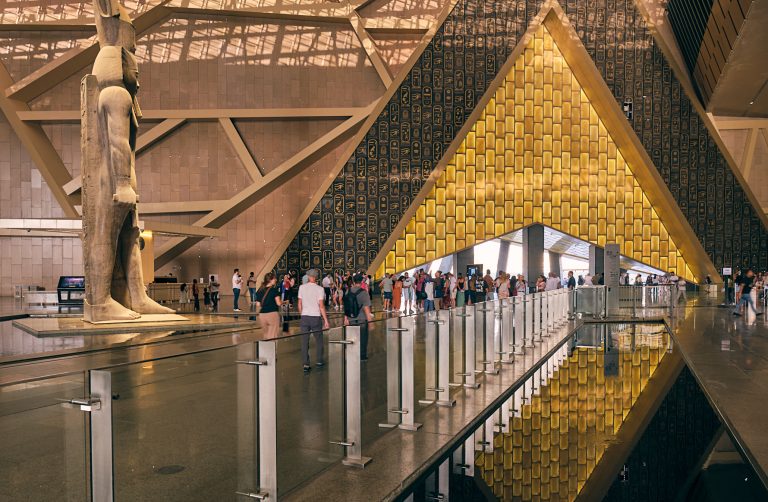
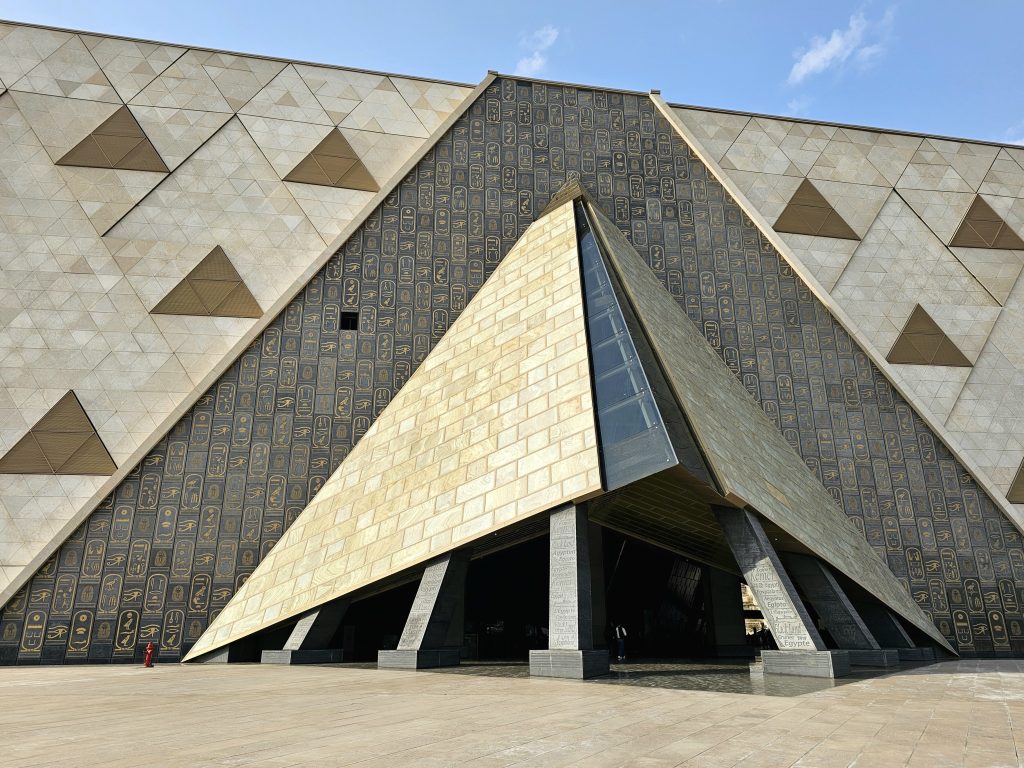
Although construction began in 2005, the project was originally conceived in 1992 to replace the Egyptian Museum in Tahrir Square as the nation’s primary cultural showcase. The building was designed by the Irish firm Heneghan Peng Architects, who created a modernist structure with a striking combination of stone, glass, and light to echo the principles of ancient geometry.
The facility houses a staggering collection of over 100,000 artifacts, with approximately 50,000 items currently on public display. Most notably, it is the first museum in history to present the complete Tutankhamun tomb assemblage in one location, offering an unprecedented look at the treasures of the famous boy king.
The Highlights of GEM
The exhibition spaces of the GEM are thoughtfully designed to transition visitors from the grand, sweeping scale of the Giza Plateau to the intricate details of individual artifacts. To protect these priceless treasures, the inner galleries utilize advanced climate-controlled vitrines and specialized lighting systems. This sophisticated environment ensures that every piece of history, from massive statues to delicate jewelry, is preserved while being showcased in its full glory.
1. Hanging Obelisk of Ramesses II
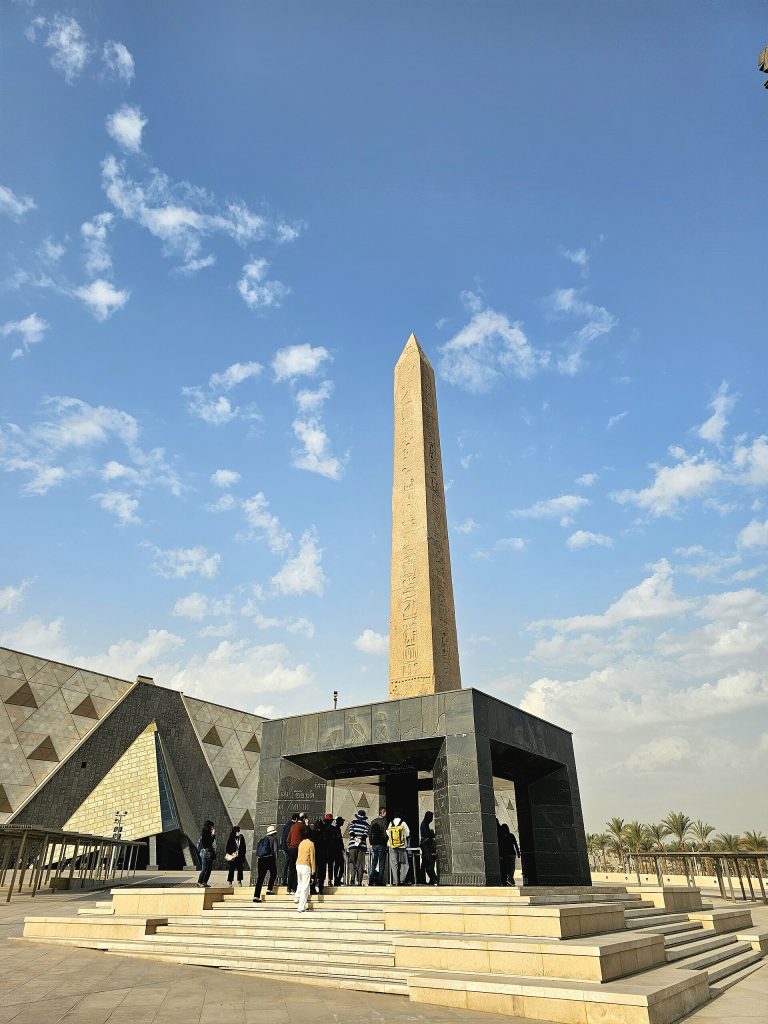
The first object to greet visitors to the Grand Egyptian Museum is a monumental obelisk of Ramesses the Great, the most celebrated ruler of the New Kingdom, who reigned for an extraordinary 66 years. It is one of 10 obelisks associated with his reign and is the tallest among them, carved from granite and inscribed with the king’s Horus name, throne name, and birth name. The 87-ton obelisk has been raised on a platform supported by four massive pillars set on a large concrete base, allowing visitors to view the cartouches of Ramesses II carved on its underside, a detail hidden from the public eye for millennia.
2. Colossal Statue of Ramesses the Great
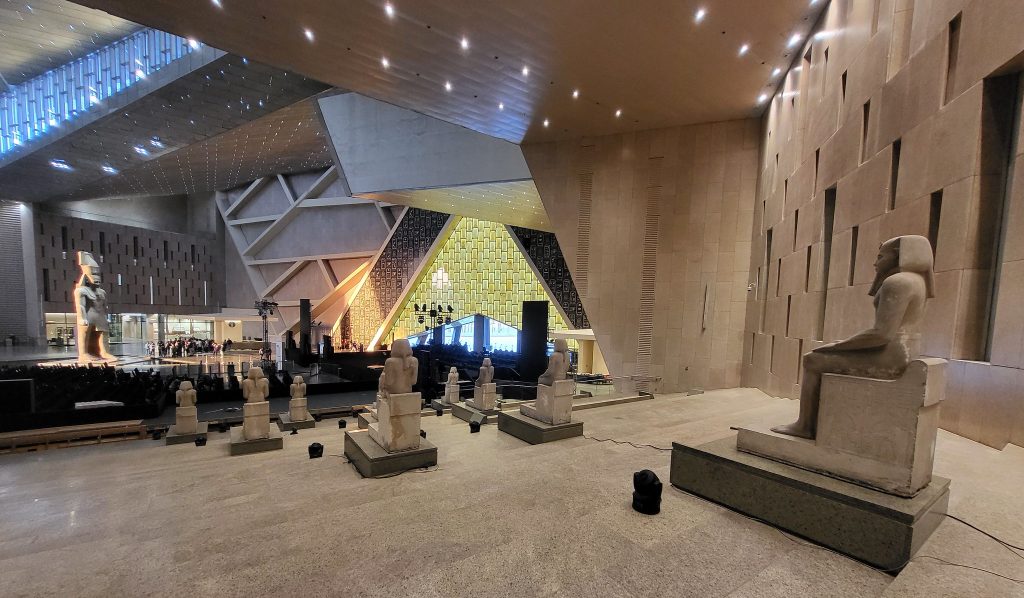
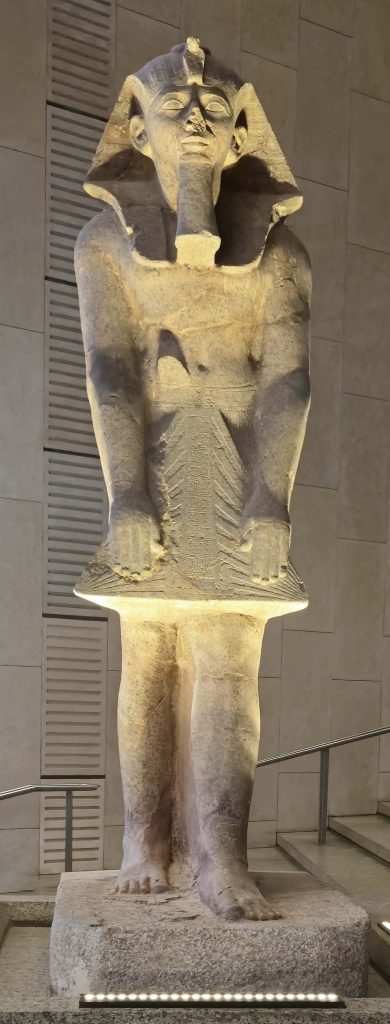
The Grand Atrium is dominated by the 3,200-year-old standing figure of Ramesses II. This colossal red granite statue originally guarded the Temple of Ptah in ancient Memphis before its 1955 relocation to Cairo’s bustling Ramses Square. While it was famously restored and mounted on a large pedestal there, decades of exposure to harsh urban pollution eventually forced its transfer to the GEM for permanent protection.
Moving the 37-foot-tall (1,135 cm), 83-ton giant was a monumental undertaking that culminated in his commanding presence at the GEM’s breathtaking atrium.
3. Grand Staircase
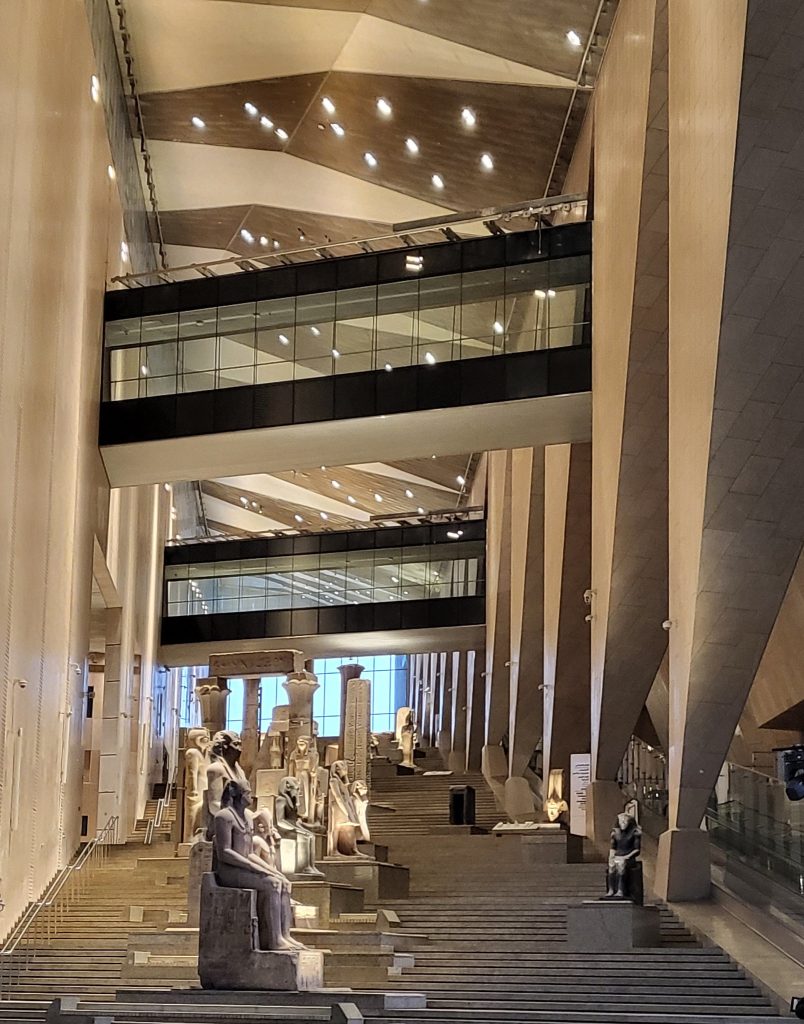
The Grand Staircase at the Grand Egyptian Museum (GEM) serves as a monumental vertical gallery. It begins at the base with the Royal Image, where visitors encounter colossal statues of pharaohs, positioned to reflect the nuances and deep understanding of Egyptian history.
As you ascend via the stairs or travelators, the focus shifts to the king’s relationship with the divine. Here, the display features grand architectural elements and sacred monuments that illustrate how the pharaohs honored the gods and cemented their own status as semi-divine rulers. The final stages of the climb transition into the funerary realm, showcasing a grand collection of stone sarcophagi and pyramidions designed for the royal afterlife.
The journey culminates at a massive glass facade on the top landing, which offers a perfectly framed, breathtaking view of the Pyramid of Khafre, connecting the artifacts inside to the ancient landscape outside.
4. Khufu’s Boats
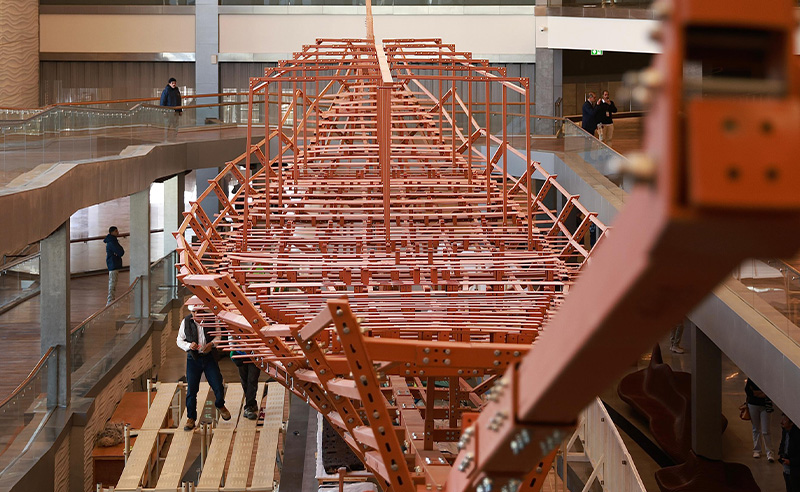
Khufu, the builder of the pyramids, ruled ancient Egypt more than 4,500 years ago. His famed boats of Khufu were discovered at Giza in five boat pits located near the Great Pyramid. Three of these pits were found empty, likely the result of ancient theft, while two remained sealed. Experts remain uncertain of the boats’ purpose, but many believe they were used either during King Khufu’s funeral or for his symbolic journey in the afterlife with the sun god Ra.
The first boat was discovered buried beneath limestone blocks and required more than 10 years to assemble. Its restoration was a slow and painstaking process that stretched through the 1960s and was finally completed in the 1980s, when the fully assembled vessel went on display in a museum adjacent to the pyramids. In recent years, the boat was transported intact to the Grand Egyptian Museum.
The second boat remained untouched for decades longer, and it was not until the late 2000s that a joint project with Japanese experts began, using advanced conservation techniques to study, extract, and restore the vessel. Today, the second boat is being assembled in full public view at the Grand Egyptian Museum’s exhibition hall, displayed alongside its already reconstructed twin.
5. Colossal Statue of Queen Hatshepsut
Among the treasures of the Grand Staircase is a striking depiction of Hatshepsut, one of the few women in ancient Egypt to assume the full power of a pharaoh. Though she began as regent for her stepson, Thutmose III, she soon declared herself as ruler, adopting the traditional male regalia such as the royal kilt and false beard. This statue, originally from her mortuary temple, includes the masculine pose of a seated monarch while also imparting a subtle feminine softness in the facial features.
The presence on the staircase is especially poignant given that later rulers attempted to erase her from history by defacing her monuments, yet her image endures as a bold political statement carved in stone.
6. Golden Throne of Tutankhamun
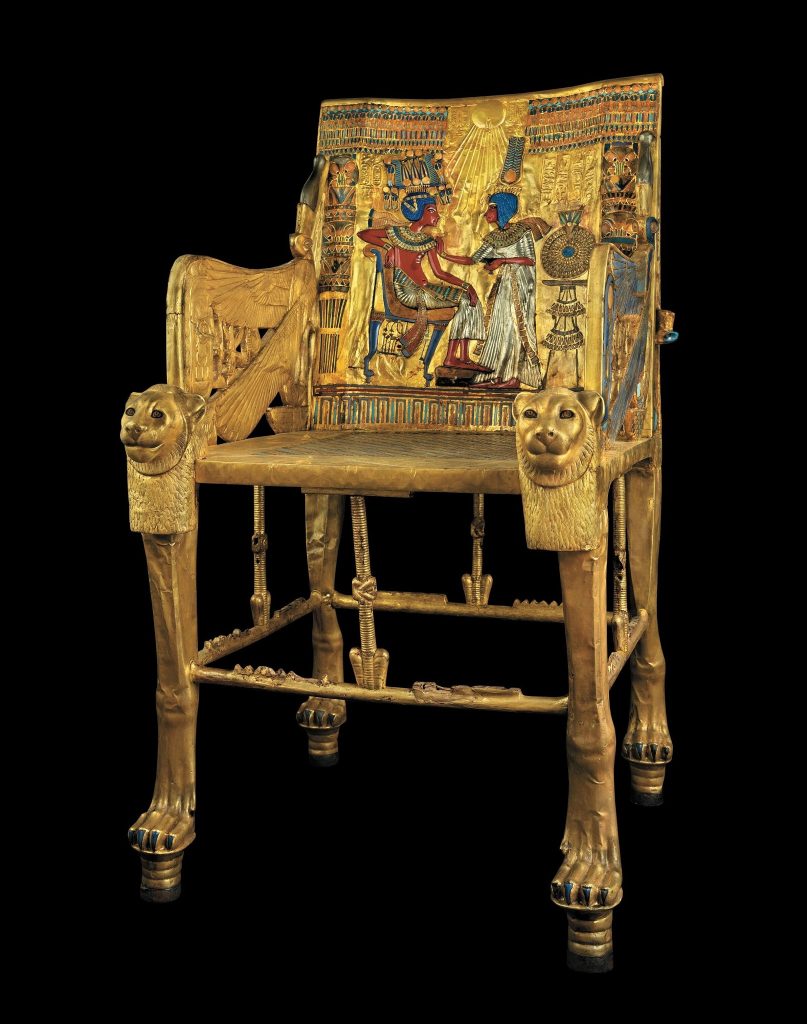
The GEM collection includes the Golden Throne of Tutankhamun, a masterpiece of 18th Dynasty craftsmanship discovered in the tomb’s antechamber. Entirely overlaid with a gold sheet about three millimeters (1/8 in) thick, this ceremonial seat is most famous for its backrest, which depicts a rare and intimate moment of affection with Ankhesenamun tenderly anointing Tutankhamun’s shoulder under the rays of the sun deity, Aten. Inlaid with silver, glass, and semi-precious stones, this exquisite work of art was reportedly described by Howard Carter as “the most beautiful thing found to date in Egypt.”
8. The Golden Mask of Tutankhamun
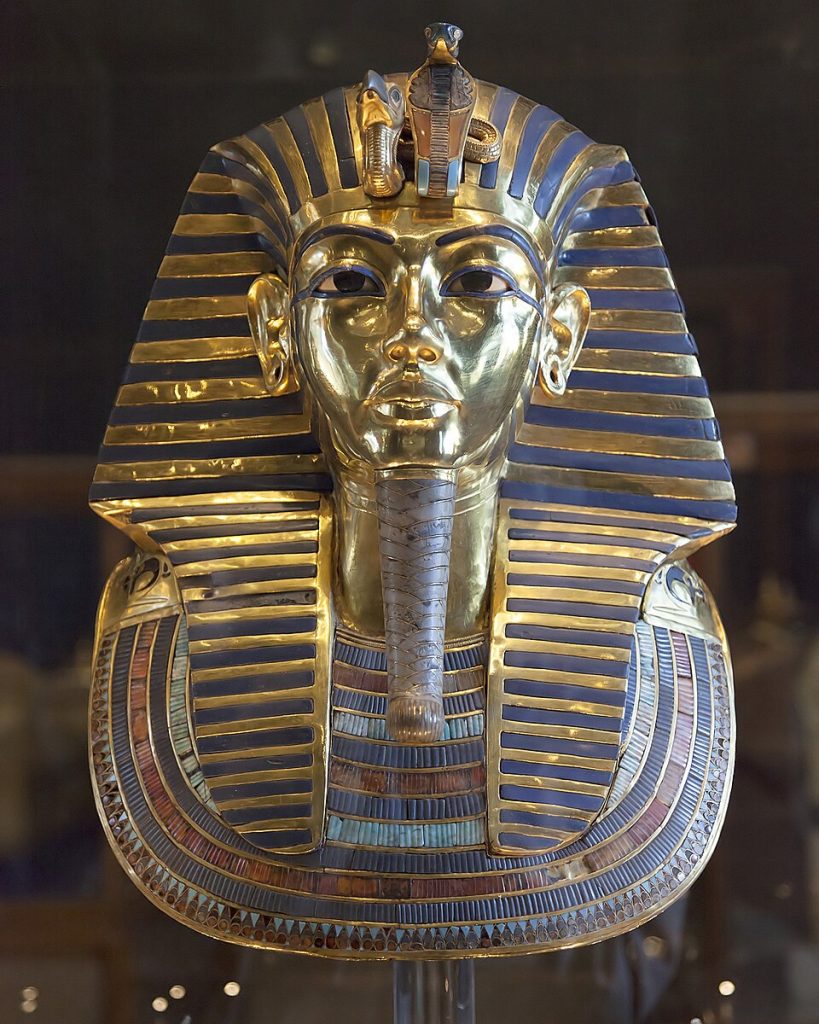
Among the Grand Egyptian Museum’s many incomparable treasures, the Golden Mask of Tutankhamun stands as its crowning glory, and could be described as the Mona Lisa of the collection. This 11-kilogram masterpiece of New Kingdom craftsmanship is forged from solid gold and inlaid with iconic lapis lazuli. As the quintessential image from the Boy King’s tomb, the funerary mask remains the ultimate symbol of ancient Egypt and is perhaps the most recognizable object from antiquity itself.
A New Era for Egyptology
The Grand Egyptian Museum unites antiquity with innovation, setting a new standard for Egyptology. This world-class institution shifts the focus of research back to Cairo, inspiring a new generation of scholars and visitors alike to explore the profound legacy of Egypt.