
A Beginner’s Guide to Icons in Eastern Christianity
Icons are among the oldest image traditions, yet they often remain misunderstood, especially in the West. They belong to a visual culture that...
Catherine Razafindralambo 27 April 2026

Jean-Léon Gérôme, The Snake Charmer, 1880, Sterling and Francine Clark Art Institute, Williamstown, MA, USA. Detail.
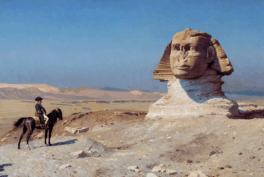
19th-century Europeans were fascinated by the Near East and North Africa. Everything began roughly around the time of the Napoleonic invasion of Egypt when fantasies about the “other” served to justify the colonial expansions. As Napoleonic troops brought foreign objects as spoils, Europeans wanted to see more… Learn about Orientalism, a concept that was born at that time.


The scholar Edward Said defined Orientalism in his famous book from 1978 called Orientalism as a
Western style for dominating, restructuring, and having authority over the Orient.
Edward Said, Orientalism, 1978.
Orient, that this the area of North Africa and Near East, served as a counter-place for the European collective self.
European culture gained in strength and identity by setting itself off against the Orient as a sort of surrogate and even underground self.
Edward Said, Orientalism, 1978.

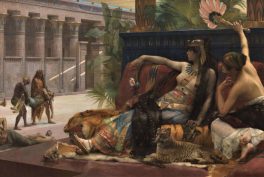
To justify their imperialistic conquests, Europeans presented the Eastern people as idle, dissolute, chaotic and savage. The East was the home of all Western vices and suppressed needs, and painting helped to express it. This is why we have so many Orientalist scenes at baths or harems where the Western viewer could peep at what was behind the walls of the imagined Orient.
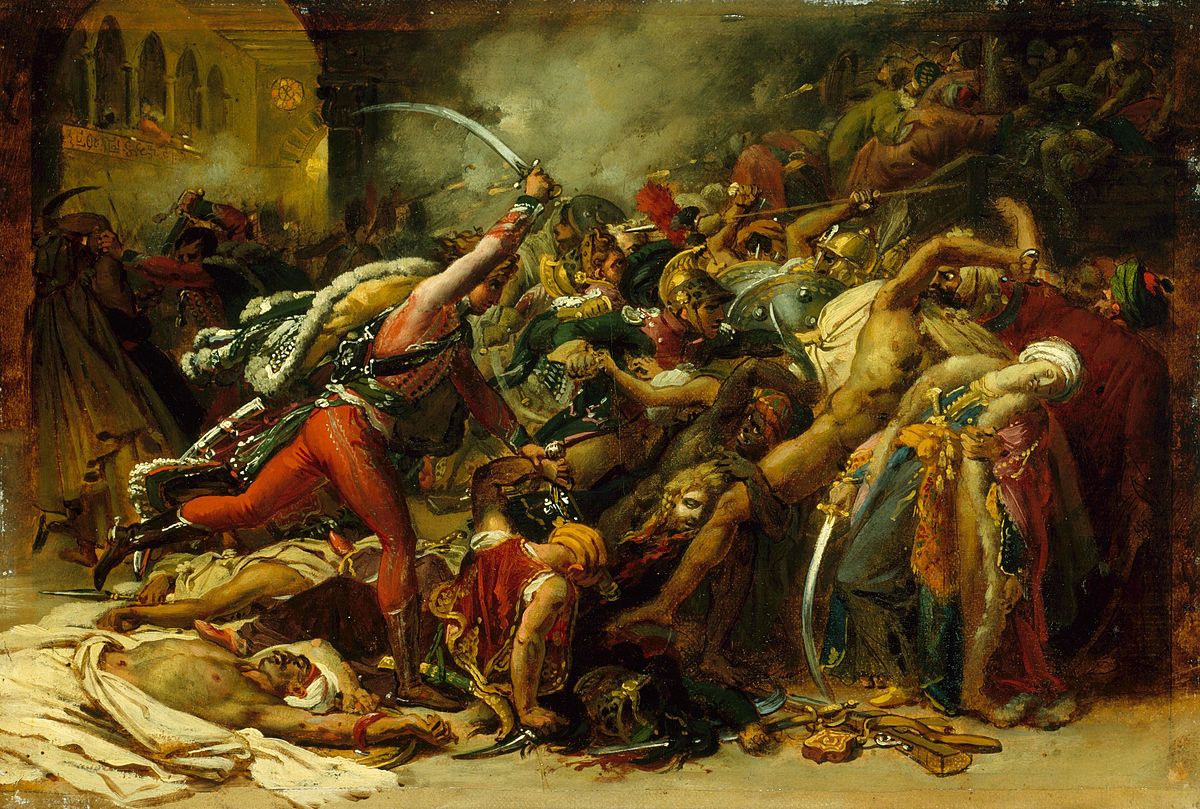
Most of the scenes presented by the artists were imagined as many of the artists did not even leave Europe! (But they still felt entitled to paint Orientalist works.) Others, like Jean-Léon Gérôme, went abroad but depicted places they did not see with their own eyes, such as baths, slave markets, or harems. To create an illusion of reality, the painters used insignificant details and highly realistic drawings which would make an impression of places that really existed.
Get your daily dose of art
Click and follow us on Google Profile

DailyArt Magazine needs your support. Every contribution, however big or small, is very valuable for our future. Thanks to it, we will be able to sustain and grow the Magazine. Thank you for your help!

Magda, art historian and Italianist, she writes about art because she cannot make it herself. She loves committed and political artists like Ai Weiwei or the Futurists; like Joseph Beuys she believes that art can change us and we can change the world.
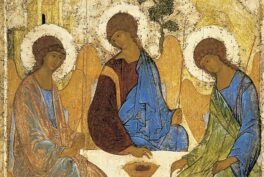
Icons are among the oldest image traditions, yet they often remain misunderstood, especially in the West. They belong to a visual culture that...
Catherine Razafindralambo 27 April 2026
As one of the most enduring symbols in world mythology, the sphinx embodies a fascination with mystery, power, and transformation. From its origins...
Martha Teverson 10 November 2025
Color theory has played a central role in art throughout history, shaping how viewers respond to images even before they consciously think about the...
Jimena Aullet 12 January 2026
The Northern Renaissance took place in Europe north of the Alps, primarily in regions like the Netherlands, Germany, France, and England. Artists...
Anna Ingram 31 March 2025