


Whistler in 10 Works: The Poetry of Sight
James Abbott McNeill Whistler can sometimes appear as insubstantial and vague as one of his Nocturnes. He flits across the late 19th-century art...
Catriona Miller 25 June 2026
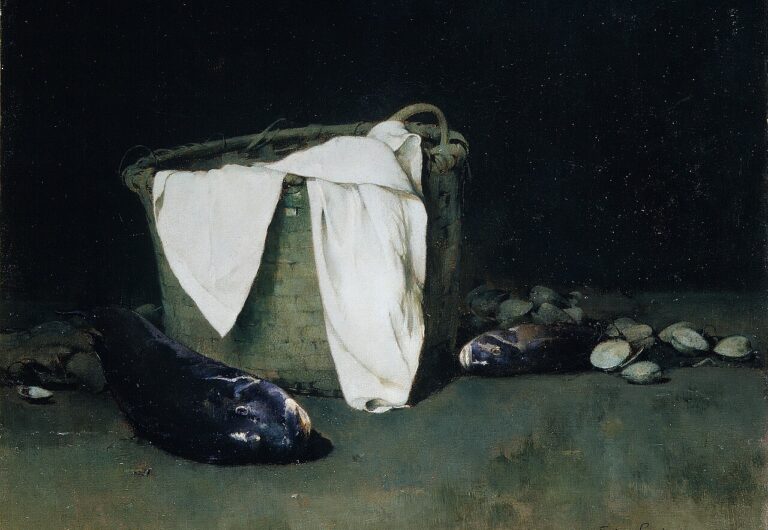
Emil Carlsen, Blackfish and Clams, ca. 1880–1890, Metropolitan Museum of Art, New York City, NY, USA. Detail.
For roughly the first 40 years of his life, Emil Carlsen was poor and relatively unknown. Rather than embrace the florid color and fleeting light that defined modern Impressionism, he adapted the movement by incorporating principles from his native Denmark. The result was an American Impressionist with a distinctly Danish style—one unlike any other.
Raised in Copenhagen, Denmark, Emil Carlsen got his first exposure to art through his family. His cousin Viggo Johansen was a member of the Skagen painters, who emulated French Impressionists, and his mother received painting lessons from I. L. Jensen, who was known for his flower still lifes.
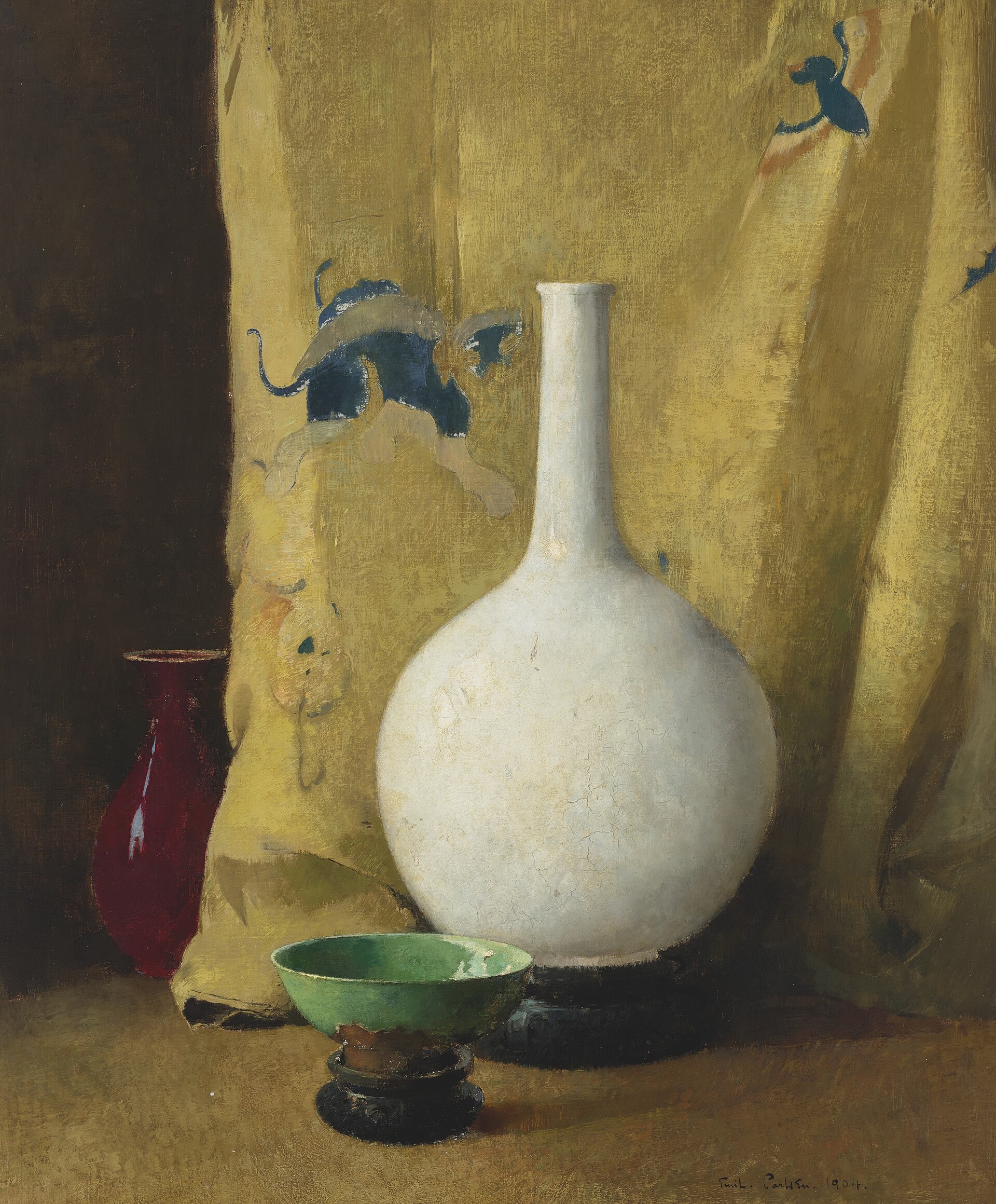
After attending the Royal Academy of Art and serving a brief stint in the army, Carlsen came to New York to work as an architect. Eventually, he began work in the studio of Lauritz Bernhard Holst, who once sold a sketch of Carlsen’s under his own name. When Holst died, Carlsen inherited the studio.
He left a job teaching drawing at the Art Institute of Chicago to travel Europe studying. But it wouldn’t be until his three-year period in Paris from 1884 to 1887 that he would adopt the colors of the Impressionist palette.
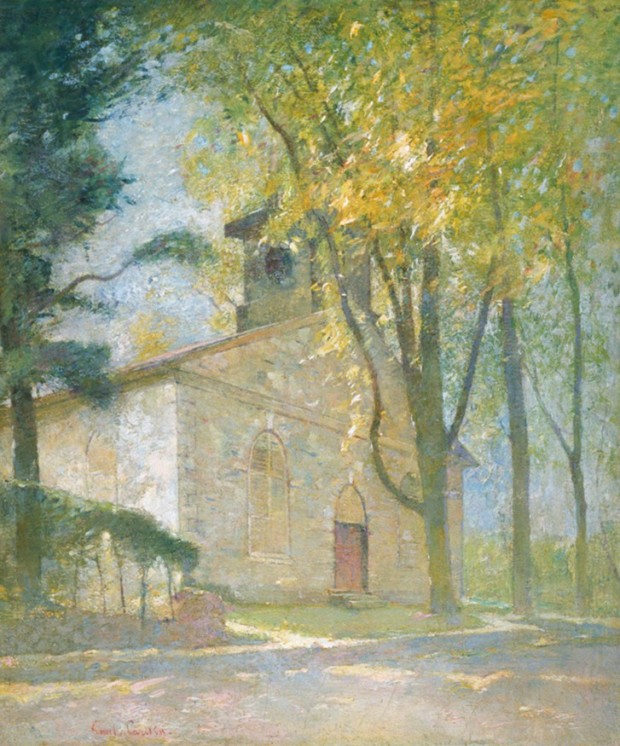
Upon returning to the US, Carlsen spent a few years in San Francisco serving as the head of the California School of Design. His return to New York marked the beginning of his permanent residence on the East Coast, where he fell in with William Merritt Chase, Childe Hassam, and Julian Alden Weir, amongst others. These American Impressionists helped shape Carlsen’s mature work.
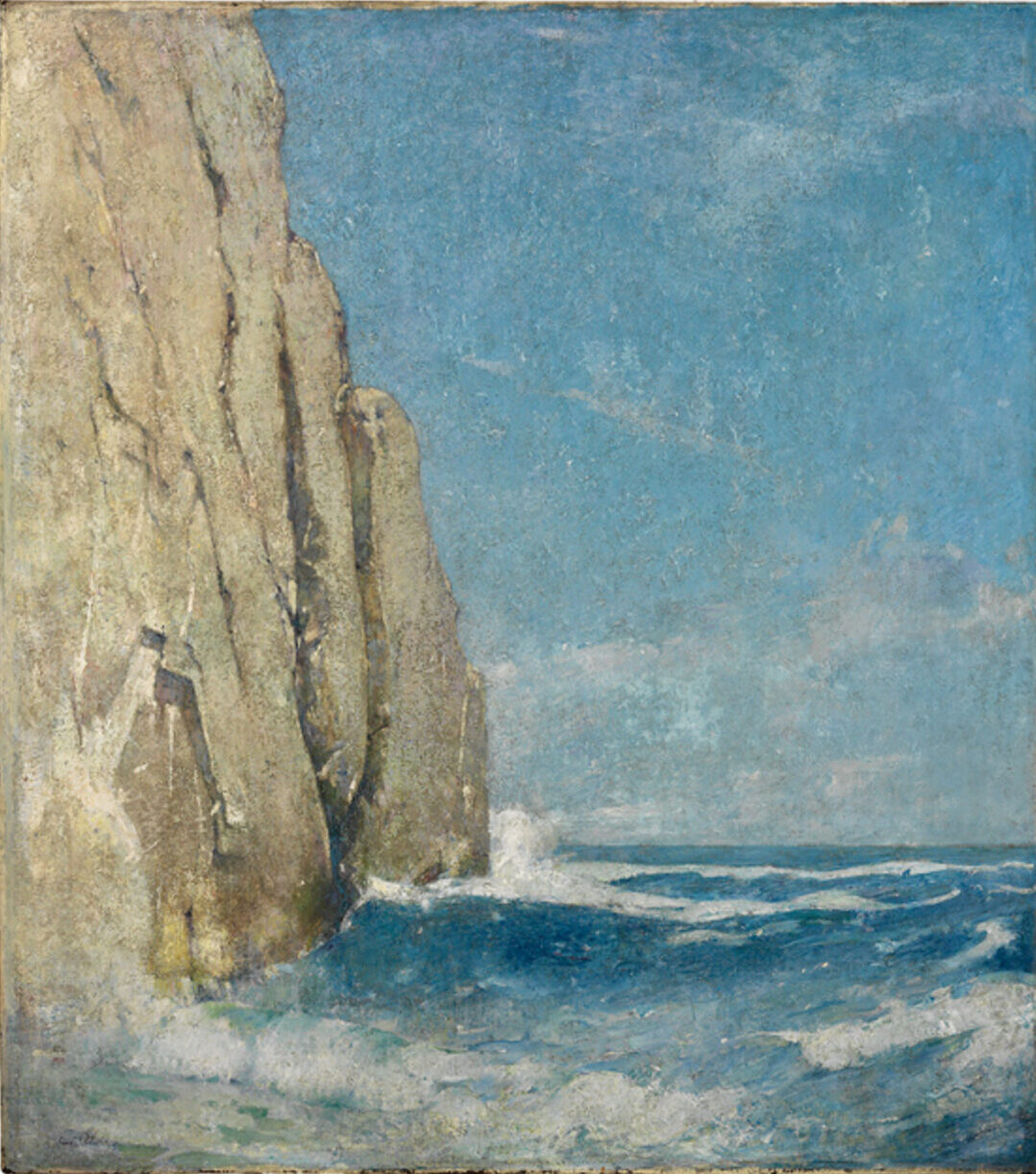
Though Carlsen spent most of his career as a painter in America, was a fundamentally Danish artist. His balance between the calm and the emotional was similar to his contemporaries at the Skagen school, though more reserved. However, he was always compared to the American Impressionists, with similarities between his style and that of American genre painting present as well.
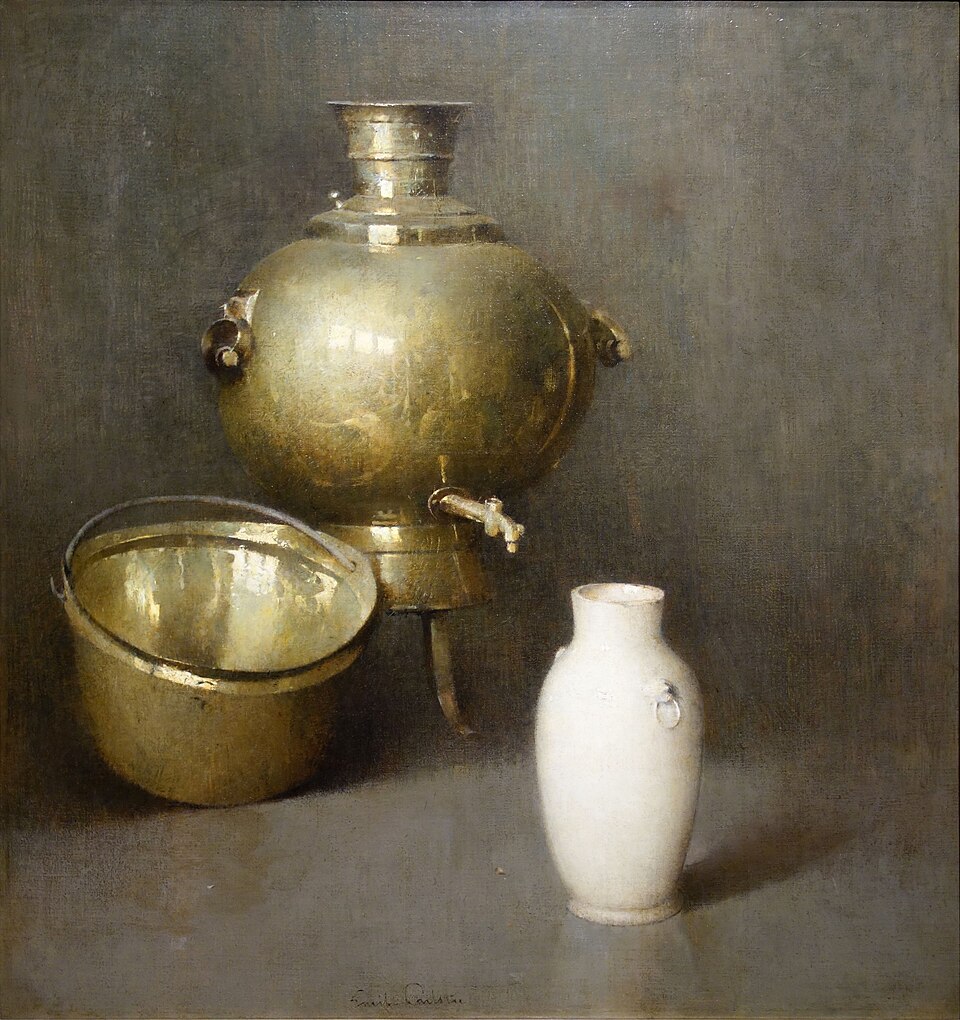
He took a particular interest in still lifes—not just in his dedication to a “veiled” appearance of light in the brushwork, but in the composition of the objects arranged, which maintained a silent harmony. Carlsen didn’t believe life needed to be depicted in every painting; instead, his still lifes suggest the absence of life—not death, per se, but the feeling that there was once life present, or that there will be.
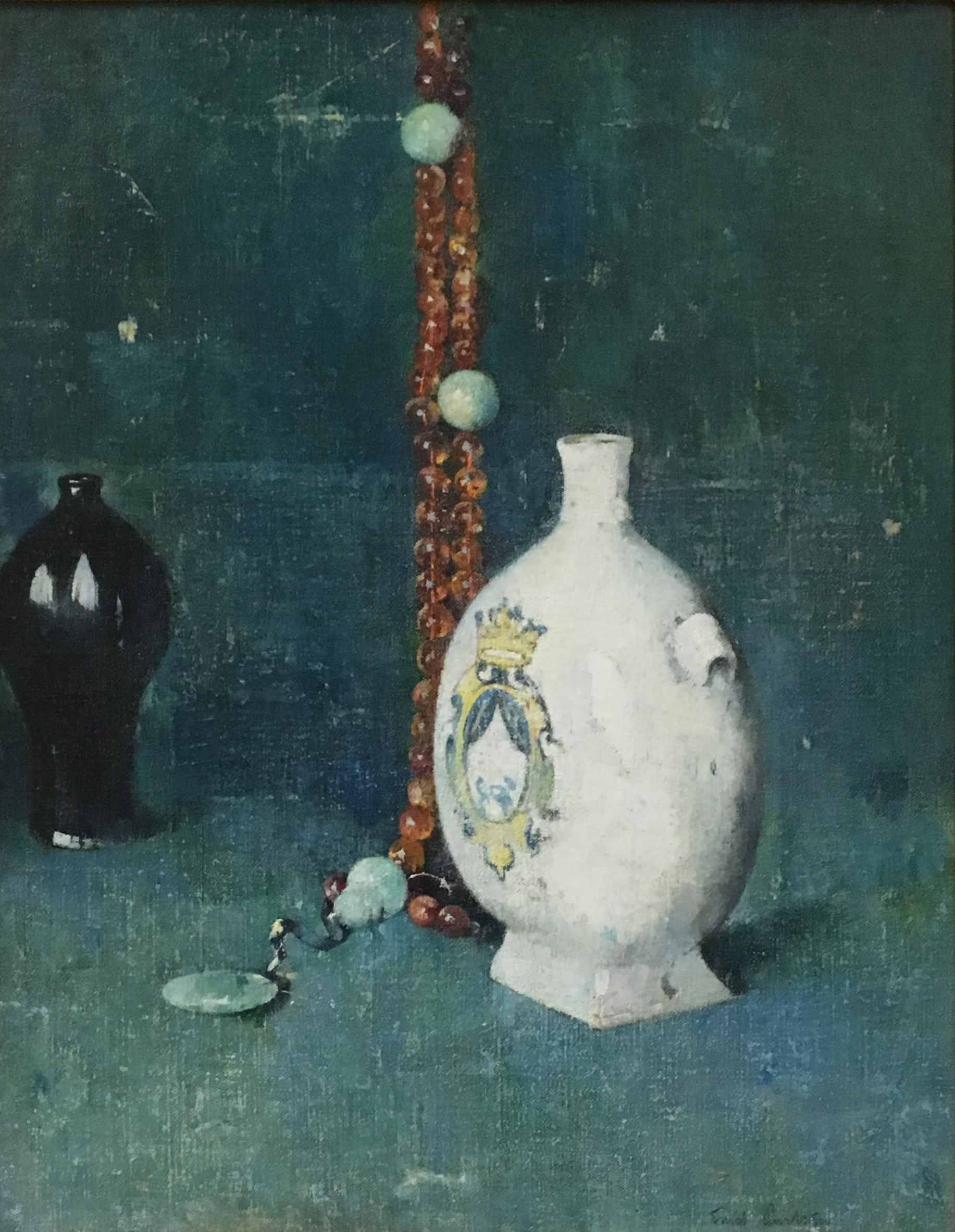
He was particularly fond of depicting porcelain, where his approach to the use of white is most plainly apparent. Carlsen was known to mix some amount into every pigment he applied. As a result, his palette remained light, yet reserved. His grisailles (compositions done entirely in grey) look almost like early photographs of statues. His depictions of porcelain earned him widespread admiration for their subtle rendering of light on white surfaces and their extraordinary realism.
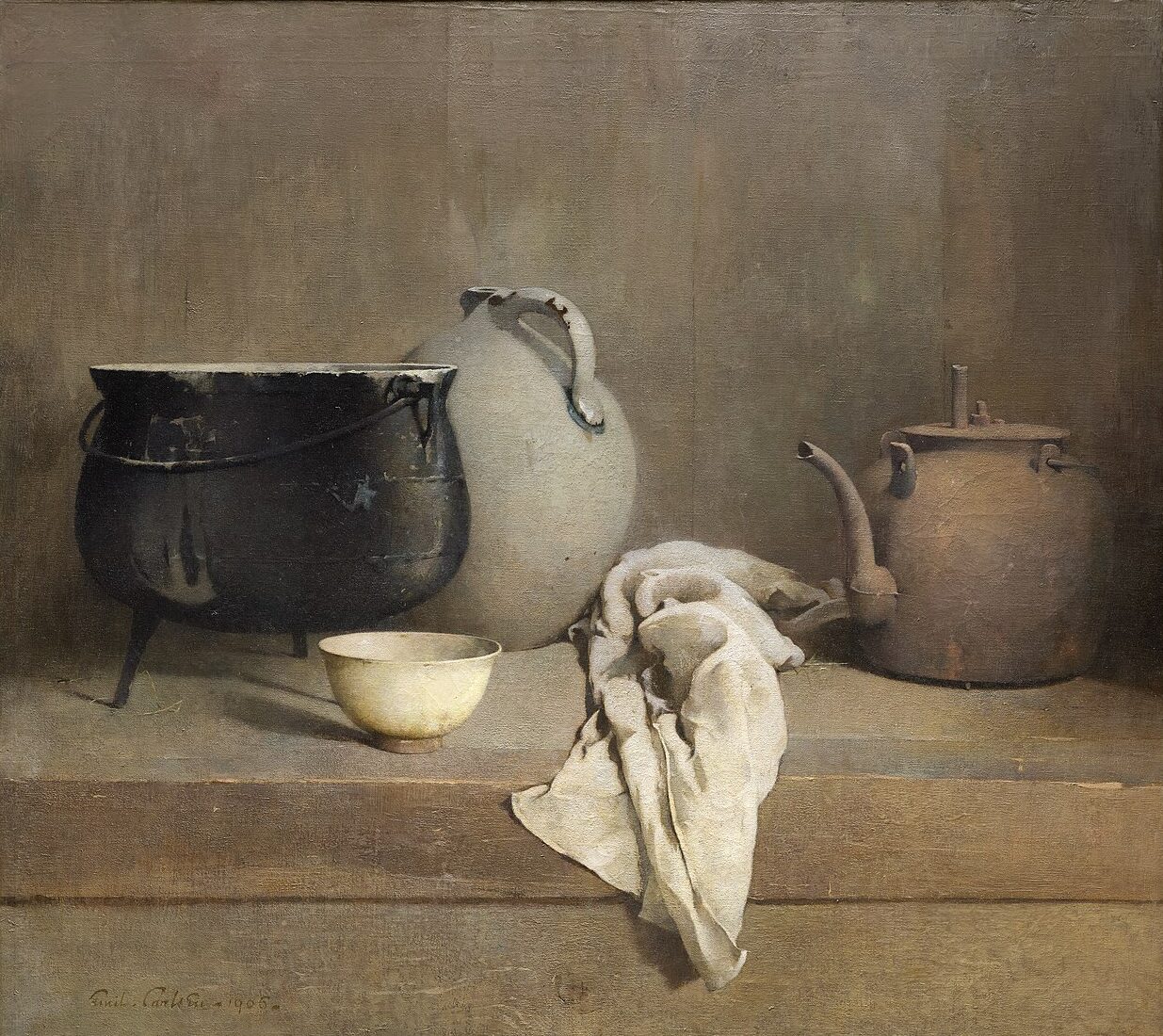
Carlsen’s landscapes adopted his light-infused colors and forms as well. He frequently employed large areas of positive space composed of sky, land, sea, or simply a colorful background. Grey days when a mist hung in the air seemed his favorite, and the appearance of a fog (or smudge on the lens, perhaps, were he a photographer) lingers in most of his landscapes.
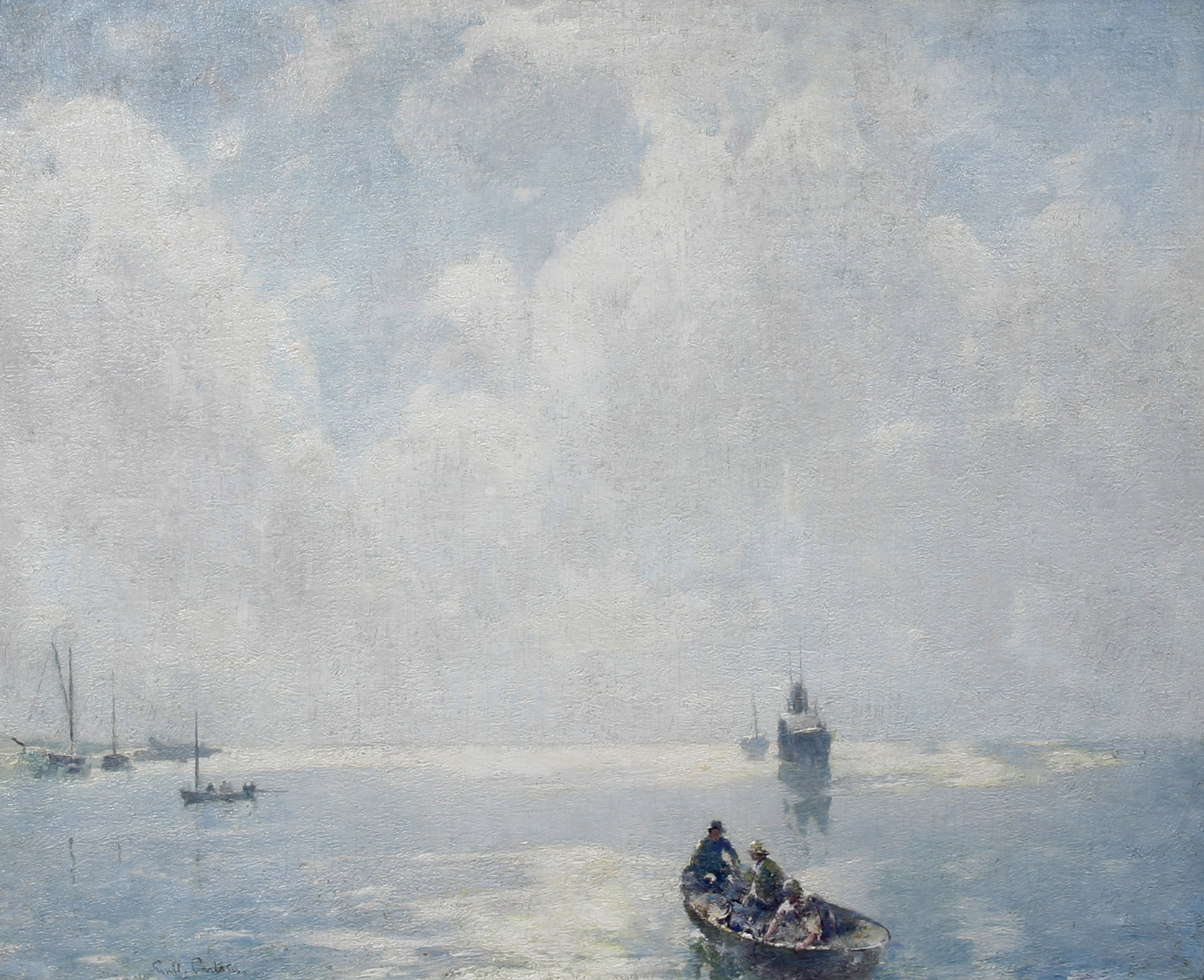
Much like photographs, Carlsen’s paintings contain a solid stillness. Yet, as per the Impressionists, he captures light in a fleeting sense that blurs the composition. Thus, his landscapes appear as though a photographer accidentally hit the camera; there is motion amidst the rigidity.
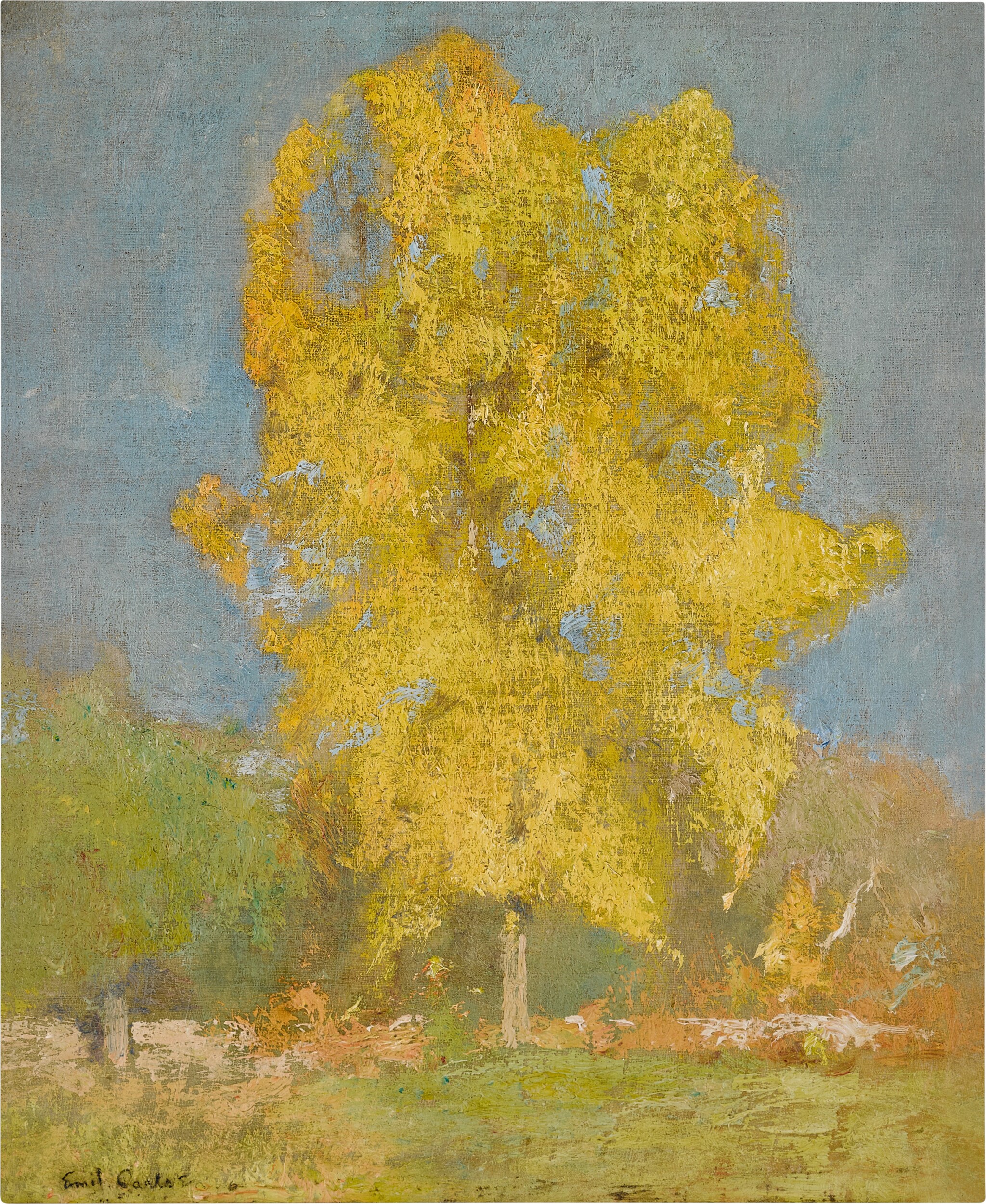
Overall, Emil Carlsen was considered by his contemporaries and is still by historians to be one of the finest painters of his time. His fellow artists claimed his work captured the essence of the man himself, someone who lived life “simple and true,” as the collector August Bontoux put it. His death in 1932 at the age of 83 left the art world with a wealth of uniquely honest and organic paintings that embodied not only a lifetime of work but the life that conceived it.
DailyArt Magazine needs your support. Every contribution, however big or small, is very valuable for our future. Thanks to it, we will be able to sustain and grow the Magazine. Thank you for your help!

Screenwriter; art-lover; barrel-rider.
James Abbott McNeill Whistler can sometimes appear as insubstantial and vague as one of his Nocturnes. He flits across the late 19th-century art...
Catriona Miller 25 June 2026
Think art school is the only path to greatness? Think again. These 10 artists defied convention through persistence, originality, and vision, without...
Wen Gu 14 September 2026
Bronzino was of the generation of artists who had to find a way of following the perfection of the High Renaissance. They pushed the conventions of...
Catriona Miller, 17 November 2025
From early roots in rural Ontario, Canada, to New York City and back again, David Milne was an artist who rarely settled for long. His works span a...
Bec Brownstone 1 July 2026